
The Usual Channels review: Yorkshire characters are leading figures in book which lifts lid on murky world of whips

It’s the winter of 1974 and Prime Minister Harold Wilson’s government is hanging on by a thread.
In the second election of that year, Labour won a razor-thin three-seat majority, however by December this was already being whittled away.
John Stonehouse, the MP for Walsall North, had vanished into thin air off the coast of Miami, presumed dead.
The former minister was quietly removed from the Cabinet by Wilson previously over suspicions he was an agent for the Czech secret service.
Struggling without his ministerial salary, Stonehouse set up various firms to supplement his income, however when these ran into financial difficulties he stole the identities of two dead constituents and flew to Miami - faking his own death by apparently disappearing while out for a swim.
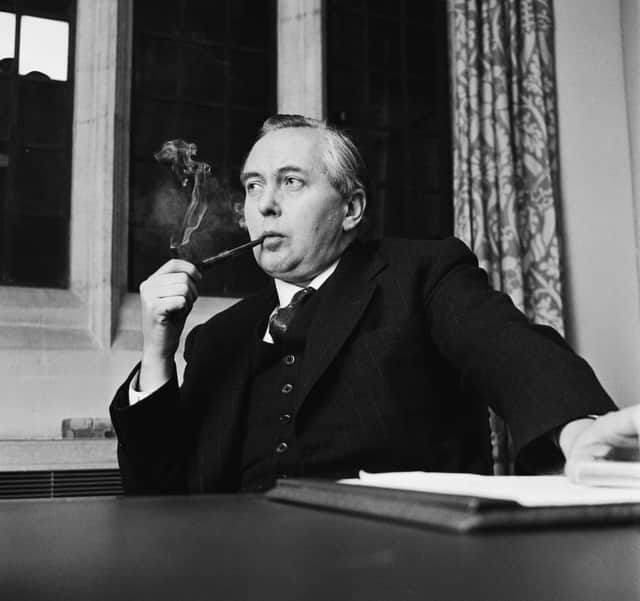
Wilson’s fellow Yorkshireman, no-nonsense Walter Harrison, the deputy chief whip from Dewsbury, was tasked with getting Government business through the House of Commons.
Believing Stonehouse had drowned or been eaten by sharks, Harrison, who had a formidable reputation as a drinker and enforcer, began recruiting opposition party MPs to vote with Labour.
Independent Northern Irish MP Frank Maguire, who ran a pub in his Fermanagh and South Tyrone constituency, was on the whip’s hitlist, however his wife told Harrison: “Frank can’t come Tuesday, it’s dance night.”

After being informed that Maguire would be heading to Westminster on Wednesday, Harrison dispatched a whip to collar him at Heathrow and then spend all day drinking with him in the pub until the 10pm vote.
“The business of the government literally depended on dance night at a pub in Fermanagh,” one whip said.
The political journalist turned author charts the modern history of whips - the Machiavellian operators working in Westminster’s shadows to get legislation through the Commons - from Wilson’s governments in the 60s and 70s right up to Sir Keir Starmer’s administration now.
These are some of the most influential people you have never heard of, colourfully brought to life over some 500 pages by Whale.
The book is full of remarkable stories involving everyone from the Queen, see the extract below, to Margaret Thatcher and Tony Blair.

Many of these tales have not been told before due to the whips’ “omertá” or code of silence.
“Ex-whips don’t discuss the Office, so you will have to look elsewhere, I am afraid,” one told Whale.
A former Deputy Chief Whip said: “I have a policy of not discussing matters which occurred during the period in which I served as a government whip. Indeed, I believe that whipping, like stripping, is best done in private.”
As such, Whale approached almost every living MP for their experiences with the whips, to put together this essential piece of reading for anyone interested in politics.
Many of the most memorable revolve around Harrison, the gruff MP from Wakefield, who used to profess about the Commons’ food: “I am a down-to-earth man. I don’t want any fancy dishes, I want my roast beef and Yorkshire pudding.”
Former New Labour Home Secretary Jack Straw regaled to Whale an incident with Harrison in 1979.
The Blackburn MP said he was getting “a bit cocky” until Harrison “took me in hand”.
The whip, who disagreed with Straw’s tactics on the Government’s Finance Bill, relayed his views only for the rising star to push back.
Harrison fixed his eyes on Straw, who then felt a “pain between my legs I’d not experienced since the school rugby field”.
“His grip tightened,” Straw said, “I rose on my tiptoes as he pushed up as well. My mouth came open; only a little screech came out.”
The Yorkshireman told him: “Now, lad. Have you got the point or do you want some more?”
These antics earned the nickname “Mr Mafia”, however some more sociopathic behaviour of the whips wouldn’t come into the public domain until several years later.
In the summer of 1987, Michael Dobbs lay next to a swimming pool on the Maltese island of Gozo and began to write a novel loosely based on his time as Thatcher’s chief of staff.
On the first page, he put just two initials “F.U.” which as Whale writes “provided both a neat insight into his feelings towards his former employer, and the initials of his protagonist, Francis Urquhart”.

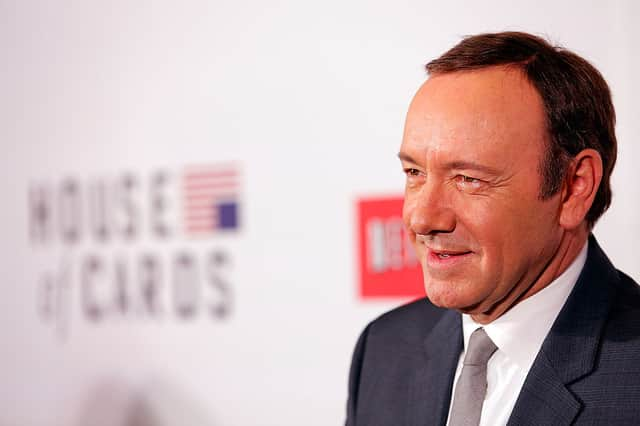
The book was called House of Cards, and made Urquhart, a fictional politician portrayed by Ian Richardson in the BBC series and more famously Kevin Spacey in Netflix’s adaptation set in Washington DC, the most famous whip in the world.
Dobbs insists that Urquhart is an “amalgam” of many characters he met in politics, who has no hesitation in using blackmail to make ends meet.
This is particularly interesting in the context of the whips’ so-called “black book”, an almost mythical document which allegedly includes every MP’s most salacious scandals.
Some former whips dispute the existence of the book to Whale, while others refer to it as a “dirt book”, which included “scandalous stories … which possibly are not all accurate”.
Former Tory Gerry Malone summed it up when he said the whips’ job was to get government business through the House of Commons, and ensure MPs did not interrupt it.
The three things, which could impede MPs with this, he said, was “sex, money and alcohol”.
There are plenty more tales like that in Whale’s book, which is a must-read on modern British history.