
King's Speech: what the Government's plans mean for Yorkshire
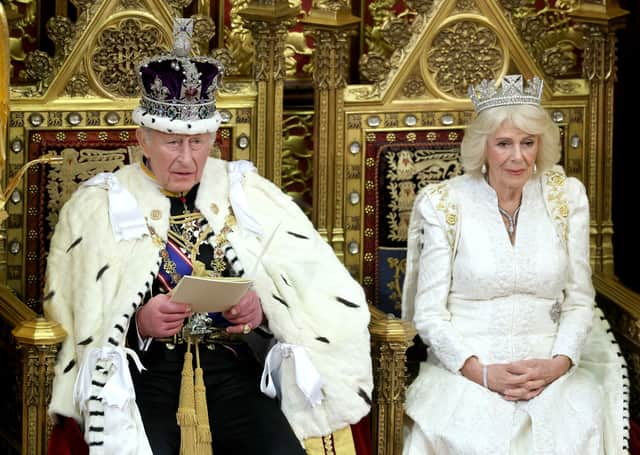
King Charles announced the Government’s legislative plans in the House of Lords.

Legislation to nationalise British Steel, kick-start Northern Powerhouse Rail and introduce visitor levy powers are all included in the King’s Speech.
In a ceremony full of pomp and prestige this morning, Charles III announced the Government’s legislative agenda for the next Parliamentary session.
Speaking in the House of Lords, the King said: “My Government will respond to this world with strength and aim to create a country that is fair for all.
“My Ministers will take decisions that protect the energy, defence and economic security of the United Kingdom for the long-term.
“They will defend the British values of decency, tolerance and respect for difference under our common flag, and they will harness the potential of the pride felt across this country for its communities.”
Charles is not giving his own opinion, but, as is tradition, announcing the Government’s legislative plans going forward.
Here are the key announcements for Yorkshire:

Steel Industry (Nationalisation) Bill
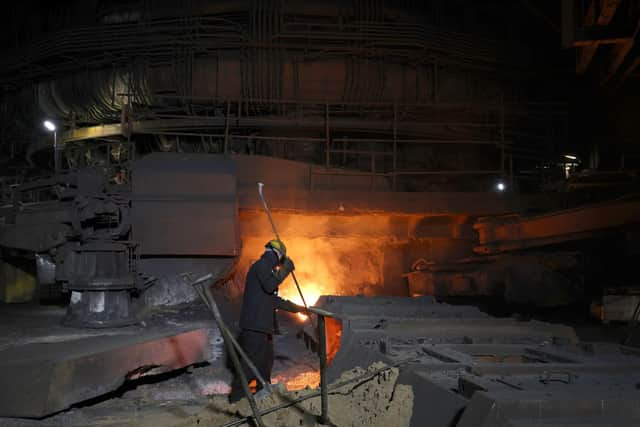
As announced by Sir Keir on Monday, the Government is preparing to nationalise British Steel.
The Department of Business and Trade already took control of the Scunthorpe steelworks last year, when it appeared owner Jingye was set to take the blast furnaces offline.
That would have meant the UK would have become the only G7 country unable to produce virgin steel.
The DBT has been attempting to find an investor who would keep the blast furnaces online, while transitioning the plant to electric arc furnaces (EAFs), but so far has been unsuccessful.
The King’s Speech states “it has not been possible to agree acceptable terms which would represent a responsible use of public money”.
Sir Keir has obviously decided that the only option is nationalisation, with the legislation providing a public interest test.
British Steel was previously owned by the Government until 1988, when Margaret Thatcher privatised it.
In recent years, other Yorkshire steel firms, like Sheffield Forgemasters, have been nationalised to keep them afloat.
Northern Powerhouse Rail Bill
In January, Chancellor Rachel Reeves announced the Government’s plans for the long-awaited Northern Powerhouse Rail project, to connect up the North’s great cities on both sides of the Pennines.
She’s said £45bn of Treasury money will be spent on a “turn up and go” railway across the North that mirrors London’s transport network.
By the 2040s, Ms Reeves pledged there would be a new line from Liverpool to Manchester and into West and South Yorkshire, with simpler upgrades across the region being completed in the early 2030s.
The bill is required for the section of line from Manchester Airport that was originally going to be part of HS2.
Henri Murison, chief executive of Northern Powerhouse Partnership, said: “The inclusion of the High Speed Rail hybrid bill to link Manchester Airport to Piccadilly station in today’s King’s Speech is a significant moment for the North.
“For too long, we have lacked the infrastructure needed to properly connect our major economic centres and support growth across our region. Re-starting legislation paused unnecessarily by the previous government is an important step forward towards changing that.
“A reliable, more frequent and high-capacity rail network across the North will increase areas people can travel to work from, improve access to opportunity and help businesses operate across the region more effectively.
“It also will link not only Liverpool but cities like Leeds, Bradford and Hull better to Manchester Airport, opening up global direct links.”
Overnight Visitor Levy Bill
The Government said the Overnight Visitor Levy Bill “is the first step in a new era of fiscal devolution”.
It will give mayors the powers to introduce a so-called tourist tax - an overnight charge on visitors that would be reinvested in the local economy.
York and North Yorkshire Mayor David Skaith and West Yorkshire Mayor Tracy Brabin have both indicated that they will bring in such a tax.
Research by York St John University has estimated that a £2 visitor levy, per room per night, could generate £52m each year for Mr Skaith’s combined authority.
The Government says this will bring England into line with Scotland and Wales.
Ms Reeves has said she plans to announce more fiscal devolution in the Budget.
However, Marvin Rust, managing director at consultancy Alvarez & Marsal, said: “A tourist tax could not come at a worse time for many hospitality businesses struggling to get by right now.”
European Partnership Bill
The Government could fast-track EU rules into law without giving MPs a vote under legislation brought forward in the King’s Speech.
Ministers have been attempting to forge closer ties with the continental trade bloc since coming to power in 2024, and have set the stage for a series of co-operation deals this summer.
Britain and Europe hope to agree a new alignment on food, on energy emissions, and on youth mobility when negotiators gather in Brussels for the second annual UK-EU summit.
The European Partnership Bill, set out in the King’s Speech, will provide a “framework” which will allow these deals, and other future agreements with the EU, to be swiftly implemented, according to officials.
While the Bill is set to give Parliament “a say” in the new agreements, critics have shared fears in several media reports that the powers laid out in the legislation will allow ministers to bypass a meaningful vote by MPs.
The Government is however keen to point to the benefits of allowing ministers to quickly adopt EU rules into UK law.
The new food and drink deal could provide a benefit of £5.1bn to the UK economy, officials believe.