
'You can't park there mate!' - Hull gears up for tough new pavement parking rules
Hull City Council has voted in favour of a crackdown on pavement parking across the city, following the passage of new national legislation earlier this year.
A council motion discussed and passed at The Guildhall outlines plans to identify problem hotspots.
The motion was proposed by Hull’s Labour Group on the council and makes clear some limited exceptions for pavement parking may be needed on its historic streets.
It calls on the local authority to make best use of new national powers to tackle pavement parking which makes life particularly hard for people with disabilities and parents pushing prams.

Local authorities were granted new powers by the national government earlier this year allowing them to ban vehicles from parking on footways and verges.
While the Government has committed to introducing secondary legislation so civil enforcement officers can tackle unnecessary pavement obstructions, pavement parking remains largely legal across England outside London until those specific rules come into force.
In the motion put forward at a full council meeting in Hull, local councillors warned that vehicles parked on footways create serious safety and accessibility hazards, particularly for people with disabilities, blind and partially sighted residents, wheelchair users, older people, and parents or carers with pushchairs.
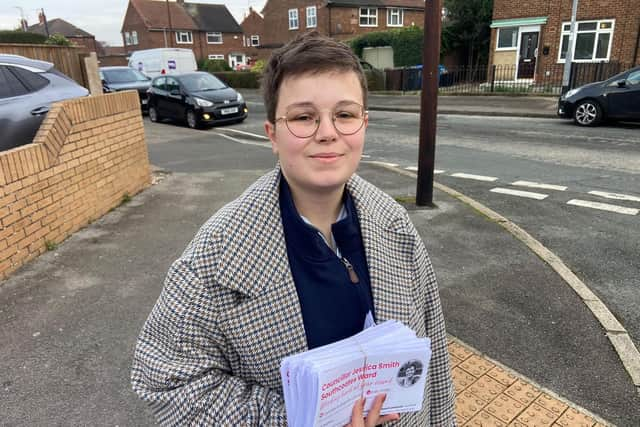
More than 80% of drivers support action on pavement parking, according to an RAC study, Councillor Jessica Smith told the chamber.
“Seeing a car parked partly or on a pavement is commonplace in Hull. It turns an everyday journey into an obstacle course for many residents,” she said. “Families, wheelchairs and pushchairs are too often pushed into the road.”
Coun Smith said a ‘proportionate response’ is needed. But warned it was a key issue for many local people who have been waiting too long for action.
“People are restricting their independence because they cannot safely use their pavements,” she added. “There is now a framework for pavement parking prohibitions but we need to make sure Hull is ready to use those powers.”
The councillor admitted Hull has many historic road layouts that create genuine challenges for city planners, warning: “We cannot introduce a policy that just pushes a problem around. We need to get the balance right.”
Pavement parking is particularly problematic for people with disabilities
The motion was backed by Coun Tracy Dearing who told the chamber 89% of blind and partially sighted people say they find it difficult walking around their neighbourhood due to cars parked on their pavement.
She warned pavement parking could lead to serious injuries, and needs urgent action. “Pavements should be for people!” Coun Dearing stated.
“Walking keeps us healthy, it even keeps us slim if we want to be. This is not just about highways, it’s a wellbeing and community issue too.”
Work is already ongoing to tackle the issue. Liberal Democrat Mark Ieronimo, the council’s portfolio holder for transport and infrastructure, told the chamber he recognised the urgency of the issue and would happily support the motion – but had already included preparation for the new rules in his strategic priorities.
“In September, I included preparation for the introduction of pavement parking enforcement powers in my priorities,” he said. “I did this because I recognise the problems pavement parking causes, and the opportunity that new powers could give us to address them.”
However, Coun Ieronimo said parking challenges in the city need to be recognised within the rules. “Many of our older residential streets are narrow, with limited off street parking. In some areas, there simply isn’t enough space to accommodate all of the vehicles,” he said.
“We need to take these circumstances into account when deciding how the new powers should be used, and I believe a targeted approach based on evidence and local circumstances is more appropriate than a blanket prohibition.”
Creating a pro-pedestrian culture in Hull
Hull City Council must send a clear message that obstructive pavement parking will be addressed – moving beyond recognition and into delivering clear action, said Coun Sharon Hofman.
“It is not being anti-motorist, but being pro-pedestrian,” she said.
Under the current rules, parking on the pavement is not usually an offence unless covered by local restrictions such as double yellow lines or a Traffic Regulation Order. London has had a blanket ban since 1974 and Scotland has introduced similar restrictions.
As part of agreeing the motion, councillors insist any future framework in Hull must strike a fair balance between protecting pedestrian access and granting locally informed exceptions where street geography demands them.
The motion also requests the authority’s overview and scrutiny commission establish a dedicated group to examine enforcement options and resource costs, map out high-risk pedestrian hotspots, identify narrow historic streets requiring exemptions, and explore how to consult residents and disability organisations.
The scrutiny group will also look into interim partnership arrangements with Humberside Police and other agencies to manage the issue before the new council powers take effect.
In addition, the motion calls on the leader of Hull City Council to write directly to the Secretary of State for Transport to welcome the 2026 Act while pressing for a firm implementation timetable.
Emma Hardy, the Labour MP for Hull West and Haltemprice took to Facebook to welcome the council’s decision.
“Hopefully, this will be a good deterrent and have a positive impact on areas across West Hull. It’s an issue which regularly comes up when I speak to residents, particularly around Gipsyville,” she posted.