
Fresh planning bids land across Leeds as residents invited to comment

Leeds City Council has received a large number of new planning applications covering homes, heritage buildings, community sites and major institutions across the city.
Leeds City Council has confirmed that dozens of new planning applications have been submitted and are now open for public comment.
The applications have been made under the Town and Country Planning (Development Management Procedure) (England) Order 2015 and, where relevant, the Planning (Listed Buildings and Conservation Areas) Act 1990.
Members of the public have 21 days from January 16, 2026, to submit comments.
The proposals span a wide range of developments, including residential alterations and extensions, changes to listed buildings, community and faith premises, commercial units, transport and infrastructure works, and major institutional sites.
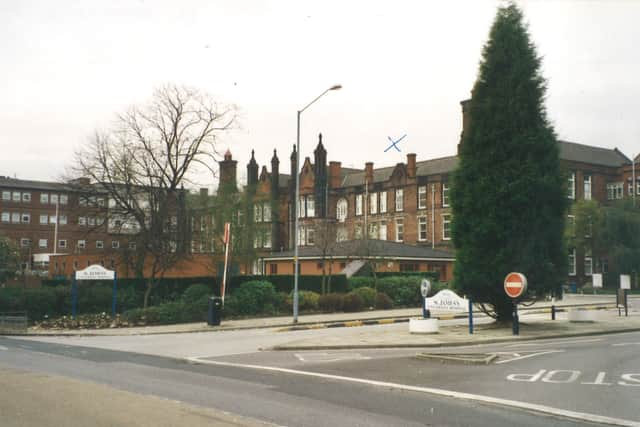

Among the submissions are applications affecting historic homes and listed buildings, works at churches and community centres, proposals linked to Leeds Teaching Hospitals NHS Trust, Leeds Beckett University and the University of Leeds, as well as schemes involving retail, leisure and hospitality premises in the city centre.
Several applications relate to railway infrastructure, submitted by Network Rail, alongside proposals for bridges, car parks, former industrial sites and redevelopment land across both urban and rural parts of the Leeds district.
The list also includes multiple householder applications, covering properties in areas such as Chapel Allerton, Headingley, Horsforth, Pudsey, Otley, Guiseley, Morley, Rothwell and Wetherby, as well as villages including Linton, Bardsey, Clifford and Boston Spa.
All applications can be viewed online via the council’s planning portal or at any Leeds City Council hub.
The council has reminded residents that comments are public documents and should not include personal information such as phone numbers or signatures.
Anyone wishing to comment must do so within 21 days of the notice date, with representations forming part of the planning decision-making process.