
25 Yorkshire surnames that could reveal where your ancestors once lived


This article contains affiliate links. We may earn a small commission on items purchased through this article, but that does not affect our editorial judgement.
From Pickering and Selby to Sykes, Booth and Thwaites, these Yorkshire surnames preserve clues about the places, landscapes and communities where families once lived.
Yorkshire is a county where family names can be almost as rooted in the landscape as the villages, dales and market towns themselves.
For centuries, people were identified by where they came from, the work they did or the family they belonged to. In some cases, a surname still carried in Yorkshire today can point back to a particular settlement, patch of countryside or landscape feature familiar to people hundreds of years ago.
That curiosity is also easy to turn into an unusual Christmas present this year. MyHeritage DNA kits are currently £19.90, giving recipients another way to explore their genetic origins and look for DNA matches alongside the paper trail of names, census entries and family stories.
A surname on its own cannot prove where a particular family came from. Names can have more than one origin and families have moved around Britain and beyond for centuries, but they can provide an intriguing place to start.
Some Yorkshire surnames point directly to towns and villages. Others preserve words once used for streams, woods, valleys, ridges and small patches of farmland.
Here are 25 with particularly interesting Yorkshire connections.
1. Pickering
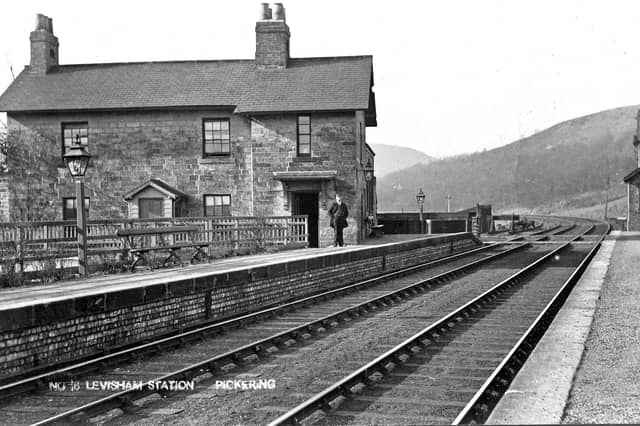
This is one of the clearest Yorkshire examples. Pickering is a habitational surname derived from the North Yorkshire market town, whose much older name is thought to have referred to the people or followers of a man called Pīcer.
A medieval ancestor described as being "of Pickering" could eventually have passed the place name down as a family name, long after descendants had moved elsewhere.
2. Selby
Selby is another surname with a direct Yorkshire place-name connection. The town's name may combine an Old English word connected with willows with the Old Norse bý, meaning a farmstead or village.
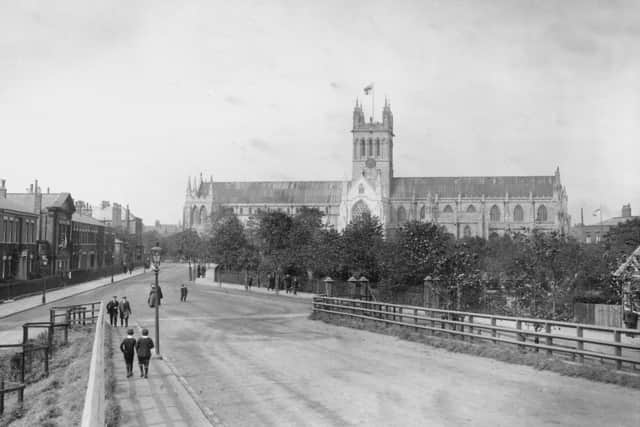
That Scandinavian ending survives all over Yorkshire and is one of the most obvious reminders of the Vikings' impact on the county's map.
3. Beverley
The East Yorkshire town also gave rise to the surname Beverley. Its name contains the Old English word for beaver, with the second part possibly referring to a stream.
That makes it one of the more evocative names on the list, preserving an image of a Yorkshire landscape very different from the one we know today.
4. Wakefield
Wakefield is a habitational surname associated with the West Yorkshire city. Its place name may combine the Old English personal name Waca, or a word meaning a wake or festival, with feld, meaning open country.
The surname therefore carries a possible link not just with a place but with the much older landscape that existed before modern Wakefield grew around it.
5. Ripley
Ripley can come from several English places, including Ripley in North Yorkshire. The Yorkshire version is thought to combine the name of an early Anglian group called the Hrype with lēah, an Old English word for a woodland clearing.
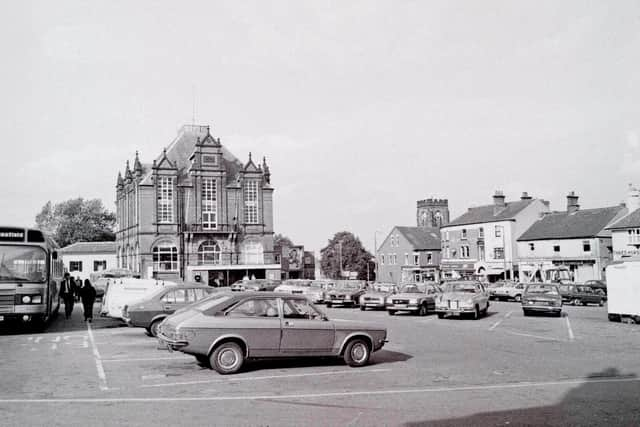
Someone bearing the surname today cannot assume their family came from the Yorkshire Ripley, but it is certainly one avenue worth investigating.
6. Scarborough
Few Yorkshire surnames wear their origins quite so prominently. Scarborough is a habitational surname from the North Yorkshire seaside town, whose name combines the Old Norse personal name Skarthi with borg, meaning a fortress or fortified settlement.
It is a surname carrying a particularly strong echo of Scandinavian Yorkshire.
7. Whitby
Whitby can also be a surname, derived in some families from the famous North Yorkshire port. The Yorkshire place name probably combines an Old Norse personal name or the word for "white" with bý, meaning farmstead or village.
The same -by ending turns up repeatedly across areas shaped by Scandinavian settlement.
8. Wetherby or Weatherby
The surname Weatherby, together with the variant Wetherby, comes from the Yorkshire town. Its Old Norse elements are generally interpreted as meaning a farmstead or village associated with wethers, or castrated rams.
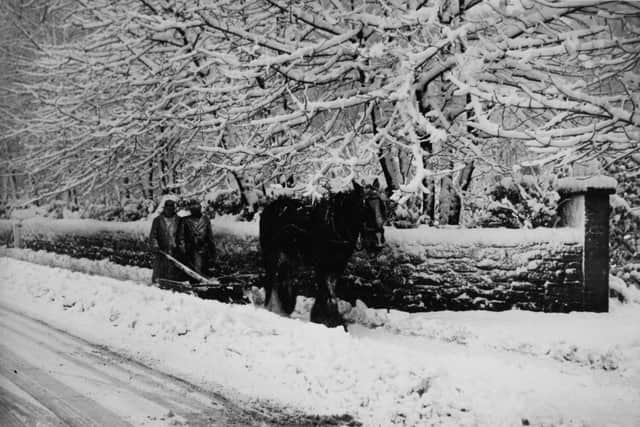
It is a reminder that place names did not need grand origins. Farming, animals and ordinary features of daily life could be enough to identify a settlement for centuries.
A name can provide a tantalising clue, but following the family itself usually means combining records, family trees and other evidence. A £19.90 MyHeritage DNA kit can add another line of enquiry by identifying DNA matches who may share branches of the same family.
9. Richmond
Richmond tells a different part of Yorkshire's story. The surname is associated with Richmond in North Yorkshire, but the place name itself was brought across after the Norman Conquest and derives from French elements meaning roughly "strong" or "mighty hill".
Yorkshire surnames therefore preserve Norman influences alongside their Anglo-Saxon and Scandinavian ones.
10. Halifax
Halifax is an uncommon but particularly intriguing Yorkshire-derived surname. Its origin is not completely settled, although the place name may combine Old English words referring to a nook or corner of land and an area of coarse grass.
The uncertainty is itself a useful reminder that names surviving for a thousand years do not always surrender their secrets easily.
11. Birkby
Birkby has a fascinating West Yorkshire connection. The surname is linked to Birkby Hill at Thorner, with the medieval place name interpreted as an Old Norse term meaning something close to "farmstead of the Britons".
It hints at different cultural groups living alongside one another in Scandinavian-era Yorkshire.
12. Sykes
Sykes is a name with particularly strong Yorkshire associations. It developed from a northern word for a small stream, ditch or watercourse, itself derived from Old Norse.
An early bearer may simply have been the person who lived "by the syke". Over generations, the description became the surname.
13. Shaw
Shaw is especially associated with Yorkshire and Lancashire and originally referred to a small wood, grove or thicket. It could identify someone who lived beside such a feature or came from a place named after one.
For ancestors living in rural Yorkshire, a patch of woodland could be as useful an identifier as a street name is today.
14. Booth
Booth has a particularly appealing Pennine story. In Yorkshire and Lancashire, the word could refer to the temporary shelters or huts used on cattle farms, and the surname may have described someone who worked at or looked after one.
It is the sort of surname that can conjure up an ancestor's surroundings hundreds of years before photographs or detailed maps existed.
15. Beck
Anyone familiar with Yorkshire will recognise a beck as a stream. The surname Beck can likewise be topographic, describing somebody who lived beside a stream, with the word coming into northern English from Old Norse.
Watercourses were important landmarks, boundaries and sources of water, so it is easy to see how they became part of people's identities.
16. Brook
Brook has a similar story but a particularly interesting West Yorkshire connection. It can describe someone who lived beside a brook or on low, watery ground, and the name became especially established in parts of West Yorkshire.
The contrast between "brook" and "beck" also reveals something of the different layers of language that became embedded across the county.
17. Briggs
Briggs is strongly associated with West Yorkshire and comes from the northern word brigg, meaning bridge. An ancestor bearing the name may therefore have lived beside a bridge or come from a place identified by one.
The word itself ultimately has Scandinavian roots, another small piece of Yorkshire's Norse inheritance.
18. Garth
Garth remains instantly recognisable in northern place names. In Yorkshire it meant an enclosure, yard, paddock or piece of ground close to a house or farm, and the same word became the surname Garth.
For some families, the name may once have distinguished an ancestor simply by the patch of enclosed land beside which they lived.
Another branch of your family may tell a completely different story. MyHeritage's DNA kit is currently £19.90, which could make it a Christmas present with more to discuss than most gifts once the results arrive.
19. Dale
It would be difficult to find a more Yorkshire-sounding landscape surname than Dale. The word means valley and became particularly characteristic of northern England, where its use was reinforced by the Old Norse dalr.
A family called Dale may have taken its name from living in a valley or from one of numerous places named using the word.
20. Rigg
Rigg originally referred to a ridge and survives in northern English place names as well as the surname. Its linguistic roots lie in the Old Norse hryggr, and the word was long used in Yorkshire for strips and ridges of land.
It is another surname that may effectively describe the shape of the ground on which an ancestor lived.
21. Gill
Gill, when pronounced with a hard "g", can have a northern landscape meaning. It derives from a word for a deep glen or ravine, particularly associated with areas of northern England affected by Norwegian Viking settlement.
Anyone who has walked through the Yorkshire Dales will recognise how naturally such a landscape feature could become a local name.
22. Thwaites
Thwaites has an especially strong Yorkshire pedigree. The name derives from Old Norse thveit, referring to a meadow, paddock or clearing, and places bearing the name can still be found around the county.
The same element survives in numerous northern place names, making it another linguistic footprint left by Scandinavian settlers.
23. Croft
Croft could describe somebody who lived beside a small cultivated enclosure, usually close to a house. It can also be a habitational surname from several English places called Croft, including one in North Yorkshire.
For many medieval families, such a modest piece of land would have been central to everyday life.
24. Holme or Holmes
Holme is another name shaped by water. In Yorkshire the word was used for low-lying land beside a river or stream, sometimes liable to flooding, and it appears widely in local place names.
Holme, Holm and Holmes can have related origins, although individual family lines need to be researched rather than assumed from the modern spelling alone.
25. Cockcroft
Cockcroft is a particularly Yorkshire name to finish with. It can derive from places including Cockcroft at Rishworth and Cock Croft at Bingley, with the name combining an old word for a rooster with croft, meaning a paddock or smallholding.
A surname that looks unremarkable today could therefore preserve the name of a tiny piece of West Yorkshire countryside used hundreds of years ago.
What can a surname really tell you about your family?
Surnames are signposts rather than proof. Two people with the same name need not share the same ancestry, and a family called Whitby, Dale or Sykes today may have travelled through several counties and countries since the name first appeared.
That is where genealogy becomes more interesting. Census returns, parish registers, birth and marriage records and old addresses can gradually turn a surname into a real family story, while DNA matching can sometimes uncover relatives and branches that the surviving paperwork does not reveal.
With MyHeritage DNA kits currently available for £19.90, the search for those connections can also make an unusual Christmas gift for somebody who has always wondered where their family came from.
And even when the trail leads somewhere unexpected, a Yorkshire surname can still be a remarkable survivor. Words once used for a stream, ridge, wood, farmstead or tiny medieval settlement are still being spoken every day, centuries after the landscape first gave someone their name.