
Bempton Cliffs RSPB reserve: This stunning Yorkshire cliff face makes a perfect day out for winter
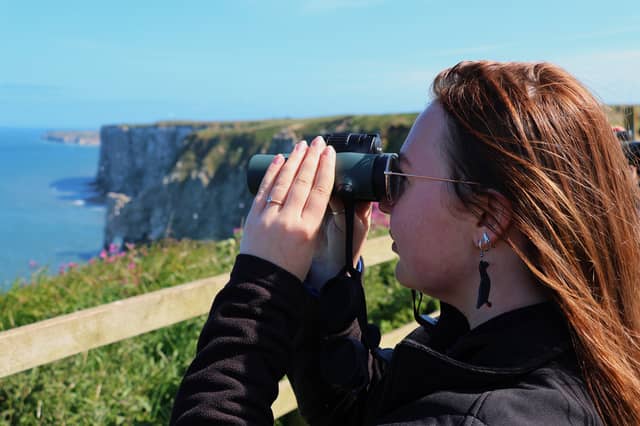

This spectacular section of Yorkshire’s East Coast still remains undiscovered by many – and yet it provides wonder all year round, is home to the UKs largest seabird colony including Puffins, and is perfect for blowing away the cobwebs on a winter’s day
Poppy Rummery, has arguably one of the best ‘offices’ in the UK – the spectacular chalk-faced Bempton Cliffs, complete with a café stocking locally-produced cakes and treats for the perfect tea-break.
As a lifelong bird and nature lover, there is no wonder she says being visitor experience manager for the RSPB reserve at Bempton, is her ideal job. And the fact she gets to watch puffins – the ‘clowns of the sea’, and one of the UK’s most popular birds – return to the cliffs and rear their young every year, is surely the icing on the cake.
“I honestly cannot imagine doing anything else,” says Poppy, who has enjoyed seeing thousands of visitors discover its delights during her six years here.
“I still think it’s a bit of a hidden gem,” she says. “A lot of people come and say they have not been before, and are so surprised. There are so many things that make it a special place and things that make it different in all seasons.”
For Poppy the constantly changing landscape, the dramatic seascapes and countryside make it a stunning spot. But it is the birds, in particular seabirds, which make RSPB Bempton Reserve a unique destination. Dolphins have been known to cruise past and out at sea distant storms can add extra drama to the scene.
Alongside the bright-beaked endearing (and endangered) Puffins, the reserve’s chalky cliffs make the perfect home for a host of seabirds from gannets to razorbills, fulmars to guillemots.

High-rise sea bird living
The cliffs are well placed on the headland to attract migrating birds, and the soft chalk cliffs provide ideal ledges, cracks and crevices for sheltered nesting places.
With different species all coming back here year on year to nest, feed, and rear their chicks, all choosing their favoured spot, the whole cliff faces becomes a luxury high-rise block of bird apartments.
Spring (April and May) is the prime time for birds returning to the colony, nesting, mating and rearing their young. It is then that visitors will see the birds at their most active, constantly flying backwards and forwards with food or nesting materials.
“Sometimes they will return en-masse and we try to keep an eye on the numbers,” says Poppy.
Full colony counts are taken every five years and there is a conservation science team at the reserve too. The expertise on the reserve helps offer birds the best accommodation and food – making it an attractive place to be and perfect for bringing up the chicks. Parts of the countryside are left deliberately unharvested to offer winter food for the likes of buntings and sparrows for example, whilst other parts are cleared to make the perfect hunting ground for owls and hawks.
But all times of year offer something different. Entry to the reserve costs nothing and the many knowledgeable and experienced staff and volunteers are on hand around the reserve to help you get the most from your visit.
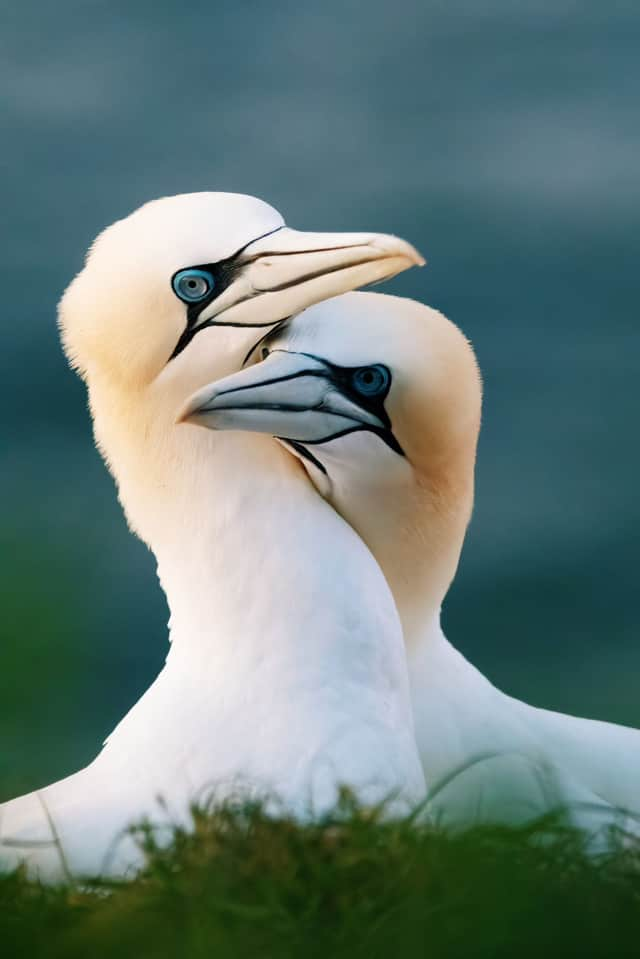
Poppy says gannets have already been spotted around the cliffs in January – these giants of the sea are at their most impressive when they dive into the water for for food. Plunging into the water at speeds of over 80mph (they are specially adapted to withstand the impact) and are sight to behold.
Smaller land-based birds like the chiff chaff, willow warblers and goldcrests can be found The rarest bird seen here was a white throated needle tail, which was a first for the reserve and only the 13th one spotted in the UK. A pale legged leaf warbler also caused quite a stir amongst the twitchers.
But you don’t have to be an ornithological expert to enjoy a visit here and spot some truly beautiful birds.
Tips for bird spotting
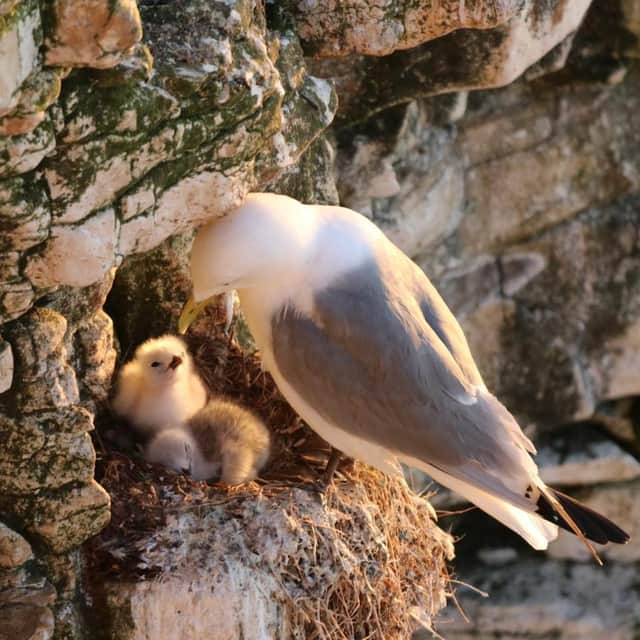
Poppy says look out for distinguishing features and colours, look at the shape and size of the beak and tail, take photographs –even a phone snap will help you identify it later. Seasonal signage or special events will help you know what to expect and what to look out for and the many expert staff and knowledgable volunteers are there to answer any questions and point you in the right direction too.
Poppy’s love of nature, and in particular birds, came from childhood, in particular trips out with her grandparents, who took her on trips to see birds across the UK.
She first became an RSPB volunteer in Lincolnshire and eventually came to Bempton, where her role involves helping people gain the most from their visit, organising events, liaising with volunteers and other staff as well as special responsibility for monitoring two species of gull on the reserves; the pretty kittiwakes and their bad-boy cousins, the Herring Gulls. These are the ones that will steal your chips as soon as look at you, but for Poppy they don’t really deserve their bullying reputation, they’re simply survivors, who have found a ready supply of food by moving inland.
“I’m always a big advocate for gulls,” she says, especially observing parent gulls trying to find their errant chicks, who like to go off exploring on the cliffs and are perfectly camouflaged.”
Discover for yourself
The reserve has clearly-signed footpaths leading you to safe viewpoints that overlook the impressive towering sheer cliffs rising 100m from the sea, from where you can watch waves pounding the base and keep a look out for wildlife in and out of the water.
And of course, you can end your exploration with a visit to the café and visitor centre where you’ll find ample delicious refreshments and a host of gifts. Every purchase helps to fund the work of the RSPB, ensuring this unique part of our Yorkshire landscape is protected and enhanced for future generations of birds and people.
Find out more and plan your visit here