
Managing flood risk: resilience in York’s independent business community

Haunting images of York under water, as mountain rescue teams and the military evacuated residents during the Boxing Day floods of 2015, remain etched in the city’s memory.
The clean-up cost ran into millions of pounds and prompted renewed scrutiny of the city’s flood defences.
For many independent traders, it meant lost stock, cancelled bookings and weeks of disrupted trade.
Flooding is not confined to York itself. Heavy rain falling miles upstream can swell York’s rivers and affect homes, pubs and shops days later, creating a ripple-effect across communities along the catchment.

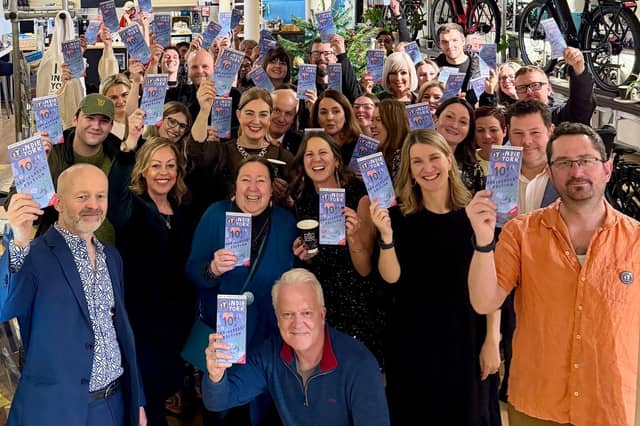
In the aftermath, York’s independent traders came together to fight a national narrative that the city was closed. What started as a handful of traders saying they were still open for business has evolved into Indie York, a not-for-profit traders’ association now representing around 300 members.
Today, as Indie York has just marked its tenth anniversary, 65 per cent of businesses in the city are still independently run. Many say they are more prepared and more pragmatic about flooding and wider economic pressures than they were a decade ago.
Charlotte Watson, chair of Indie York, said the city’s businesses refused to be defined by flooding.
She said: “You know in Yorkshire you don’t let the weather stop you, we carry on. We don’t ignore flooding, but we don’t draw attention to it.
“People say, 'what do you do when it floods'. We get on with it, there is no other way. Of course, some places, like the Nags Head pub, will be under water and won’t be able to open but it has been like this for years.”
However, without the 2015 floods, Indie York may never have come about, its community created and expertise shared.
Charlotte said the city’s independents have become more prepared for flooding in the last ten years. Some have installed pumps to remove water if they flood, others having sandbags on hand, some have gates over doors and entrances.
Preparedness has become part of daily business planning, with flood risk factored into stock decisions, insurance and event scheduling. These measures show how businesses live with the rivers every day, responding not just to rainfall in the city but to changing conditions across the wider catchment.
From a business and revenue aspect, independents are also mitigating the effect climate change and variable weather patterns can have on footfall and trade.
She explained: “There is an appetite for experiences. Even businesses who have a shop front and sell things, now offer workshops or other events to attract people into their business and the city centre.
“Everybody got used to booking during COVID, putting down a deposit, and because they don’t want to lose these, or hotel rooms or things like that, they still come.
“Take January for instance, it has rained every weekend. However, we have had the York Ice Trail and Colour and Light from York BID. If you had come to York on the weekend of the Ice Trail, it was the same level of people as it was at the Christmas market.”
York BID collaborates with local businesses on a programme of events and initiatives throughout the year to encourage visits to the city, helping maintain activity even in challenging periods. While these initiatives support the city, sustained resilience ultimately depends on how upstream landscapes are managed to reduce flood risk downstream.
As York’s independent businesses look ahead, attention is also turning to how flood risk can be reduced across the wider catchment, including the Ouse.
Ousewem is a government funded partnership exploring nature-based solutions (NbS) including natural flood management (NFM) to reduce flood risk across the wider catchment. It forms part of a broader set of measures helping to reduce the impact of flooding for communities and businesses downstream across York and North Yorkshire.
For many of York’s independents, resilience now means both practical measures on the ground and a growing awareness that the future of the city – and all downstream communities – depend on how the entire catchment is managed.
BLOGS:
READ MORE: