
Leeds United managing director Robbie Evans explains SCR position as rule-breaking possibility addressed

Leeds United are unsure if they have broken the Premier League's new spending rules in the summer transfer window, but know that even if they have, they will escape punishment.
And although they voted against the Squad Cost Ratio (SCR) regulations that replace the league's Profit and Sustainability Rules (PSR), managing director Robbie Evans thinks the new laws will suit Leeds better in the long run.
Under PSR, Premier League clubs were allowed to lose £105m over three years, although infrastructure projects such as the expansion of Elland Road were excluded to encourage long-term investment to create growth over short-term squad building. Exceeding that led to points deductions for Everton and Nottingham Forest in 2023-24.
They were two of many controversies, with the likes of Chelsea adept at exploiting loopholes, and unintended consequences as clubs found it more attractive to sell home-grown players than mercenaries.
Newcastle United, Leeds’ visitors for Monday’s Premier League game, are one of the clubs who have found PSR difficult.
This season the Premier League has fallen more into line with UEFA by adopting a version of their SCR rules. These tie how much clubs can pay in transfer fees, player wages, agents fees and the like to the money they generate, as opposed to what the new-money clubs have injected into them by billionaire owners.
The ratio for Premier League clubs is 85 per cent but crucially the nine English clubs in European competition need to meet UEFA's 70 per cent mark, allowing the rest to close the financial gap.
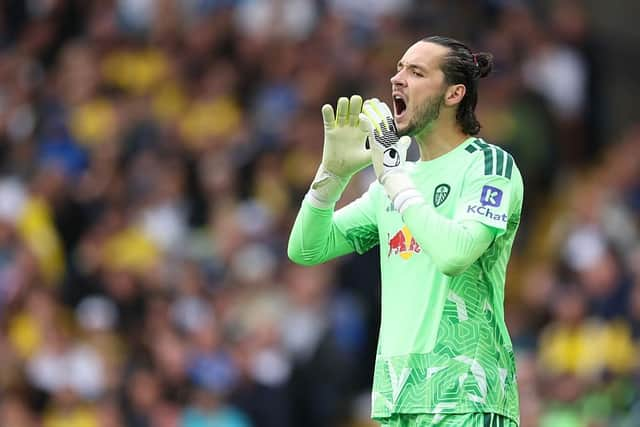
Leeds have tried to spend as much as they can in a window in which they set a new British record by paying £45m for a goalkeeper (James Trafford), as well as £34.1m on Tarik Muharemovic.

Before that, they – and Hull City – had to sell players so as not to overspend for the three-year period running up to the end of June 2026.
In Leeds' case, they sold Pascal Struijk to Brighton and Hove Albion.
"Our goal is to spend all we can under PSR or SCR, and I'm confident we've done that," commented Evans. "The way it works is complicated so you don't know how much you're over or under until the season's over based on placements, cup runs, partnership revenues, gameday sales, things like that, but I'm confident we are spending up to the limit. We did not leave any meat on the bone this summer.
"This year SCR is in a phase-in season, so there are no levies (for overspending) this season. Even if we end up over, there would not be a tax (fine), and we’d certainly be well short of a points deduction.

"In general we would rather run up to the line, and if we get a bit over, take a fine if we have to, than run too far below the line and leave ourselves with a gap in the squad.
"Even then, the rules are pretty complicated but allow for some (overspend), so if you are aspirational and plan to achieve certain revenue targets and you miss by a bit, it's not like PSR where it's instantly a points deduction. It would be a fine only.
"The structural goal is to have a soft landing if your club gets it wrong so they can be aspirational, which is certainly our intent.
"Whether it's revenue changing or it's your spending profile changing over the year, your actual SCR result won't be known until May or after.
"In PSR the profits from a (player) sale are booked all at once. Under SCR, they spread it out over multiple years (three). So you can't just sell a player for £20m, book £15m to profit, and then clear your books.
"January will still affect SCR based on your buying and selling but it's probably less volatile than PSR would have been as far as how those transactions affect your books."
As well as seven new signings, Leeds put key players Ethan Ampadu, Joe Rodon, Jayden Bogle and Brenden Aaronson on new contracts, something Evans also believes SCR will encourage.
"I think continuity has been one of our biggest strengths across the entire project, whether it's the staff or it's the players," he said. "Keeping the guys who are delivering for us in the building has been really critical. It also keeps that dressing room continuity and positive spirit going.
"The move from PSR to SCR will encourage keeping your current players, instead of being a constant churn of trading.
Despite Leeds voting against the change coming in this season, Evans believes the long-term benefits outweigh the negatives.
"I think SCR is good for Leeds long-term," he said. "I know there's been some curiosity around why we voted against SCR last season.
"This year in particular I would rather have had PSR because we were coming out of a three-year window including a very tough first year in the Championship. That was going to roll off our three-year window this year and could have given us a lot of freedom this summer.
"The move to SCR robbed us of that opportunity so I was hoping for more of a phase-in year where you could pick PSR or SCR, or perhaps we delay SCR by a year.
"But long-term, SCR is probably better for Leeds, because the teams that tend to benefit are teams that have a large fanbase, strong commercial revenues, that kind of thing."