
'Overview': Rotherham United head of football Steve McClaren on why it's a question of timing

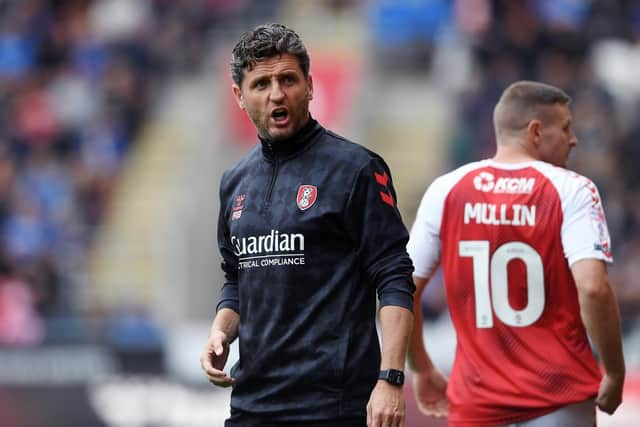
WHEN Rotherham United head coach Alex Bruce samples tough days at the office, the experience of Steve McClaren should really start to come into its own.
Bruce endured such an occasion at Exeter City on Saturday.
The Millers boss was very disappointed with his side's efforts in the second half at St James Park, calling the performance 'unacceptable' as the visitors suffered a tepid 1-0 League Two reverse.
Now 65, head of football McClaren can vouch for the position Bruce found himself in at the weekend. He also experienced such moments early on in his coaching career.
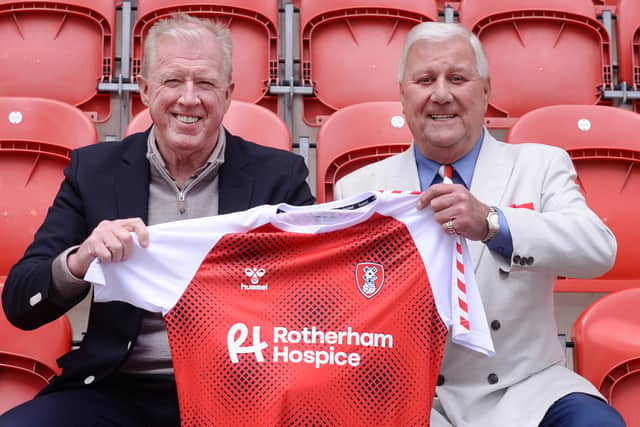

As far as McClaren is concerned, the trick is not over-reacting, despite the obvious flat feeling that occasions like Saturday can generate.
York-born McClaren emphasizes the benefit of sensible analysis and providing perspective over time and not being reactive.
That is particularly important given that Bruce is in his first foray as a 'number one' at EFL level, while the Millers are effectively a new group of players still getting to know each other. Bumps in the road do - and will—occur.
After events in Devon, Bruce was keen for a response in Tuesday’s EFL Trophy group game against Bradford City.
The Millers, whose defeat in Exeter was their first loss in five matches in all competitions, return to action on the league front at home to Gillingham this weekend.
McClaren said: "He (Bruce) is very good because not many of us as coaches would be able to have someone like me next to them or in my position.
"I've had it and relationships can get fraught, so I've kind of tried to - and he's been very good in that respect - not be too busy so I'm just feeding in (observations) at the right time.
"I'm always watching training and we have the meetings and my job now is to review and say to the coaching team: 'This is what you're doing well, this is what you're not doing well, this is what you need to improve on, and this is what you probably need to introduce'.
"So, kind of my job is to overview, give him perspective and we'll keep that going over five-game periods to feed back and hopefully not get in that position where it's very easy to (react) when you lose games.
"My job is to give perspective and (say): 'okay, what's the solution to this problem that we've got with the team?'"