
Shay Stadium, Halifax: Date set for decision over controversial sale of Yorkshire sports stadium
Questions over finances, consultation, alternative approaches and impact of selling a major sports stadium were posed to senior councillors at an emotionally charged council meeting over the future of Shay Stadium.
Calderdale Council’s Cabinet will decide whether or not to sell the stadium – home to professional clubs, football’s FC Halifax Town and rugby league’s Halifax Panthers – to Huddersfield Giants rugby league club owner Ken Davy at its November 3 meeting, according to the council’s “key decisions” list.
Councillors agreed to dispose of the Shay in 2024 amid ongoing battles to balance the council’s books including budget pressures, such as funding statutory adults’ and children’s social care, rising year-on-year.
Ten months’ negotiation with the two clubs had not made progress when Mr Davy, who wants to base his club there while a purpose-built stadium is developed for them in Kirklees, made his approach late last year, Cabinet members heard this spring.
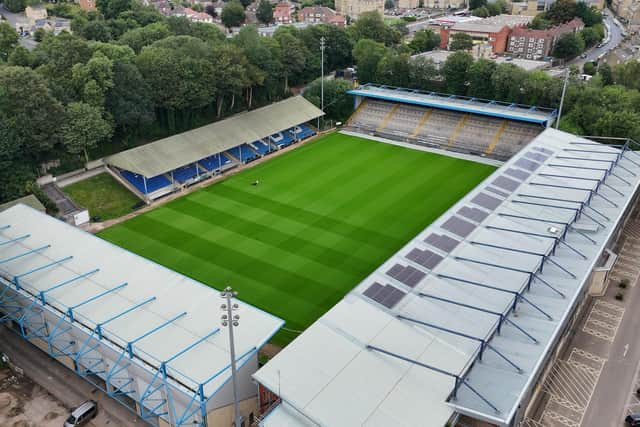

This would entail selling Mr Davy The Shay for a nominal sum – in return for ground upgrades, renting to the two Halifax sports clubs and with a covenant that when he left sports use will be ensured.
Alternative proposals to run the stadium – which is registered as an Asset of Community Value – as a community partnership on a not-for-profit basis were submitted this summer but later withdrawn.
Some raised questions about process, finances and impact about the controversial sale.
Conservative group leader Coun Howard Blagbrough urged a rethink: “Given the serious concerns raised by residents over inadequate consultation, delayed equality impact assessments, inconsistent financial reporting and lack of transparency surrounding the proposed disposal of The Shay Stadium, will the Cabinet please review this decision?”
Cabinet member for Public Services and Communities, Coun Danielle Durrans, responded to questions posed.
She answered Coun Blagbrough: “We are satisfied the council has acted properly, correctly and fairly in its plans for disposal of The Shay.
“We have acted in accordance with our standard approach to the disposal of the property.
“Both the proposal by the Shay Stadium Working Group and that submitted by Mr Davy were deemed commercially confidential, which is usual in such circumstances,” said Coun Durrans, adding the budget decision was approved by the full council.
Gavin Butler said the council appeared to be transferring the Shay for only a nominal sum, although detail remained unclear, handing over a stadium which had just had £800,000 invested in it with tenants already contributing around £240,000 a year in rent and an additional notional value of around £170,000 for the council’s use of office space.
He asked: “Can Cabinet please explain how this represents value for money for Council Tax payers and what, specifically, the public is getting in return?”
Coun Durrans said liabilities associated with The Shay were deemed to outweigh its commercial value in its current operation as a sports stadium.
“An independent valuation has been obtained, and a further valuation will be produced once final terms are agreed, to meet our requirements to achieve best consideration as part of the Local Government Act,” she said.
Coun Durrans said recent investment in the pitch, including a Football Foundation grant, was welcome but “only one area of investment that is needed to ensure the stadium continues to operate safely, meets sports governing body requirements and provide modern attractive facilities.”
Disposal savings would “be significantly higher than budgeted,” she said, adding council use-of-offices sums had been considered.
Malcolm Walker wanted to know: “What were the underlying reasons for Calderdale Council prioritising disposal of the Shay over alternative approaches such as investing in operational improvements, implementing efficiency measures or exploring a community-led management or ownership model?”
He added: “Were financial, strategic or political considerations the primary drivers of this decision, and to what extent were potential benefits of non-disposal options evaluated?”
Coun Durrans said The Shay was “a significant liability” for the council, Cabinet briefing papers had set out the rationale for disposal.
Although a budget saving of £161,000 a year was tabled, it was anticipated savings, based on current expenditure, would be “much greater.”
“A subsidy of between £350,000 and £500,000 is made each year in order to ensure the stadium meets strict health and safety requirements,” she said.
Both clubs were asked if they were interested in taking over operating the stadium, including liabilities, either in partnership or separately, said Coun Durrans.
“They did not wish to do so,” she said.
Referencing a 2019 report, Sam Barnes asked: “Why did the council take no action to implement the recommendation to develop parts of the Shay estate in order to make the stadium financially self-sufficient?”
Coun Durrans replied scrutiny councillors had noted this report and asked for an update a year on, but due to the Covid-19 pandemic no further report was submitted until Budget proposals for 2024-25.
Richard Walsh and Christopher Wilde both raised concerns about whether assessments had been carried out correctly.
Mr Walsh said councils had a duty to consider the impact of decisions on existing users under the Local Government Act 1972 and be guided by the Gunning Principles on public consultation and asked what assessment had been made of the risk of displacement and how these might be mitigated.
Mr Wilde claimed the Equality Impact Assessment for the stadium disposal had been released in “incomplete form” and asked how Cabinet justified making a major decision without publishing “a full and transparent assessment.”
Responding to Mr Walsh, Coun Durrans said Cabinet had agreed a restrictive covenant – that The Shay must be used as a sporting stadium – would be included as part of any disposal.
To Mr Wilde, she replied Equality Impact Assessments had been carried out and “it was not considered the proposed disposal had any relevance to equality in terms of eliminating unlawful discrimination, victimisation and harassment, advancing equality of opportunity or fostering good community relations.”