
A competition in transition: what Super League's first 10 rounds tell us

Speak to most Super League coaches and they will say it is only worth assessing the table after 10 rounds.
The logic is sound: by then, squads have usually been stretched enough by injuries, suspensions and the relentlessness of the fixture list for their true strengths and shortcomings to be laid bare.
And with a third of the 2026 campaign now gone, Super League's opening 10 rounds have already revealed plenty about where clubs are heading.
Here, The Yorkshire Post takes a look at what we have learned so far.
Super League splitting into two tiers
There is always a natural split in any competition but that divide is becoming more visible in Super League following the addition of two teams.
The top six – from leaders Leeds Rhinos to Wakefield Trinity in sixth – are separated by only four points.
With one good or bad weekend enough to reshuffle the picture, it is shaping up as an intriguing battle for play-off places and the League Leaders' Shield.
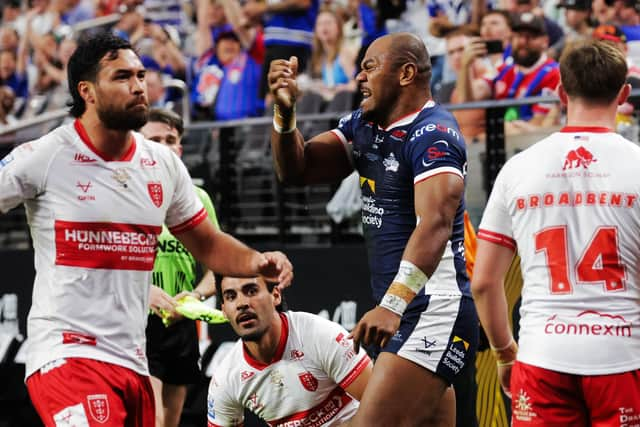

The challenge for the chasing pack is to avoid drifting into the group already planning for 2027.
Hull FC, who are waiting for Steve McNamara to take over at the end of the year, are the clearest example after going down at home to Toulouse Olympique on Sunday.
Leigh Leopards appear to be the biggest threat to the current top six, leaving others at risk of being cut adrift long before the business end.
For York Knights, Bradford Bulls, Castleford Tigers, Huddersfield Giants and Toulouse, the damage may already be done.
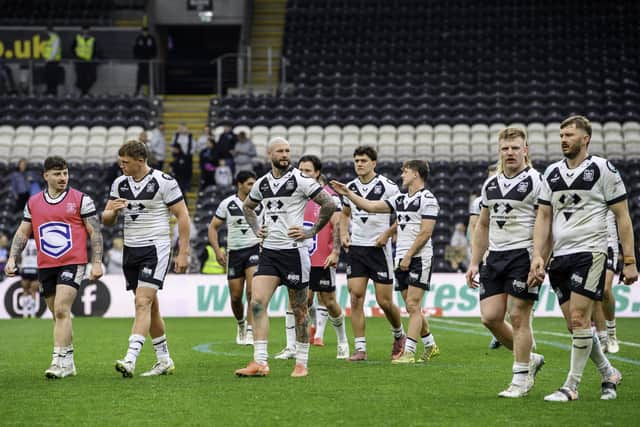
Balance of power shifting
A Leeds-St Helens top two is a throwback to the late 2000s when the rivals dominated the competition. They met in three consecutive Grand Finals and made it four in five years after the Rhinos reached Old Trafford from fifth place.
While nothing is decided in May, there is a sense that they could be on course to prevent another monopoly from forming.
Hull KR and Wigan Warriors met in the previous two Grand Finals but this year they face greater competition at the summit, led by Leeds and Saints.
That being said, Rovers have hit their stride following a slow start and remain the team to beat. They have scored 268 points in a run of six straight wins, conceding just 44.
Wigan appear to be the most vulnerable of the two despite snapping a four-game losing streak against the injury-ravaged Bulls over the weekend.
Bevan French will return to boost their chances but questions remain over their ability to cope without their key playmaker.
Upcoming fixtures against Leeds and Hull KR should offer a clearer indication of whether their recent wobble was a temporary blip or the end of an era.
Curious case of the 14-team competition
Before Toulouse's win at Hull, the evidence was beginning to mount that the move to 14 teams had come too soon for Super League.
The same concerns remain: the player pool is not deep enough and blowout scores may become more frequent as the season progresses.
For all the solid work done in a short space of time – and on reduced central funding in the cases of York and Toulouse – the squads built by the promoted clubs were always going to struggle with the demands of Super League.
And yet they have each, Bradford included, won three of their 10 games, injecting life into a competition that had become stale in the loop fixtures era.
All three clubs have shown their value to Super League at various stages and in different ways.
Indeed, Huddersfield have struggled more than anybody despite being an established top-flight club.
So while the concerns are valid, the picture after 10 rounds is far less straightforward than many expected.
Speeding up and slowing down
After watching Leeds beat Wakefield over the course of two hours and 11 minutes, Brad Arthur dubbed it the "longest game in history".
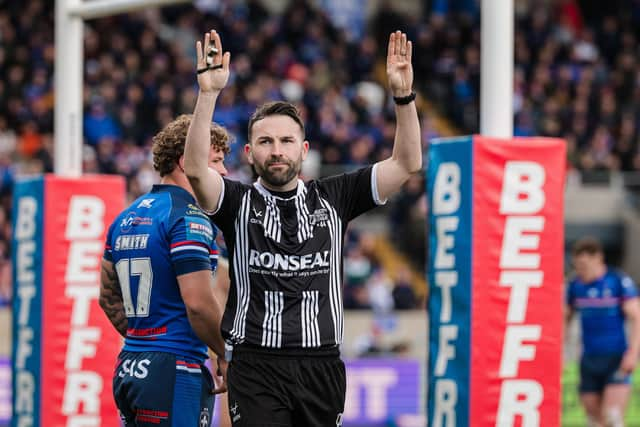
His frustration was shared by anyone who sat through the interminable video referee deliberations, which got in the way of an otherwise entertaining West Yorkshire derby.
The system for reviewing tries has improved, leaving the Captain's Challenge as the biggest momentum killer.
A short delay is inevitable when a decision is questioned but it isn't working in its current form.
Short of consigning it to the history books, a time limit should be imposed.
The introduction of quicker ruck interpretations was designed to speed the game up and increase ball-in-play time.
The irony is that in trying to create a faster game, Super League has arguably made interruptions more disruptive than ever.
Game at a crossroads
While Super League's opening 10 rounds have focused on what is happening on the field, the most significant conversation in the background remains off it – the talk of a long-term partnership with the NRL.
The argument that the competition needs external investment to realise its full commercial potential refuses to go away.
Attendances and engagement may be on the rise but the true measure of success will lie in the value of the next broadcast deal at the end of the year.
Between that and the NRL talks, it is a pivotal period for Super League.