
From 'Poms can't play' and £29,000 in a briefcase to tour success: How 1996 Great Britain Lionesses made history

To fully appreciate an achievement that earned the 1996 Great Britain Lionesses a place in the Rugby League Hall of Fame, one must go right back to the start.
Women's rugby league was not recognised or supported by the RFL back then, meaning the players had to self-fund a first-ever tour of Australia.
Nikki Carter, who played herself for Hull Vixens, accepted the role of tour manager just 10 weeks before the trip.
There were no flights or hotels booked and the Lionesses had no kit to play in.
After being told it was too late to open a bank account, Carter had to carry the money in a briefcase that was strapped to her wrist once arrangements had been made.
What followed is the stuff of legend with Great Britain coming from behind to win the series against Australia – but it would not have been possible without Carter's cash-handling skills.
"It seems a bit odd now because I could go to the bank and stick the money in the current account and use the card abroad but it wasn't like that in 1996," said Carter, who initially juggled the role with her day job in a care home as well as being a mother of two.
"One of the girls was a bank manager but she said there was nothing we could sort in that timeframe.


"I had to sort everything for the tour with a guy from Australia and it was all by pigeon post or over the phone.
"I had to pay for everything when we got there because we couldn't do bank transfers like you can now. I literally had to take the money with me. I had £29,000 in a briefcase, a mixture of cash and travellers' cheques.
"It was attached to me and never left my side. If I went to the toilet, it went with me.
"When I went to book 32 flights from Canberra to Brisbane, I opened the briefcase and said, 'Would you like cash or travellers' cheques?!'
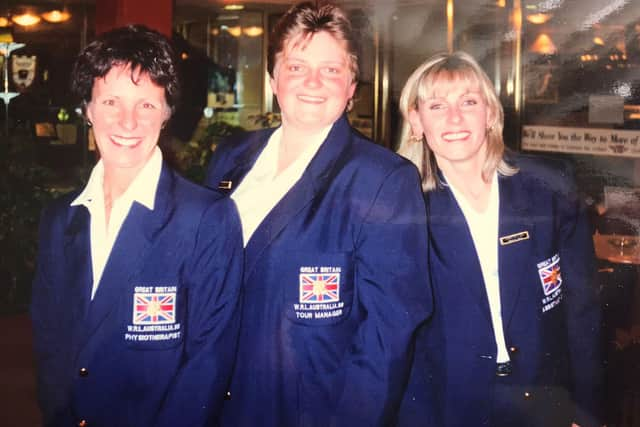
"It was quite stressful and a lot of pressure. It was scary to have that amount of money and know if I lose the case, the tour is over."
The Lionesses overcame every obstacle to win six of their seven games Down Under, including the second and third Test matches.
The tourists did not waste any time in gaining the respect of the locals.
At the end of a week that began with her induction into the Hall of Fame both as an individual and part of the first team to be recognised, key player Michelle Land said: "We played a couple of regional games before the Tests.
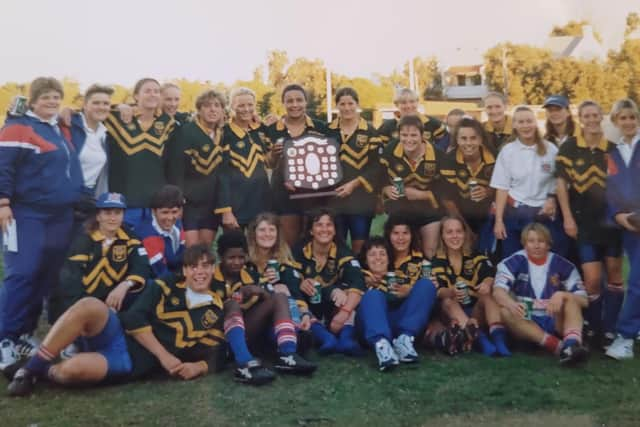
"I can remember walking out for the first game and hearing a guy say, 'You Poms can't play'.
"At the end of that game, they clapped us off. That was an amazing feeling from them writing us off. They knew we could play then."
From being told she was not allowed to play at school, Land found herself sharing the same stage as legendary figures such as Jamie Peacock and Paul Sculthorpe at the Hall of Fame dinner on Tuesday.
Of the 32 people who went on the tour, only two missed the event to highlight the unbreakable bond created in Australia.
"Everybody worked and loads of the girls had families so it was a proper commitment and you saw that in each other," said Land, who captained Wakefield Panthers at club level.
"Every time we turned up to training, we were all asking each other if we'd nearly got the money. If you didn't get your money, you thought you weren't going to go.
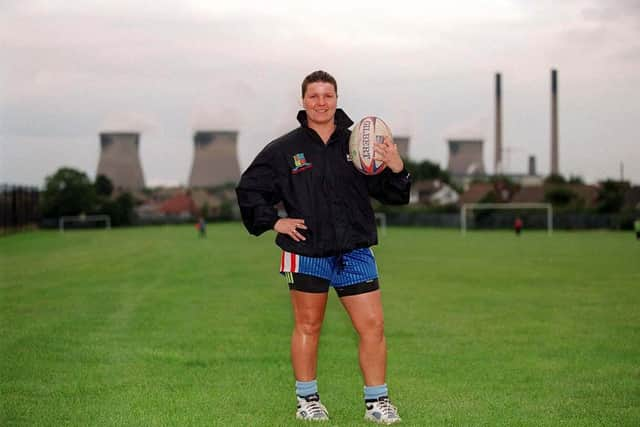
"It was a really big responsibility to get the money to even get out there. We had a lot of pressure on us but a lot of determination and commitment as well.
"For it to come together how it did was a massive achievement. To go out there and pick the Aussies' pockets is something we'll never forget.
"And now to get the same recognition as the likes of Jamie Peacock and Paul Sculthorpe, it's a massive honour."
This week has been a trip down memory lane for each member of the touring party.
In Carter's case, it has been a reminder of the lengths the Lionesses went to for a series win that remains the most recent in a senior Ashes series against Australia.
"They treated us like queens out in Australia but the RFL didn't support it and BARLA didn't support it so everything had to be raised by us," she said.
"The girls got a target of £1,000 each but that was a team effort with some players giving more. Even a week out from going, we didn't have enough money.
"The camaraderie of that team is really hard to describe. Everyone really pulled together to make the tour possible and it showed in the performances.
"Men's teams can't go and win in Australia – that's the reality. It was a huge, huge undertaking to go but to actually win on their soil is something very, very few Great Britain teams can do in any sport.
"The fact our team is the first to be recognised in the Hall of Fame before the 1972 men's World Cup winners reflects the size of the achievement."