
Gig review: Robert Plant and Saving Grace at York Barbican
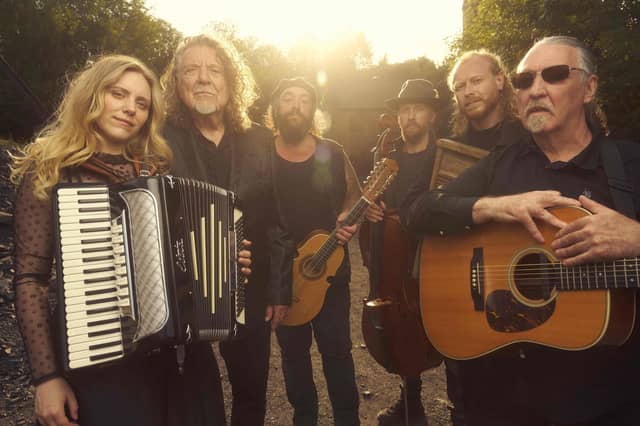

The music legend gives others an object lesson in how to age gracefully with his creativity undimmed.
At one point during tonight’s consistently inspired, musically adventurous 90-minute performance, Robert Plant stops to contemplate his good fortune.
“I could have ended up supporting a Whitesnake cover band,” the singer – an entertaining and good-humouredly self-deprecating host tonight – quips before gesturing towards his five Saving Grace bandmates, “but I’m doing this instead. I thank all the gods.”
The one-off 2007 Led Zeppelin reunion ventured close to the lucrative stadium-slaying nostalgia that seems like a no-brainer final act for a bona fide rock god of Plant’s vintage and stature. However, Plant has spent the subsequent years indulging his less riff-and-strut orientated musical preoccupations (the loping drones of desert blues, psychedelically tinged folk-rock, arcane forms of US roots music, far-flung aspects of global sounds, spotlight-sharing duet albums with American bluegrass star Alison Krauss) with impressively vibrant results.
As evidenced by their recently released self-titled album (Plant’s first with the Shropshire-based five-piece, although the combination has been gigging since 2019), Saving Grace allow Plant to blend all these disparate musical reference points into a richly expressive, beautifully nuanced and – when needed – potently dynamic sound.
Tonight, the band shift effortlessly from a haunting, minimalist rendition of Blind Wille Johnson’s gospel-blues testimonial Soul of a Man (originally recorded in 1929, “just a few months before my first solo album,” according to Plant) to the rhythmically complex stomp of Four Sticks, one of the four Led Zeppelin tunes aired tonight.
A lot of the credit for Saving Grace’s flexibility belong to multi-instrumentalist Matt Worley (who appears to be travelling with every conceivable string instrument, from banjo to Latin American guitar cuatro), seemingly limitlessly versatile guitarist Tony Kelsey and drummer Oli Jefferson, who embarks on refreshingly counterintuitive rhythmic strategies around his vintage 1930s drum kit.
Whether the duo is exchanging lines or engaged in seamless harmonies, Plant’s seemingly intuitive vocal union with singer Suzi Dian is the real star of the show, however. Plant’s willingness to concede the spotlight to allow Dian to deliver a shiver-inducingly plaintive take on Gillian Welch’s Orphan Girl and pump up the intensity of murky Neil Young deep cut For The Turnstiles (possibly the only Young cover to feature a prominent cello solo, courtesy of Barney Morse-Brown) when the needs of the song or plain old musical comradeship call for it says a lot of the egoless spirit of collaborative exploration that has allowed Plant to stay vital by regenerating musically whenever stale predictability has beckoned.
At one point, Plant swears he’s not coming down the chimney with a bag on his back, but the age-defyingly agile wail Plant unleashes during the chorus of an otherwise affectingly languid take on Ramble On must seem like an unexpected Christmas treat for the undoubtedly numerous hardcore Led Zeppelin fans amongst tonight’s deeply appreciative sold-out crowd.
A slow-burning, genuinely moving and beautifully sung torch song rendition of The Rain Song (with Dian on accordion) masterfully delivers the polar opposite of cosy nostalgia by effectively reinventing one of Plant’s finest co-writes with Jimmy Page.
Even that pales next to the fiercely charged rendition of Low’s Everybody’s Song that closes the set. As Plant and Dian’s seemingly endlessly sustained final wail finally gives way to a richly deserved standing ovation, a thought emerges: on this form, Plant could conceivably launch a course for fellow music legends who are stuck on a cycle on milking the final embers of vintage past glories on how to age gracefully with their creativity intact.