
Guy Fawkes: The story behind Yorkshire man involved in the failed Gunpowder Plot of 1605 and its connection to Bonfire Night

Guy Fawkes is known for his involvement in the failed Gunpowder Plot of 1605 - here is his background and connection with Bonfire Night.
While fighting for the Spanish, Guy Fawkes joined a group of English Catholics involved in the failed Gunpowder Plot in 1605.
Guy converted to Catholicism and left for mainland Europe, where he fought for Catholic Spain in the Eighty Years’ War against Protestant Dutch reformers in the Low Countries.
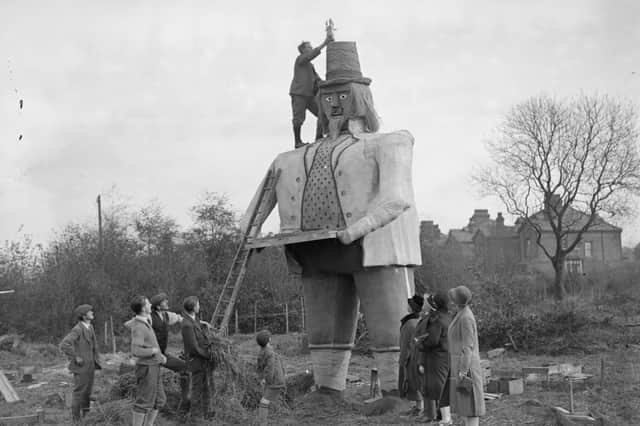
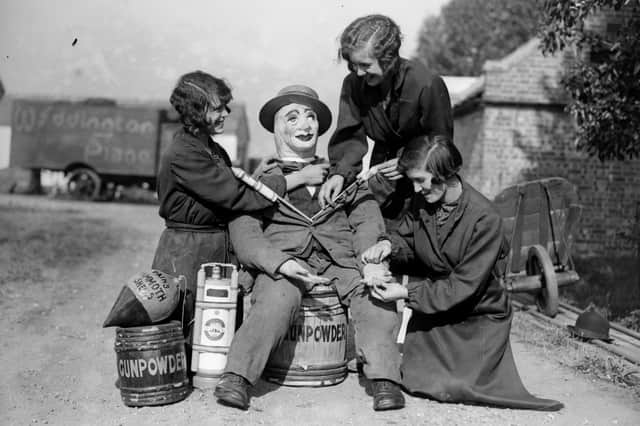
He became linked with the Gunpowder Plot, which has been commemorated in the UK as Guy Fawkes Night since November 5, 1605, when his effigy is traditionally burned on a bonfire.
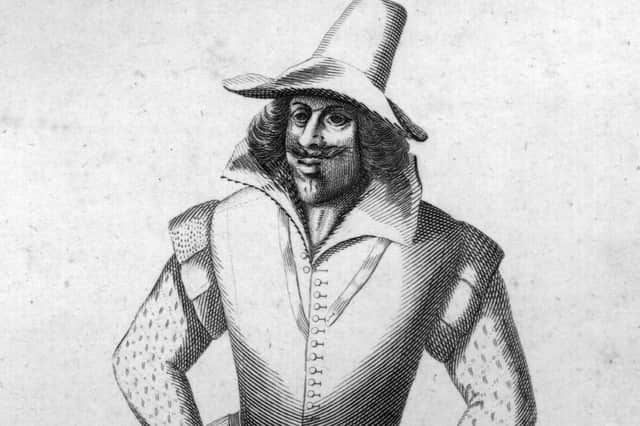

Childhood of Guy Fawkes
Guy was born in 1570 in Stonegate, York, and was the second of four children born to Edward Fawkes, a proctor and a supporter of the consistory court at York, and his wife, Edith.
Guy’s parents were regular communicants of the Church of England, as were his paternal grandparents; his grandmother, Ellen Harrington, was the daughter of a prominent merchant, who served as Lord Mayor of York in 1536.
His mother’s side of the family were Catholic loyalists, and his cousin, Richard Cowling, became a Jesuit priest.
While Guy’s birth date is unknown, he was baptised in the church of St Michael le Belfrey, York, on April 16.
In 1579, when he was eight years old, his father died and his mother remarried several years later, to the Catholic Dionis Baynbrigge of Scotton, Harrogate.
Guy attended St Peter’s School in York, according to the 1915 book The Pulleynes of Yorkshire by author Catherine Pullein, she suggested that Guy’s Catholic education came from his grandmother’s relatives, who were known for harbouring priests, one of whom later accompanied him to Flanders in 1592-93.
Guy’s fellow students included John Wright and his brother Christopher who were later involved in the Gunpowder Plot along with Fawkes.
Following his school years, he entered the service of Anthony Browne, 1st Viscount Montagu, who disliked Guy and after a short time dismissed him; he was then employed by Anthony-Maria Browne, 2nd Viscount Montagu, who succeeded his grandfather when he was 18 years old.
Guy Fawkes’ time in the military
Clifton estate in York was sold by Guy in October 1591, who inherited it from his father, and he travelled to the continent to fight in the Eighty Years’ War for Catholic Spain against the new Dutch Republic and, from 1595 until the Peace of Vervins in 1598, France.
England and Spain were at war, despite the former not being engaged in land operations against the latter at the time.
The attempted invasion of England, led by the Spanish Armada in 1588, was only five years in the past.
Guy joined Sir William Stanley, an English Catholic and veteran commander in his mid-40s who had raised an army in Ireland to fight in Leicester’s expedition to the Netherlands.
Elizabeth I highly regarded William, but following his surrender of Deventer to the Spanish in 1587 he, and most of his troops, had switched sides to fight for Spain.
Guy became a junior officer, fought successfully at the siege of Calais in 1596, and by 1603 had been recommended for a captaincy.
That same year, he travelled to Spain to find support for a Catholic rebellion in England and used the situation to adopt the Italian version of his name, Guido.
While he was treated politely, the court of Philip III refused to offer him any support.
The Gunpowder Plot
Guy became involved with a small group of English Catholics in 1604, that were led by Robert Catesby, who planned to assassinate the Protestant King James and replace him with his daughter, who was third in line to the throne, Princess Elizabeth.
Oswald Tesimond described Guy as “a man highly skilled in matters of war”, and it was his combination of piety and professionalism that drew his fellow conspirators.
During the first meeting of the five main conspirators on Sunday, May 20, 1604, at an inn called the Duck and Drake, in the Strand district of London, they discussed plans to kill the king and his government by blowing up “the Parliament House with gunpowder”.
It was initially proposed by Catesby with Thomas Wintour and John Wright, although Wintour objected to the plan initially, and was convinced by Catesby to travel to the continent to find help.
He met with the Constable of Castile, the banished Welsh spy Hugh Owen, and Sir William Stanley, who said that Catesby didn’t receive any support from Spain.
It was Hugh who introduced Wintour to Guy Fawkes, who had by then been away from England for many years.
It is thought that by December 1604, the conspirators were tunnelling their way from their rented house to the House of Lords.
They stopped in their tracks when, during tunnelling, they heard a noise from above and Guy was sent out to find out who it was. When he returned, he warned that the tenant’s widow was clearing out a nearby undercroft, directly beneath the House of Lords.
The plotters bought the lease to the room, which was also owned by John Whynniard; it was unused, dirty and was considered an ideal hiding place for the gunpowder the plotters planned to store.
According to Guy, 20 barrels of gunpowder were brought in initially, followed by 16 more on July 20. However, eight days later, the ongoing threat of the plague delayed the opening of Parliament until Tuesday, November 5.
After some time overseas, Guy returned to London by late August 1605 and he and Wintour had discovered that the gunpowder stored in the undercroft had decayed.
More gunpowder was brought into the room, along with firewood to hide it. Guy’s last role was to light the fuse and escape across the Thames, while a revolt in the Midlands would distract as they captured Princess Elizabeth.
On the evening of October 26, Lord Monteagle was handed an anonymous letter warning him to stay away.
Finding out about the letter did not deter the conspirators from their plans, as it appeared that it “was clearly thought to be a hoax”.
Monteagle’s suspicions had been aroused and the letter was shown to King James, who ordered Sir Thomas Knyvet to conduct an investigation underneath Parliament, which took place in the early hours of November 5.
Guy was found leaving the cellar soon after midnight and he was arrested. After being tortured in prison, he admitted their plan and expressed regret at his failure to blow up the House of Lords.
Trial and execution of Guy Fawkes
The trial of eight of the plotters began on Monday, January 1606 and Guy shared the barge from the Tower to Westminster Hall with seven of his co-conspirators.
Guy pleaded not guilty despite his admission of guilt from when he was captured and the jury found all the defendants guilty, and the Lord Chief Justice Sir John Popham pronounced them guilty of high treason.
On January 31, 1606, Guy and three other conspirators - Thomas Wintour, Ambrose Rookwood and Robert Keyes - were dragged from the Tower on wattled hurdles to the Old Palace Yard at Westminster. They were hanged and quartered
Guy was the last person to stand on the scaffold; he asked for forgiveness and began climbing too high so the rope was incorrectly set up, he managed to avoid being hanged as he broke his neck. His lifeless body was quartered.
Guy Fawkes’ connection to Bonfire Night
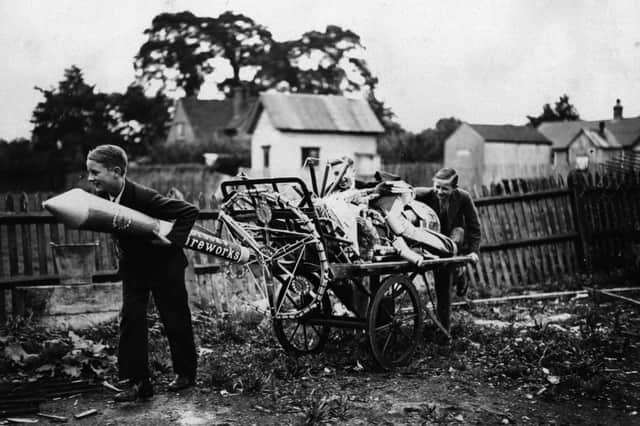
On November 5, 1605, Londoners were encouraged to celebrate the king’s escape by lighting bonfires.
The Observance of 5th November Act 1605 is designated every November 5.