
FIFA World Cup 2026 and Hidden Treasures of the National Trust - TV highlights

Here are some of the TV highlights coming up from tomorrow, Saturday, June 6, including the FIFA World Cup 2026 opening matches and Hidden Treasures of the National Trust.
The 1966 World Cup Final – In Colour (Saturday 06/06/26, Channel 4, 4.45pm)
Words by Sarah Morgan
Sixty years of hurt… Frank Skinner and David Baddiel need to rewrite their song Three Lions so that it offers an accurate description of just how long it is since England’s men’s football team won their only piece of major silverware.
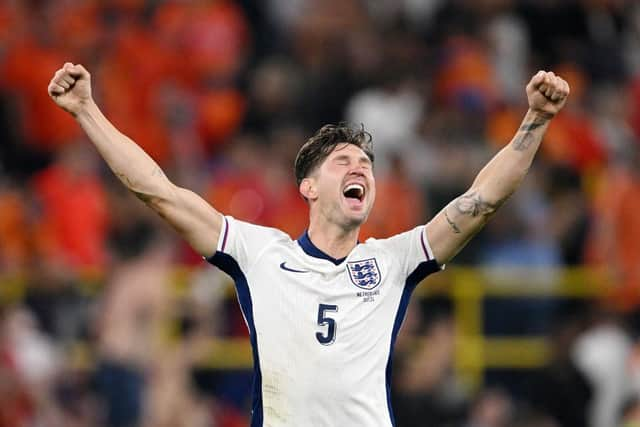

It occurred on the hallowed turf of Wembley on a hot July day in 1966, when almost 100,000 fans packed into the grand old stadium to watch what turned out to be an enthralling six-goal thriller, one that wasn’t without controversy – yes, Russian linesman, we’re thinking about you here.
The sight of Bobby Moore holding the Jules Rimet trophy aloft while sitting on the shoulders of his teammates is embedded in the English collective memory, whether fans were around to witness the moment or not. And thankfully, despite the fact that the technology – at least in TV terms – was in its infancy, it was recorded in full glorious colour.
Now, with the 2026 event almost upon us, we’re getting another chance to relive the entire game – and for a very special cause.
All but one of the men chosen by manager Alf Ramsay to start the game have now passed away, several of them having lived with dementia. It seems fitting, then, that this special broadcast is aiming to raise awareness and funds for the Alzheimer’s Society, which offers support to those with the condition and their families.
Sir Geoff Hurst, England’s hat-trick hero 60 years ago, is a patron of the charity, and will share his feelings and emotions about the day during the programme, which is introduced by the aforementioned David Baddiel, whose father, Colin, had a form of dementia known as Pick’s disease. Current England captain Harry Kane is also among the contributors.
“We are so grateful to be part of this collaboration, which will allow people to experience the historic 1966 World Cup final in full colour, while also raising vital funds for Alzheimer’s Society,” says Michelle Dyson CB, the organisation’s Chief Executive Officer.
“It’s heartbreaking that many former players – and indeed fans – of the legendary 1966 World Cup team have been affected by dementia. Their stories are a powerful reminder of why we must keep raising awareness and the funds needed to support people living with this devastating condition today while also working towards a better future.”
“This was a deeply personal mission,” adds Anton Sensky from production company Whisper. “As a primary carer for my mother, it was both emotional and cathartic to share this journey with David Baddiel, Geoff Hurst and the Alzheimer’s Society.
“At Whisper, we tell stories that truly matter, and it was a privilege to partner with Channel 4 on such an important and historic project.”
Perhaps, one day, we can kick Alzheimer’s into touch while mirroring Kenneth Wolstenholme’s iconic commentary by saying, “they think it’s all over… it is now” – something all involved in this special broadcast are working tirelessly towards.
But for moment, it’s time to forget all the frustrations over team selections and the disappointments of the past to consider what a force for good football can be.
Tiger Island (Sunday 07/06/26, BBC One, 7.15pm)
Words by Sarah Morgan
Other channels may show wildlife programmes, but let’s face it, they’re not a patch on the BBC.
“Natural history is at the heart of what makes the BBC special,” stated Jack Bootle, Head of Commissioning, Specialist Factual, while launching a new slate of such documentaries last October.
“No other broadcaster invests so consistently in wildlife film-making or covers such an ambitious range of subjects and styles – from David Attenborough exploring the wildlife of his own city, to a team of intrepid film-makers risking it all to document the secret lives of tigers in Nepal.
“The BBC remains the place to come to see beautiful, intelligent and entertaining programmes about the natural world, and I’m proud we continue to lead the way at a time of such uncertainty for our planet.”
Ah yes, David Attenborough. Only a few weeks ago, in the run-up to his 100th birthday celebrations, we were treated to repeats of episodes from some of his most popular and enduring programmes. They proved once again how beloved he is, but after so many years on our screens – more than 70 – he deserves to put up his feet once in a while.
And, of course, other directors and producers have amazing ideas they want to share – including those behind Tiger Island, a new two-part documentary shot largely using drones. The footage helps us see aspects of the species in a new and revealing light.
“Tiger Island captures a remarkable species in an extraordinary setting,” says series producer Matthew Wright. “Filming in western Nepal, we recorded tiger behaviour that’s rarely – if ever – been seen before, including scenes of parenting, hunting and fighting.
“The whole crew became deeply invested in these charismatic cats, sharing in the emotional journey of mothers raising their cubs, and I know viewers will feel the same connection when they see these powerful stories unfold.”
The area of Nepal in question is a community-owned forest on a river island which contains one of the world’s highest concentrations of tigers. Usually they live solitary lives, roaming territories of up to 100 square kilometres. However, their home here is only around four square kilometres in total, which is forcing them to be in close proximity to each other.
Despite that, thanks in no small part to the efforts of conservationists in the region, tiger numbers have, by and large, increased six-fold. The aforementioned drones have enabled operators to witness the impact this has had on the cats’ behaviour – and it’s rather astonishing.
However, as the audience will see, more tigers, as well as a number of humans, are moving into the area, which is set to make life more turbulent, to say the least.
As is always the case with such shows from the BBC, Tiger Island is both entertaining and informative, with an enthralling story to tell. And you never know, it may make you look at any smaller, domestic tigers who may share your living room in a whole new light.
Gareth Southgate: Changing the Game for Young Men (Monday 08/06/26, BBC1, 9pm)
Words by Rachael Popow
The recent drama Dear England explored how Gareth Southgate (played by Joseph Fiennes) tried to turn around the fortunes of the England men’s football team. In this documentary though, the man himself is tackling a much bigger challenge as he confronts some of the problems facing a generation of boys.
It’s a subject that’s long been close to Gareth’s heart. He’s previously spoken about the need for more positive male role models and how many young men and boys feel isolated or find it hard to open up about how they’re feeling.
The numbers back up his concerns. Since the pandemic, the number of men aged 16-24 not in education, employment or training has risen by 40 per cent, compared with just seven per cent among girls. Boys are also twice as likely to be excluded from school and more than three times as likely to die by suicide.
Now, Gareth wants to hear from the young men themselves as he travels across the UK to find out what is behind these struggles.
It’s a journey that takes him to Middlesbrough, where he first made his name in management and where he meets young men struggling with unemployment. He also visits a secondary school in Essex to hear how boys are coping with the demands of the education system, and goes behind bars to speak to young prison inmates about what led them to crime.
If that sounds bleak Gareth also explores the possible solutions, which don’t involve any talk of the ‘manosphere’. Instead, he’ll be asking what changes can be made to the worlds of education and work to create meaningful opportunities for young men from all backgrounds.
Working on the documentary has certainly proved to be an educational experience for Gareth. He says: “This is the next step in my purpose to get young men and boys moving in the right direction rather than falling behind. I wanted them to speak openly and without judgement about what’s really going on in their lives. Through these conversations, I’ve gained a better understanding of the challenges they face.”
He adds: “It’s been a fascinating experience, and I am so grateful to everyone I met who were brave enough to share their stories. I hope this documentary will go some way towards changing the national conversation and encourage us all to support them in realising their potential.”
Meanwhile, Gian Quaglieni, BBC Commissioning Editor, explains why the former England manager is the right person for the job, saying: “Gareth Southgate is in a unique position to explore why so many boys feel like they’re falling behind and to think differently about what might help. This film steps away from polarised arguments and instead listens to how young people really feel and what they’re dealing with.
“These are important conversations – and not always easy – but they need to be heard.”
Interior Design Masters with Alan Carr (Tuesday 09/06/26, BBC One, 8pm)
Words by Damon Smith
The decorating work gloves are off as the top two interior designers from this year’s colourful intake go head-to-head to decide who will be crowned champion.
Eagle-eyed judge Michelle Ogundehin and her guest, Laurence Llewelyn-Bowen, will no doubt face a tough decision. Whoever does come out on top wins a lucrative partnership with retailer Next for their own homewares range.
Over the past seven weeks, 10 hopefuls have been steadily whittled down to the finalists, beginning with a splashy challenge to transform wooden beach huts into stylish spaces on the coast in Dorset.
As usual, the final task pushes the competitors to showcase how their design ability and eye for detail have evolved during the series. This year, the surviving pair head to the picturesque Longleat Estate in Wiltshire to transform rental cottages using the nearby safari park and surrounding countryside as inspiration.
Laurence and Michelle then lavish praise on the completed transformations and split proverbial hairs to decide who should emerge victorious and accept the baton from last year’s winner, design and technology teacher John Cooper.
Host Alan Carr continues to serve a heady cocktail of humour and candour. “Maybe I can be a bit too honest sometimes,” he confesses, thinking back to a moment this series when a contestant’s stencilling looked remarkably like damp patches on a wall. He believes the planets aligned for the aforementioned opening episode which challenged the 10 contestants to introduce viewers and Michelle to their signature styles beside the seaside. “Gorgeous beach, glorious weather and 10 beach huts to transform on the South Coast – what’s not to love?” he enthuses. “I was so impressed with the designers, and I knew right there and then that it was going to be a brilliant series.”
For Michelle, there is always a moment in every run when someone starts to trust their instincts rather than second-guessing what they think she is looking for. Suddenly, a contestant finds the courage of their convictions and thrives. “Those are the moments that stay with you, because they remind you that good design is rarely about playing it safe, sometimes it’s about making a very clear statement,” she elaborates.
Getting to know the designers and seeing how they grow is Alan’s favourite part about hosting Interior Design Masters. He describes himself as “a proud dad” and keeps in touch with some contestants from previous series. “Amy has designed wallpaper for my house,” he shares. “Peter just recently sent me a rug from his new collection, Banjo has gone on to do a TV show himself and Mollie worked on a project with (interior designer) Matthew Williamson. It’s so lovely to see all this talent being used.”
If you are inspired to experiment with patterns or add a generous dollop of Chinoiserie after watching the series, Michelle advises against making decisions based on how many likes you think an image of a space will get on social media: “The strongest designers understand that a space is not a photograph, it’s something people live in.” Love where you live.
Amandaland (Wednesday 10/06/26, BBC1, 9pm)
Words by Rachael Popow
When Motherland started back in 2016, it focused on a group of mums (and dad Kevin) who were brought together at the primary school gates.
However, time marches on even in spin-off sitcoms and the second series of Amandaland ends with Amanda’s (Lucy Punch) daughter Georgie (Miley Locke) preparing for her prom.
It seems that brought back some memories from the grown-up cast. Samuel Anderson, who plays Amanda’s downstairs neighbour Mal, says: “I can remember from the day of my prom being one of the first kids with a mobile phone. And even though I had no credit on the phone I felt like I had some ‘street cred’
“That was until my mum phoned me to tell me I’m grounded because the school had called her and told them that I hadn’t finished loads of my GCSE course work. I missed my prom and I blame technology.”
Philippa Dunne, who plays the long-suffering Anne, says: “I kind of didn’t know [my prom] was happening, I don’t know why I was so oblivious to it, so when I decided I was going it was all a bit last minute, I went on a scramble borrowing various bits from friends and family. The 90’s were way more relaxed but I managed to pull off a look all the same.”
If you have a sneaking suspicion that her on-screen alter ego would be more organised, it seems Philippa wouldn’t necessarily disagree.
When asked what piece of life advice she would give to her character, she says: “I don’t think I have any advice for Anne – she does far more with her life than I do!
“She’s spinning so many plates successfully that I have a lot of admiration for her. I would encourage her to always stand up for herself when she needs to, but she’s already shown us before that she can do that.”
Naturally, Amanda has got something planned to mark her daughter’s big night – she’s throwing a pre-prom party at her flat for Georgie and her friends.
However, the teens may not appreciate Felicity (Joanna Lumley) getting in on the action, and if that wasn’t enough of a problem, the make-up designer fails to live up to expectations and the limo gets stuck. Will the teens still have a night to remember?
The bad news for fans is that this is the last in the current series of Amandaland, but the good news is that the BBC have already confirmed it will be back for a third run.
Co-writer and creator Holly Walsh and co-writer Laurence Rickard say: “We are thrilled to be heading back to SoHa for a third series of Amandaland and delighted the show has found the sort of audience that Amanda’s Instagram account could only dream of.
“We are already priming our keyboards to prompt AI into creating another batch of scripts and can’t wait to be reunited with our incredible cast and crew.”
FIFA World Cup 2026: Opening Ceremony (Thursday 11/06/2026, ITV1, 6.15pm)
Richard Jones
Whether it’s the food portions, towering skyscrapers, or gas-guzzling trucks, everything seems bigger in America.
So when it was announced that the 2026 FIFA World Cup was going to be held in the USA, Canada and Mexico, it seemed inevitable that the tournament would be on a larger scale than before.
First of all, there are 48 nations taking part in the football (or soccer) jamboree this time – up from the 32 in Qatar four years ago – with 104 matches being played across 16 cities.
With the new format featuring 12 groups of four, the tournament will also last for a record 39 days and, as it is being staged in three countries for the first time, there is an opening ceremony in each.
Mexico has the honour of hosting the first match of tournament, so it gets first go this evening, presenting a curtain raiser soundtracked by Latin music royalty.
Colombian reggaetón superstar J Balvin joins music icon Alejandro Fernández, beloved cumbia group Los Ángeles Azules, pop star Belinda, rock legends Maná and Venezuelan hitmaker Danny Ocean in the line-up at Mexico City’s Estadio Azteca. South African breakout sensation Tyla is also on hand to add an Afropop flavour.
Then, following the (first) opening ceremony, the countdown is finally over for football fans as we get down to business on the pitch.
Although the first game may not sound like a blockbuster clash, it could be an entertaining encounter between two sides keen to make it out of Group A.
Despite being a mainstay of the tournament over the years, Mexico have never progressed further than the quarter-finals.
El Tri’s main objective this time will be to be to reach the last eight again and their manager Javier Aguirre will be looking to Fulham forward Raúl Jiménez for the firepower.
Their opponents this evening, 2010 hosts South Africa, are still to make it past the group stage at a World Cup.
Having sneaked through qualifying, hopes aren’t high for coach Hugo Broos’s unpredictable Bafana Bafana, but in Orlando Pirates’ Oswin Appollis and Burnley’s Lyle Foster, they do at least possess a goal threat.
Mark Pougatch presents coverage on ITV1 tonight, joined in the studio by Roy Keane, Gary Neville and Ian Wright.
For night owls – and those challenging themselves to watch every World Cup match this summer – there’s another Group A fixture tonight – South Korea play the Czechia at Zapopan’s Estadio Akron at 3am.
And looking ahead, the two Home Nations who have qualified for the tournament – Scotland and England – get their campaigns under way against Haiti on Saturday night/Sunday morning and Croatia on Wednesday respectively.
Of course, it wouldn’t be a major sporting event without some controversy and the 2026 World Cup has had its fair share.
From Donald Trump’s immigration policy and Iran’s participation, to the potential heat risks and the introduction of a half-time show during the final, the build-up has been ‘eventful’.
But the supporters’ main gripe relates to the stratospheric cost of attending the matches, with a seat to watch the final at MetLife Stadium on July 19 costing a mind-boggling $11,000. Bigger is definitely not better when it comes to ticket prices.
However, if you have been outpriced from watching the football extravaganza in person, fear not, ITV and BBC will be showing every single match live and, over the next month and more, the TV schedules will be dominated by the action in Mexico, the USA and Canada.
The World Cup is a very big deal, after all.
Hidden Treasures of the National Trust (Friday 12/06/26, BBC2, 9pm)
Words by Rachael Popow
As you’ll know if you regularly watch this fascinating series, the National Trust cares for the former homes of some of Britain’s most notable figures. The first episode of the current run took us into properties associated with the queen of crime fiction, Agatha Christie, and her fellow literary legend, Thomas Hardy.
However, many of its properties also offer an insight into the hidden lives of ordinary working people, which is the focus of this week’s episode.
Cameras travel to a quiet Cheshire valley, beside the River Bollin, where the Quarry Bank Mill was built in 1784 by Samuel Greg. it became a powerhouse of the Industrial Revolution, and in the process played a key role in transforming Britain.
That was partly down to its use of new machinery, including the ‘spinning mule’ which turned raw cotton into yarn faster than ever before, making clothing more affordable. The mule is still at heart of the mill but maintaining it is a constant job. This episode shows how technical demonstrator Rex and the team must strip it into hundreds of pieces and service every part before they can get the machine spinning again.
Of course, the mill couldn’t rely on machinery alone – people were also key to its productivity. An apprentice indenture from 1785 offers an insight into what life was like for the workers.
The contract concerns 13-year-old Thomas Payne, binding him to years of labour. As well as sharing what this rare record tells us about a system that brought orphaned and vulnerable children into the mills as cheap workers, conservator Sharon reveals how she is cleaning, repairing and stabilising this rare document for display.
There’s also a trip to Staffordshire, where another working-class story is being protected at Kinver Edge. It’s the location of a remarkable row of houses, which were carved into the sandstone hillside and once sheltered generations of local families.
The last residents moved out in the 1960s and the houses fell into decline, until they were taken on by National Trust in 1989 Since then, the Trust has been working hard to restore the properties, which has involved everything from the basics, such as making them watertight, to more complex jobs like sourcing replica furniture, fixtures and fittings.
Now the final house to be restored, Martindales – once home to local postman Harry Martindale – is nearly complete. But one vital feature has been missing: a kitchen range, the true heart of the home.
Luckily, a member of the public has stepped in and donated a salvaged historic range. Cameras are there to capture the moment it arrives, but while that is a cause for celebration, the team now face the tricky task of trying to fit it into a room where the walls floors have been carved from the bare rock.
It’s not just the buildings that make Kinver Edge’s special – it also boasts a rare heathland habitat. There’s an insight into how National Trust rangers are working to protect the myriad of plant and animal species that live there.