
York Theatre Royal: The oldest theatre in Yorkshire with 281 years of stage history and Medieval, Georgian and Victorian architectural influences

York Theatre Royal is the oldest theatre in Yorkshire with 281 years of history under its belt and has varied architectural influences from Medieval to Victorian.
York Theatre Royal, located in St Leonard’s Place in York, is 281 years old and currently seats 750 people.
The theatre was originally a proscenium which is a traditional and widely used auditorium layout where the audience sits in a single, fixed direction facing the stage.
It was reconfigured for a season in 2011 to offer productions in-the-round. The theatre puts on many of its own productions, as well as hosting touring companies, one of which is Pilot Theatre, a national touring company.
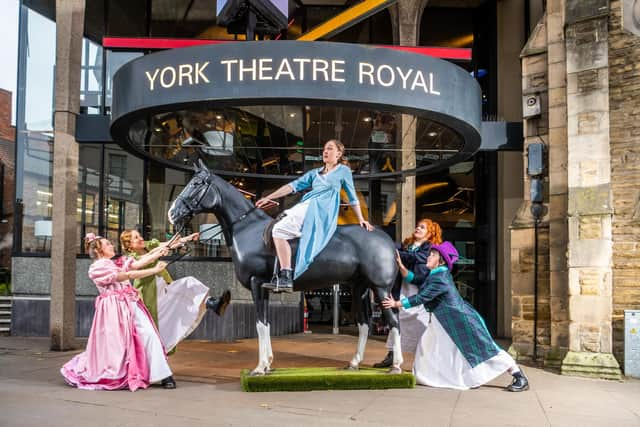

The theatre has been designated a Grade II listed building by Historic England.
During the 1700s it went through Medieval and Georgian designs and in the late 1800s it was refurbished into the Victorian style, including in 1879 when a new Gothic Revival frontage was introduced. It is decorated with carved heads representing Elizabeth I and characters from Shakespeare’s plays.
History of York Theatre Royal
The theatre was built in 1744 on, and among, the site of the medieval St Leonard’s Hospital with part of the old hospital can still be seen in the modern building, including archways and walls.
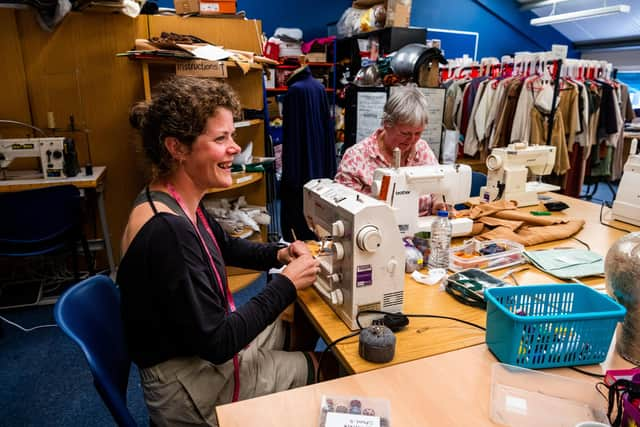
Beneath the stage is a well that is thought to be dated from the Roman era of York’s history and the 1744 theatre replaced a theatre in Minster Yard, built by Thomas Keregan in 1734.
Tate Wilkinson was offered the role of ‘regent’ to Mrs Keregan’s successor Joseph Baker in 1767, who had mounted personal debts to manage the theatre.
Mr Wilkinson died in 1803 at the age of 63 after 36 successful years managing the theatre and his son and heir inherited the theatre, though he did not have his father’s business skills. By the opening of the spring season in 1814, he was heading towards bankruptcy.
The theatre was managed by 26 people over the course of the next 61 years and later it was managed by William Alfred Waddington, a music seller based in Stonegate.
According to the York Theatre Royal’s website, throughout the 1800s the building went through extensive facelifts, including gas lighting that was introduced, a new frontage built facing the newly-created St Leonard’s Place, the stage was rebuilt to include trap doors, the pit was enlarged, stage boxes were installed and upholstered seats fitted in the Dress Circle.
The very first Christmas pantomime The Sleeping Beauty was performed in 1862. It went through its biggest challenges during the 1900s due to two World Wars and technological advances.
Since the 1960s, the theatre has been under the leadership of York Citizens’ Theatre Trust and was modernised throughout, with new Front of House facilities and an additional staircase to each level.
Patrick Gwynne’s concrete and glass foyer extension was the first of its kind and a counterweight flying system was installed backstage.
By 1994 the auditorium was completely refurbished and a specially designed chandelier was installed.
The Keregan Room was converted from the medieval undercroft of St Leonard’s Hospital.