
CBI forecasts growth is set to slow down and interest rates will stay high as a result of Budget
The UK economy is set to witness slower growth than previously expected as business investment is constrained by Budget cost pressures, according to new research.

The Confederation of British Industry has downgraded its growth projection for 2024 and 2025 and predicted an uptick in inflation in its latest economic forecast.
Forecasts from the influential lobby group have predicted that UK GDP (gross domestic product) will increase by 0.9 per cent this year – down from 1 per cent in its June predictions.
It is now also expecting 1.6 per cent growth in 2025, downgraded from an estimate of 1.9 per cent from June. GDP growth is expected to slow to 1.5 per cent in 2026.
She said: “Unless you grow the economy, you're not going to be able to increase living standards.”
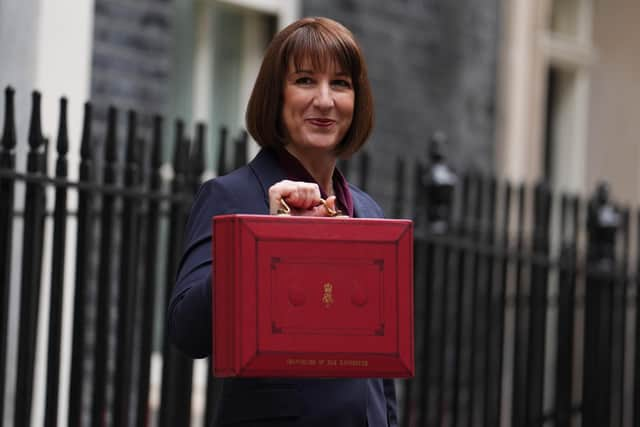

Economists at the CBI said tax and cost increases – such as the rise in national insurance contributions and the increase in the national living wage in Ms Reeves’ Budget – have significantly contributed to the downgrade.
However, the CBI said consumption is expected to be lower in 2025 than its previous forecasts as inflation takes longer to come back to the 2 per cent target rate, putting pressure on household budgets.
Inflation is due to pick up further over the rest of the current quarter, having risen to 2.3 per cent in October, it added.
The CBI said it expects this to average 2.6 per cent for 2025 and 2.5 per cent for 2026, with Budget pressures expected to particularly contribute to higher retail and hospitality pricing.
As a result, it has forecast that interest rates – which currently sit at 4.75% – are set to be higher for longer than previously predicted.
Louise Hellem, CBI chief economist, said: “Measures in the autumn Budget will increase firms’ costs at a time when their profit margins have already been under pressure.
“Many businesses have told us that these measures will likely push up prices and weigh on their hiring and investment plans going forward.
“Government can support business confidence by taking catalytic actions to increase business headroom for investment.
“Implementing a faster, more transformative timetable for business rates reform, immediate flexibility on the apprenticeship levy, measures to boost tech adoption, and delivering occupational health incentives for the workforce can help address the many challenges firms are facing.”
This comes after a poll from the County Land and Business Association found that inheritance tax changes to farmers are impacting Labour’s support in the countryside.
While a separate survey from Ipsos has revealed that half of Britons are disappointed in the new Government, including a quarter of Labour voters.
More than a third of people believe Labour will change Britain for the worst, which is higher than those who think Sir Keir Starmer will transform the country for the better.
In a raft of polls released this week, a new survey from YouGov found that voters believe the UK should prioritise its relationship with Europe over President-elect Donald Trump’s US.