
'Really effective': Yorkshire Water boss reveals hope about Andy Burnham's plan for industry
Yorkshire Water chief executive Nicola Shaw has said nationalising water companies wouldn’t improve performance – but said Andy Burnham’s plans for greater public control of the industry could prove to be “really effective”.
Mr Burnham has recently said Thames Water should be nationalised in light of its ongoing financial problems and said this week he wants more “public control” of water, housing, energy and transport in line with bus franchising in which the public sector sets routes and fares and awards contracts to private companies to deliver the services.
It comes against the backdrop of last year’s Government-ordered Cunliffe review which recommended the creation of new regional water system planning authorities including representatives from public sector bodies to develop investment plans and ensure accountability.
Shaw said while Thames is an “extreme case”, there is scope for different approaches elsewhere in the country - based in part on Mr Burnham’s template for working with United Utilities in Greater Manchester.
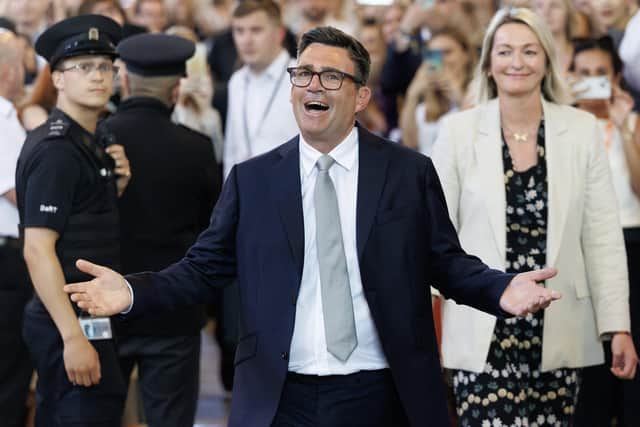

Mr Burnham’s mayoral authority created a strategic partnership with United Utilities and the Environment Agency to deliver a water management plan for Greater Manchester.
Shaw said: “Nationalisation, it is pretty clear, doesn’t make a lot of difference.
“If you look at the Welsh or Scottish businesses, they are owned in very different ways to English businesses and the outcomes are pretty similar. I don’t think that is a key defining feature.
“Control is interesting. In Manchester, the way the city council and combined authority was working with United Utilities was very much in partnership focusing on the goals they wanted to work on together. If we can do that in Yorkshire, that will be really effective for us.”
‘Yorkshire Water 2.0 is going to come’: Read our indepth interview with Nicola Shaw on firm’s future
She added: “I’m really hopeful that public control, which is what Andy Burnham talked about, is aligned with his ‘Manchesterism’ version of because he was working in partnership with United Utilities in Manchester, focusing on making sure that their investment was in areas that would support the growth investment that he wanted to make, and that’s very different from public ownership. I think we are likely to see different models in different places in the country.
“There may be public ownership or special administration with Thames Water but partnership for delivery in places elsewhere. That’s why I think this regional planning thing that came out of Cunliffe is of real importance.”
She said: “I’m not convinced that ownership models make any difference. The Welsh system is owned by a company limited by guarantee, that doesn’t make dividends, and it’s having exactly the same problems as the rest of England.
“Thames is an extreme case. I can totally see why you might decide to do something different because of its extreme case nature, but elsewhere I think the cost to the public, where we’ve got so many other things to worry about, what we do about defence, whether about the NHS, there is money we need to spend in lots of areas.
“This is an area where the private sector is continuing to support the investment over time. We’ve just got a new shareholder who is committing equity to support the new investment, allowing customers to pay for it like a mortgage over 100 years of its life, rather than 25 years of its life, rather than having to pay for every bit of investment now, which you have to do broadly with the government pays for.”
She said the regional focus suggested by Cunliffe would allow for a greater focus on local priorities such as preventing flooding.