
Consumers not farmers should bear costs of agriculture hitting net zero, Resolution Foundation says
Consumers will have to take on the costs of helping British agriculture hit net zero as razor-thin margins mean this could prove existential for some farmers, a new report has found.

The Resolution Foundation’s “Green Your Eats” paper claimed that the clean energy transition has “barely started” in agriculture and land use.
Emissions in this sector have fallen by just five per cent over the past 15 years, with the report stating there needs to be a seven-fold increase in pace to remain on track.
Decarbonising farming is hard, authors Zachary Leather and Jonathan Marshall say, explaining: “There are no ‘silver bullet’ technological solutions (such as electric cars for transport) to do the heavy lifting on cutting carbon.
“Moreover, deep changes will be managed by a large number of small farming businesses – 200,000 farms employing 450,000 people – making it more difficult to coordinate and monitor change than in industries where large companies dominate, such as the electricity sector.”
Instead farmers will have to change how they use land, manage soil differently and potentially reduce livestock numbers.
But the authors urge policymakers not to “shy away from the challenge”, as if agriculture fails to hit its 2030 target this will cost around £12bn in other areas.
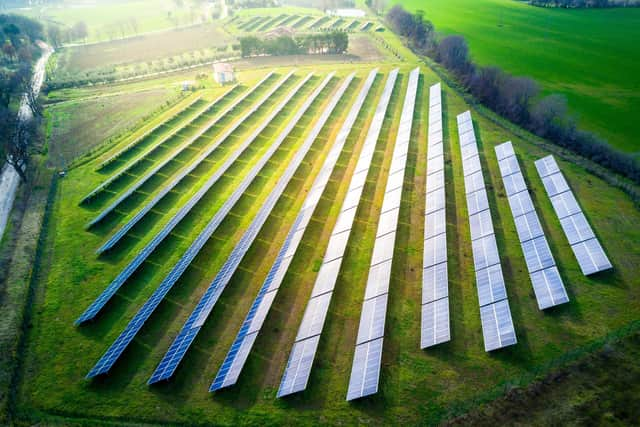

The Resolution Foundation calls on consumers and not farmers to take on the costs, which it says are low compared to other sectors.
The report finds it will be difficult for farmers to bear the costs of decarbonising due to “razor-thin margins”.
It said even a “modest three per cent increase in costs could have highly detrimental effects on the sector”.
The report estimated “that costs of this magnitude would lead to the annual average income of farmers falling by around a fifth, and one-in-20 farms would drop into the red”.
“These impacts are daunting because the farming sector is financially fragile, not because net zero costs are large,” it explained.
“That means it might be better that consumers bear the brunt through higher food prices – trading a small impact across the wider population against an existential threat to a (much smaller) number of farmers.”
The Resolution Foundation claims the increase in food prices would be less than one per cent between now and 2050, far lower than current food inflation.
Speaking to The Yorkshire Post at the UK Agri-Tech Centre’s House of Lords reception, York-based board member Tom Hind said: “It’s a really important area, whether it’s greenhouse gas emissions or the natural environment.
“It’s of absolutely pivotal importance for agriculture to reduce its impact, and restore habitats and have that wider legislative and policy agenda.
“Ultimately, the solutions will come from the market - the supply chain, retailers and food companies are looking for suppliers to reduce their environmental impacts and greenhouse gas emissions.
“They’re increasingly looking for farmers, businesses and suppliers to adopt technology.
“There’s still a lot of work to do. Emissions from agriculture have generally remained fairly stubborn over a 10-year period, but it’s an existential challenge that has to improve and we want to be a key part of that solution.”
This comes at a time when there is a huge debate about the future of agriculture.
The Labour Government has repeatedly described food security as “national security”, however former president of the National Farmers’ Union Baroness Minette Batters called for a “radical re-think of how we value food and farming” in her profitability review.
The Department for the Environment, Food and Rural Affairs claimed it is delivering the largest nature-friendly farming budget in history, with £11.8bn being spent to support sustainable food production.
This year it will also publish its Farming Roadmap and Environmental Improvement Plan, which it says will set out a long-term vision for a productive and profitable nature-positive food system.