
Criminal gangs are running fly-tipping operations 'on an industrial scale', new report finds
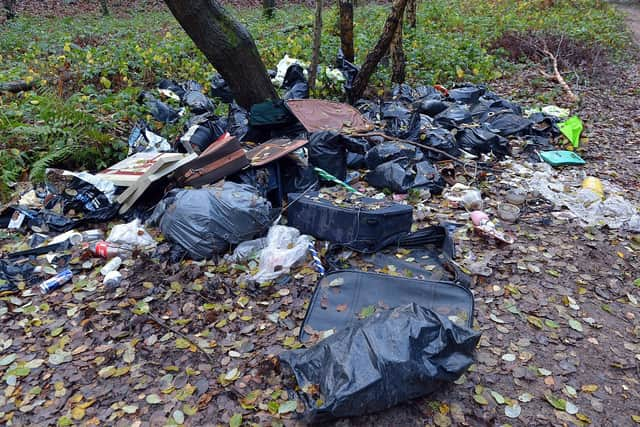
Fly-tipping is costing the economy millions of pounds each year, according to a report published today by the National Rural Crime Network and Future Countryside.

Organised criminal networks are running fly-tipping operations “on an industrial scale”, a new report has found, which says they are exploiting weaknesses in regulation and enforcement.
This is costing the economy millions of pounds each year, according to a report published today by the National Rural Crime Network (NRCN) and Future Countryside, which bring together organisations such as the National Farmers’ Union, Crimestoppers and the Countryside Alliance.
TV star Kirstie Allsopp, who wrote the foreword, said: “The overwhelming feeling is fury, not just because it’s ugly, but because of the contempt behind it.”
Incidents have soared across the country in recent years, with organised waste crime groups growing increasingly sophisticated and massive illegal dumps in protected areas sparking public outrage.
Throughout the Dales, rubbish is being dumped at the side of the roads, with detritus blowing into the stunning Yorkshire countryside.


Bogus waste-disposal companies are using local Facebook groups to offer cash-in-hand collections of household rubbish, and then dumping it in laybys or farm tracks.
The latest figures show there was a whopping 17 per cent increase in illegal waste dumps across Yorkshire and the Humber from 2023-24 to 2024-25, when the number of incidents reached more than 100,000. This was the highest level since comparable records began in 2019.
However, the rural groups say the true scale of the problem is likely to be far greater because incidents on private land, large-scale illegal dumping handled by the Environment Agency and many unreported cases are excluded from the national data.
While the Government has recently unveiled a string of reforms to tackle waste crime under a national action plan, the campaigners are calling on ministers, regulators, police forces, local authorities and the Environment Agency to work together to deliver a more co-ordinated and effective national response.
Ahead of launching the report at the Future Countryside conference, the groups said ministers should introduce a single reporting route for all fly-tipping incidents, which they say the Government has expressly declined to do.
They also want to see a comprehensive national dataset that covers all fly-tipping and waste crime incidents, including those on private land, allowing the scale of the problem and the response to be tracked accurately year-on-year.
NRCN chairman Tim Passmore said: “Waste crime and fly-tipping is not low-level nuisance offending – it is serious, organised criminality that is damaging our environment, hitting rural communities hard and leaving innocent victims to foot the bill.
“Criminals know the risks are low and the rewards are high. That has to change.
“We need tougher enforcement, sharper accountability and a system that finally treats waste crime and fly-tipping with the seriousness it deserves.”
Julian Glover, co-founder of Future Countryside, said: “Fly-tipping is no longer a simple environmental nuisance.
“It has become a serious criminal enterprise which blights communities, harms nature and places victims under unacceptable financial pressure.
“All too often, rural communities are expected to shoulder the costs while offenders operate with impunity.”
An Environment Department (Defra) spokesperson said: “Waste criminals who blight our countryside and undermine our rural way of life have gone unpunished for too long.
“This Government is ramping up efforts and tackling organised crime head on – we have increased the Environment Agency’s enforcement budget to £15.6 million, bolstered the joint unit for waste crime and our waste crime action plan sets out how we are cracking down on those responsible.
“We continue to work closely with landowners to promote good practice on fly-tipping prevention alongside supporting local authorities and police to investigate, seize and crush vehicles used to illegally dump waste.”