
York-based start-up now exporting bee-saving tech to a dozen countries around the world
A York-based agri-tech start up is now selling its innovative technology to protect bees and stop the endemic drop-off pollinators to around a dozen countries around the globe.

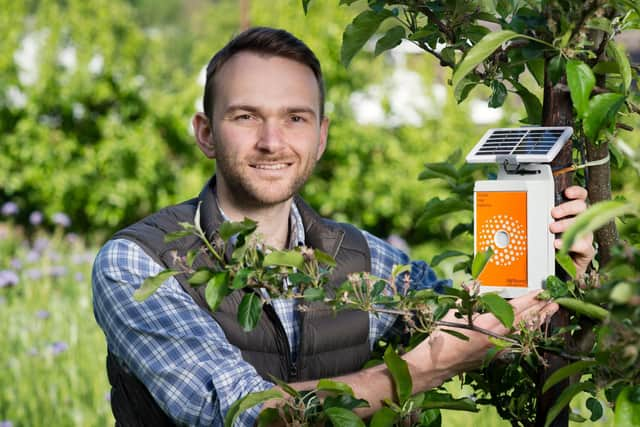
AgriSound, which was first formed in 2020, creates precision listening devices which identify the wing beat frequency of insects to measure how many pollinators – such as bees or hoverflies – are active in a given space.
“We lovingly call them a poor man’s Amazon Alexa, which is designed to recognise a specific sound - the sound of the wingbeats of honeybees or bumblebees in particular,” founder and CEO Casey Woodward told The Yorkshire Post.
This can be used by farms to ensure there are enough bees pollinating crops and to ensure that biodiversity levels are remaining high.
This technology helps to combat the “cataclysmic drop off in pollinators”, which has come with more extreme weather conditions.
“It’s an endemic problem, which is very much felt by farmers and growers here,” Mr Woodward said.

AgriSound has worked with massive companies such as Dyson and M&S, and has also begun the process of using AI to track wider trends, with a view to assessing where pollinator numbers are rising or falling in different parts of the country.
With the help of the UK Agri-Tech Centre, the York-based firm now exports its technology around the world from New Zealand to the USA.
“We sell into about a dozen countries worldwide to everything from almonds in the US to cotton in India, avocados in South Africa,” Mr Woodward said.
“They [the UK Agri-Tech Centre] have been able to support us with market entry into South Africa and some of the introductions in other countries have been really useful.”
However, Mr Woodward said it was a really “challenging” time for British agri-tech businesses, particularly when competing on a global scale.
“There’s a lot of pressure primarily because venture capital is contracting, particularly in agri-tech and food,” he explained.
“The natural pivot is to target grant funding and public sector support, and that’s obviously contracting as well because the economy is in a weak position.
“We are competing on a global market and particularly for us there is a lot of competition in this space from US and Israeli start-ups, and both of those tend to be really well funded.
“It does disrupt what you want to do and the frustration is that UK tech is really good, but you need the funding to build different teams that can be in different parts of the world.
“Although we’re great at being innovators and building great products that can compete, we need to look at how start-ups can get acquired earlier so that all the hard work in building this great stuff doesn’t get lost.”
Mr Woodward did have great praise for York as a centre of agri-tech innovation in the UK.
“It sits right in the heart of mainland Great Britain so we are close to most of our rural customers,” he said.
“We’ve got universities here so there is a deep expertise of talent. North Yorkshire is a really good ecosystem for testing agri-tech, and the UK Agri-Tech Centre is based in York.”