
Covid-19: Boris Johnson's 'Stay Home' advice during pandemic cost lives, inquiry finds

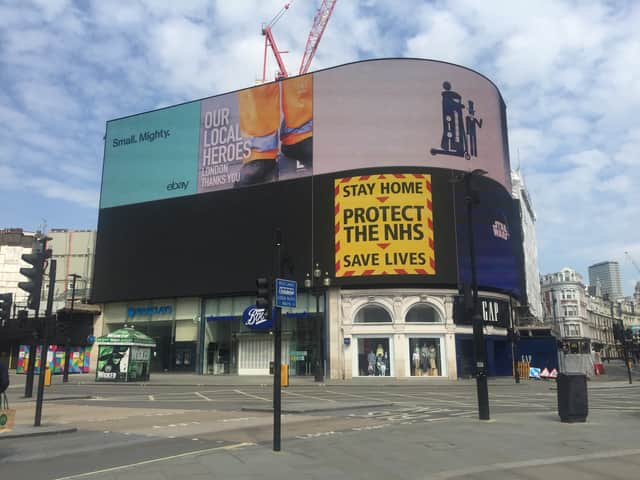
Boris Johnson’s “Stay home, Protect the NHS, Save Lives” messaging used during the pandemic inadvertently led to thousands of people missing out on lifesaving care for cancer and heart attacks, the Covid inquiry has found.
The message, which was created by Cabinet Office officials without input from health leaders, was part of the reason people were “deterred” from accessing healthcare during the pandemic, chairwoman Baroness Heather Hallett said today.
Some people steered clear of A&E, even for life-threatening emergencies such as heart attacks, they did not seek help for other medical conditions to avoid being a burden to the NHS and did not attend hospital for fear of catching the virus, according to the inquiry’s latest report on the NHS during the crisis.
Baroness Hallett said the messaging inadvertently “sent the message that healthcare was closed”.
Leeds Central and Headingley MP Alex Sobel told The Yorkshire Post: “Patients with life-threatening and serious conditions were badly let down during the pandemic by Boris Johnson's government.
“Chaotic and confused messaging, as well as a woeful lack of planning, combined with late decision making, all contributed to these patients not receiving the care they so desperately needed.”

Mr Johnson previously told the inquiry that he was “deeply sorry for the pain and the loss and the suffering to those victims and their families”. He added: “Inevitably we got some things wrong. At the time, I felt we were doing our best in very difficult circumstances... we underestimated the scale and the pace of the challenge."
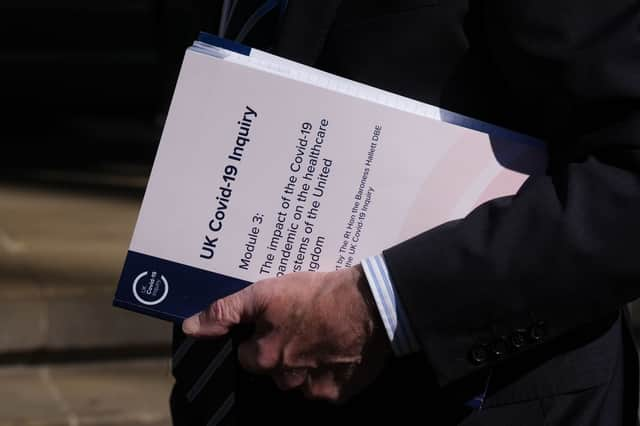
Baroness Hallett’s new 387-page report said the devastating impact on the NHS was “unsurprising” given the “parlous state” the service was in at the start of the crisis.
Ministers, including former health secretary Matt Hancock, insisted the health service was not overwhelmed, but Baroness Hallet said this was “semantics”, adding: “There was clearly overwhelm”.
She said UK healthcare systems “teetered on the brink of total collapse”.
The latest inquiry report also revealed that thousands of patients died in hospitals alone and grieving families were deprived of the opportunity to say goodbye”.
It said that many patients with Covid-19 “did not get the quality of treatment they needed”; those who were in hospital with other conditions had their diagnosis and treatment delayed “to the point where their conditions became untreatable”.
Initial guidance on preventing the infection from spreading was “flawed” because it “failed properly to consider the extent to which the virus was also spread by aerosol transmission”, Baroness Hallett said, after initially focusing on spread through contact.
The report found that communications with millions of people shielding during the crisis “were not always appropriately handled”, with some incorrectly told to shield while others were not given the instruction when they should have.
Decisions made in the early stage of the crisis – including discharging patients from hospitals to care homes – should have been planned for sooner and not in the “turbulent early stages of the pandemic”, it also found.
The report contained high praise for NHS staff who worked under “intolerable pressure” for months on end.
And it highlighted how supplies of personal protective equipment (PPE) were “particularly constrained” at the start of the pandemic, putting healthcare staff at risk as staff sometimes had to work with inadequate and unsuitable PPE.
Lady Hallett said the UK entered the crisis “ill-prepared”, with the NHS in a “parlous state”, with severe workforce shortages; low hospital bed numbers and high bed occupancy rates.
“It is unsurprising therefore that the impact on the healthcare systems of the four nations was devastating,” she wrote.
She added: “Politicians, including the Secretary of State for Health and Social Care, Matt Hancock, were reluctant to accept that healthcare systems were ‘overwhelmed’, as they chose this to mean total collapse.
“Ultimately, in my view, it is a question of semantics. Whatever word one chooses, healthcare systems were placed under intolerable strain.”
She went on: “There was clearly overwhelm.”
In a statement she added: “I can summarise that impact as: we coped, but only just.
“The healthcare systems came close to collapse.
“Healthcare workers carried the burden of caring for the sick in unprecedented numbers. It came at a huge cost to them, their families, their patients and the loved ones of patients.
“Collapse was only narrowly avoided thanks to the extraordinary efforts of all those working in healthcare across the UK.”
Trades Union Congress Yorkshire and Humber regional secretary Dave Pike said: “For years healthcare staff were warning the NHS was in a state of crisis due to chronic underfunding.
“When the pandemic hit their worst fears became reality, and the whole workforce was put at risk, without even basic PPE to keep them safe.
“But despite this they kept going to work when the rest of us were told to stay at home.
“All of those workers gave their everything, and some of them paid the ultimate price.
“We owe it to those who died – and to those workers who put their lives at risk – to make sure we are prepared for future pandemics.
“Covid showed us strong public services – and a properly supported workforce – are vital for the nation’s health and resilience.”
Normanton and Hemsworth MP Jon Trickett added: “The magnificent efforts of the NHS moved the whole nation.
“We owe them a debt of gratitude which has never been repaid. But they were let down by a failed political leadership which was out of its depth.
“Whilst Boris Johnson was on the doorstep applauding the NHS in public, in private he was partying and clearly unfit to be a Prime Minister.”
The report made 10 recommendations “to prevent healthcare systems being overwhelmed in the next pandemic”.
These included increasing capacity in urgent and emergency care; strengthening the body responsible for infection prevention and control guidance and better advance care planning.
Lady Hallett added: “We cannot know when, but there will be another pandemic. My recommendations, taken as a whole, should mean that the UK is better prepared for that pandemic.
“In doing so, we shall avoid some of the terrible human cost of Covid-19.”