
Social care system at 'breaking point' with huge rise in unpaid carers, report finds
The social care system is at “breaking point”, with the number of unpaid carers increasing by 70 per cent over the past 20 years, according to a report.

Research for the Institute of Public Policy Research (IPPR) found rising demand, shrinking supply, and a growing reliance on unpaid carers.
Analysis for the report, conducted by the York-based Joseph Rowntree Foundation (JRF), revealed the number of people providing 35 hours or more a week of care increased from 1.1m in 2003/04 to 1.9m in 2023/24.
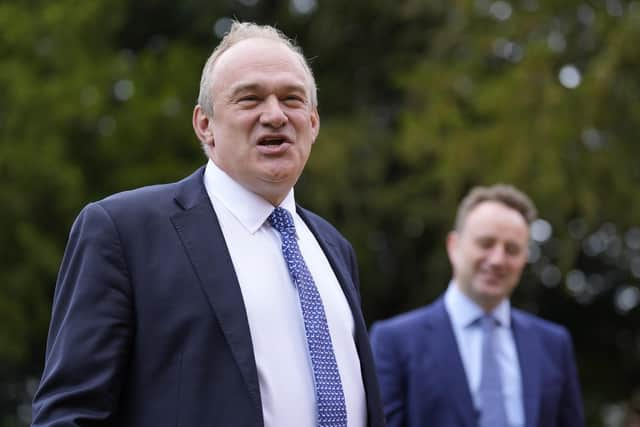
Sir Ed Davey, the leader of the Liberal Democrats, has been an unpaid carer for most of his life, to his mother, grandmother and disabled son John.
He said: “Most care happens not in care homes but in people’s homes; provided not by paid care staff but by family members and other loved ones.
“Parents and grandparents, husbands and wives, siblings and children. We don’t talk about it much, but we are a nation of carers.
"So the answers to the care crisis can’t just be about tinkering with the formal systems of childcare and social care as they exist today.

“We need to take a step back as a country and ask some more fundamental questions about how we can better support families.”
The report says unpaid care – whether by parents, spouses or adult children, and most frequently women – is relied on too heavily to fill in the gaps of the “inadequate and expensive” adult social care system.
It found there has been a 15 per cent rise in people requesting some form of adult social care which has only been met with a 2.5 per cent increase in those receiving it.
Mike Padgham, chair of North Yorkshire’s Independent Care Group, said: “We’ve known about this issue for a long time.
“Without unpaid carers in this country, it would grind to a halt - particularly the NHS.
“The more people who can’t work because they are looking after their loved ones is going to affect the economy.
“Secondly, people should be paid a decent amount so they can look after their loved ones if they want. It’s a big problem that has not been tackled.”
Both IPPR and Mr Padgham said the Government’s commitment to set up a National Care Service, via a commission from Baroness Louise Casey, must tackle the funding system and the challenges of an aging population.
A Department of Health and Social Care spokesperson said: “Baroness Casey has been appointed to build a consensus around the future of adult social care that is fair and affordable.
“The first report will be published next year and set out the immediate action this government should take to lay the foundations of a National Care Service.
“We are also taking action now, including increasing funding to allow disabled people to stay in their homes, boosting the carers allowance, professionalising the workforce and giving local authorities an extra £3.7bn in 2025-26, including a £880m increase in the social care grant.”