
Yorkshire Cancer Research: 100 years of fighting against 'one of the greatest scourges of mankind'
A hundred years on from its formation, Yorkshire Cancer Research today continues to prevent, diagnose and treat cancer, saving lives across the region – and far beyond. Laura Reid reports.


The year was 1926 and though peace was upon the nation, it was time for an “attack”. Sir Berkeley Moynihan made an impassioned plea for help – a call to action, broadcast from Leeds station, to tackle “the most formidable calamity affecting mankind today”.
One of the finest surgeons of his generation, Sir Berkeley Moynihan Moynihan had been one of six Yorkshire luminaries who had gathered at Leeds’ Old Medical School in May 1925 to establish the Yorkshire Council of the British Empire Cancer Campaign.
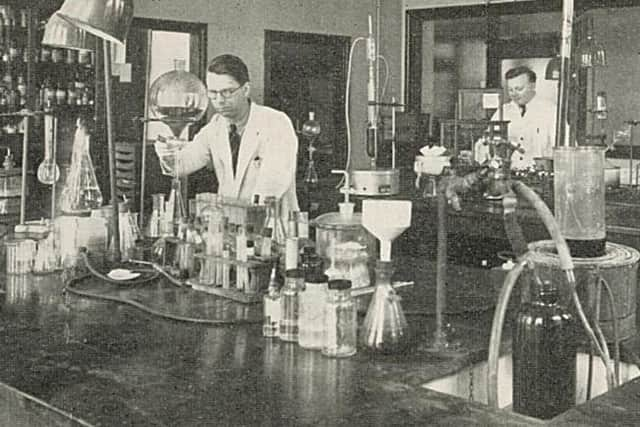
The following January, the charity kickstarted its first public appeal with a luncheon at The Queens Hotel, where distinguished guests pledged the equivalent of over £2.5m today. It was March when Sir Berkeley Moynihan then gave his stirring speech, calling for financial support from all who were able, in order to establish research in laboratories in association with the University of Leeds.
The campaign had been set up, he said, to rally “all possible forces to fight against one of the greatest scourges of mankind”. Thanks to the support of benefactors, the following year, the first research lab opened its doors. Decades later, the charity – known as Yorkshire Cancer Research (YCR) today – continues to find new ways to prevent, diagnose and treat cancer, saving lives across the region, and beyond.
Sir Berkeley Moynihan’s grandson Lord Colin Moynihan is among those celebrating 100 years of the charity, which began 23 years before the NHS was formed.
“I’ve always been fascinated by the work that (my grandfather) did,” he says. “He put Leeds and Yorkshire on the map and there’s been a succession of great surgeons and medics that have come from Leeds since. It is still an internationally esteemed centre of excellence in medicine. He had a role to play in that and I’m very proud.”
Lord Moynihan talks of how his late grandfather championed a school of thought that cancer needed to be greater publicised outside of the medical world. It was necessary, he believed, because of the need to act early on symptoms and the need for public support to fund life-saving research.
“I think his biggest pleasure and celebration would be the reality that leading research has continued throughout that time,” Lord Moynihan reflects. “He would recognise that, without support, it wouldn’t have been possible for pioneering cancer research and services that save lives in Yorkshire. And he would be delighted with the professionalism and commitment that remains in the charity to this day.”
Yorkshire Cancer Research funds £64m of research and services, including 25 clinical trials, giving thousands of people the opportunity to take part in and benefit from new developments and innovations. As it marks its milestone, the charity has paid tribute to all the “changemakers” who have contributed to breakthroughs and discoveries over the last century.
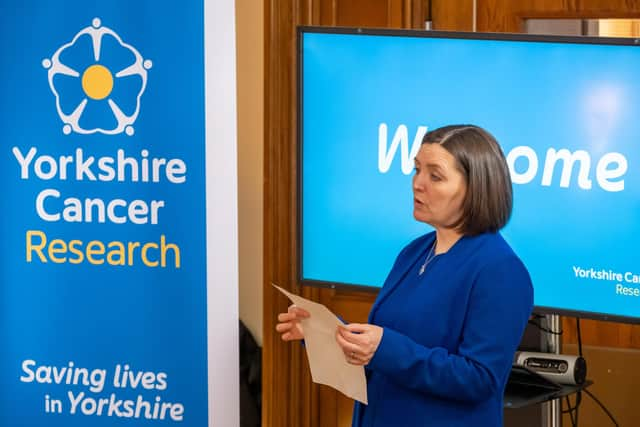
Chief executive Dr Kathryn Scott says: “Reaching the charity’s centenary is a testament to the supporters, fundraisers, volunteers, researchers, cancer experts and people with cancer who have come together to bring life-saving cancer research and innovative services to people in Yorkshire since 1925.” The centenary is at the heart of a year-long fundraising challenge for Suzanne Rogerson, a lead nurse in research and innovation at Leeds Teaching Hospitals Trust. The 54-year-old is taking on a series of tasks to support the charity, from trying 100 new foods and drinks to walking 100 miles and racking up a 100-day streak on language learning app Duolingo.
For the past few years, Suzanne has been heading up the Leeds Lung Health Check team, a pioneering lung screening trial funded by Yorkshire Cancer Research. She and her team took a mobile unit to communities across Leeds, screening 9,000 people and detecting over 400 lung cancers.
“Lung cancer doesn’t always cause symptoms so historically it has often been diagnosed really late when treatment options are limited and there’s lower survival rates,” Suzanne says. “We know if we detect it early by screening, it’s easier to treat and there’s a better chance of a cure.
“It’s been the privilege of my life working on this and the highlight of my career because my team have seen this life-saving research in action in our day job. We’ve met people who have been cured of lung cancer that was discovered at our screening unit and that’s only because it’s been funded by Yorkshire Cancer Research. It’s really important to me that they’re able to continue to fund life-saving research way into the future.”
That same goal is shared by Bradford couple Wendy and Boyd Midgley. They have been fundraising for the charity since 2016 and have raised £41,000 through events including race nights, raffles and bingo. Like many fundraisers, they have felt the impact of cancer and are driven by the thought of making a difference to others
“Breast cancer runs in my family,” Wendy explains. “My sister sadly passed away from breast cancer in June last year. She was first diagnosed with cancer in her thirties and, thanks to vital research, lived for another 35 years.”
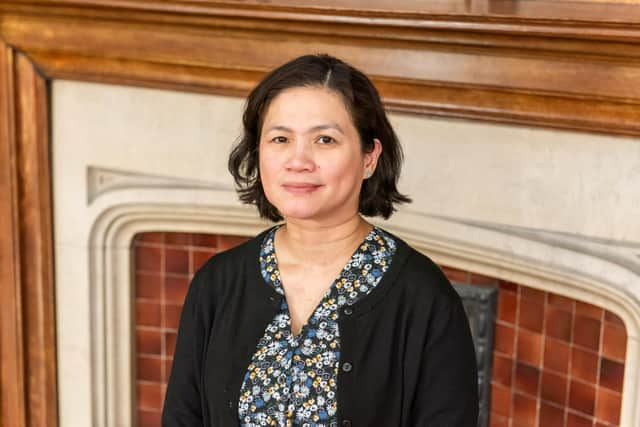
Giving loved ones more time together is one of the aims of Yorkshire Cancer Research – and volunteer Shiela Umpleby knows how precious that time can be. The 48-year-old was diagnosed with cancer in 2021 after noticing a change in the size and shape of one of her breasts whilst breastfeeding her youngest son.
The aggressive breast cancer was found to have spread to her liver and bones, and is now also in her brain, and Shiela, who lives in Harrogate with her husband and two boys, aged five and eight, says four years ago, she was given just five years to live.
“Every minute of every day is very precious and I just want to spend it creating memories as much as we can, with the boys especially,” she says.
For the past two years, Shiela has volunteered at the Yorkshire Cancer Research shop in Harrogate and she and her family have supported a number of the charity’s fundraising efforts. “I feel like cancer has taken over my life and I just needed somewhere to go outside of all my hospital appointments,” she says of volunteering. “I wanted to do something else to take my mind off cancer for a few hours, like I’m a normal person not dealing with (this).”
Shiela’s case is a sad reminder that despite remarkable advancements in the past century, this isn’t the end of the story. “We’re still on a very important journey,” Lord Moynihan reflects. “We shall celebrate but we shall also be looking forward to seeing how much more we can do to raise money for what is one of the world’s leading research centres “
That’s key for CEO Kathryn too. “The charity is looking to the future and is focused on bringing the brightest minds to our region so that new life-saving discoveries can be made in the prevention, diagnosis and treatment of cancer,” she says. “There is still a lot of work to be done, but together, we can make progress towards a Yorkshire free from cancer.”
To support Suzanne’s fundraising challenge, visit justgiving.com/page/suzanne-rogerson-1734952291487