
Archaeologists from University of Bradford to explore lost landscapes under rising seas
Archaeologists from Bradford are to head to the Gulf of Mexico to discover lost landscapes which have been submerged since the last Ice Age.
A major research project, funded with £1.1m from a US Federal agency, looks to identify and study indigenous tribal communities on what was once dry land.
The coastal plain here, from Texas to Louisiana, Alabama and Florida, has changed dramatically as sea levels rose, with whole communities thought lost on the ocean floor.
Academics and experts, partnering with American universities, are now to find new ways of identifying these landscapes to explore this period in human history.

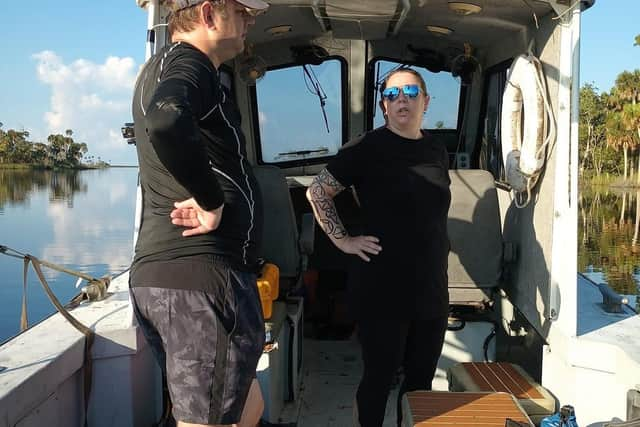
Among those taking part are Dr Simon Fitch and Dr Jess Cook Hale from the University of Bradford’s Submerged Landscapes Research Centre (SLRC) .
Dr Fitch said: “It’s really exciting. People from Indigenous backgrounds have a culture that stems back tens of thousands of years.
“As a broader society, we’ve not paid as much attention to that as we should have done. It’s important to acknowledge it. It is part of their history and culture.”
The project, under the Bureau of Ocean Energy Management (BOEM), is to last five years and will identify and then study these submerged archaeological landscapes.
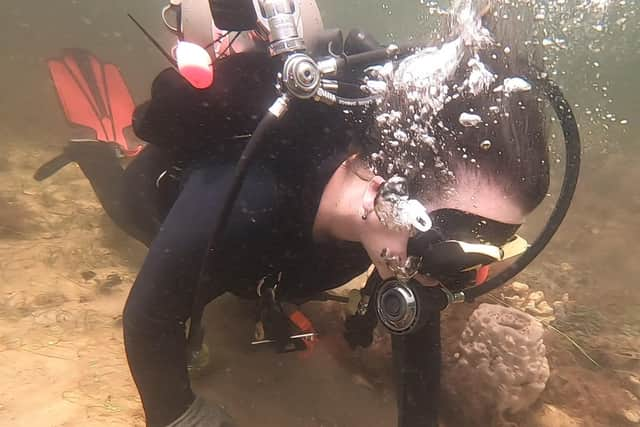
Experts are to carry out offshore surveys to find new sites, with divers exploring those already documented, and next year a PhD student will be appointed for Bradford University.
Despite more than a century of research, archaeologists still have many questions about sites left behind, teams explained, and about the people that once lived here.
Fewer than 50 such sites have so far been documented, and with many of them in semi-disturbed conditions. The project will help guide policy to preserve them for the future, while training the next generation of submerged landscape archaeologists.
Up to two dozen students will be trained in areas including geophysics, modelling, sampling and recording techniques, and there will be training and workshops with tribal communities.
Dr Cook Hale said: “One of the most important aspects of this project is knowledge transfer to Tribal Nations across the region. We know from multiple global examples that Indigenous stewardship of landscapes results in better outcomes.
“The Gulf has a long history of offshore development in oil and gas prospection that is now evolving into green initiatives such as offshore wind.
"It is critical that Tribal Nations be at the forefront of caring for these landscapes going forward, and we’re really pleased to be part of a project that can support that effort.”
The project is called Re-evaluating BOEM’s Guidelines for Identifying Submerged Pre-Contact Archaeological Sites in the Gulf of Mexico: An Extensive Geoarchaeological Approach.
Archaeologists from Bradford University will join partners from Florida State’s Native American and Indigenous Studies Center, Texas A&M’s Center for the Study of First Americans, the University of Tennessee, Chattanooga and the Smithsonian Institute.