
Thorns Gallery: How we converted an old cow shed into a top art gallery in the Yorkshire Dales
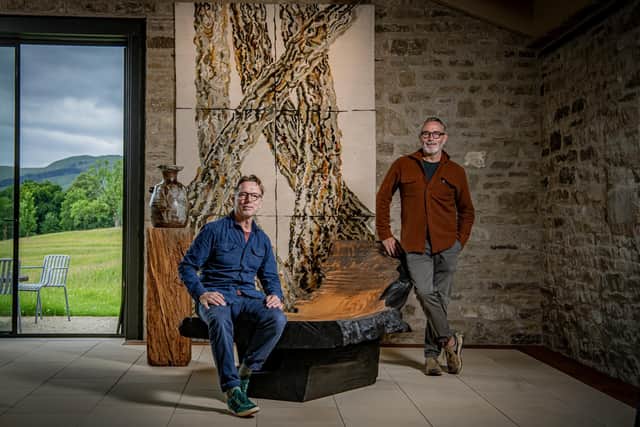
Last month Jonathan Reed and Graeme Black opened the Thorns Gallery in Raydale in the heart of the Yorkshire Dales. Sitting above Lake Semerwater surrounded by breathtaking scenery, an art gallery in a converted cowshed is the last thing you expect to see.

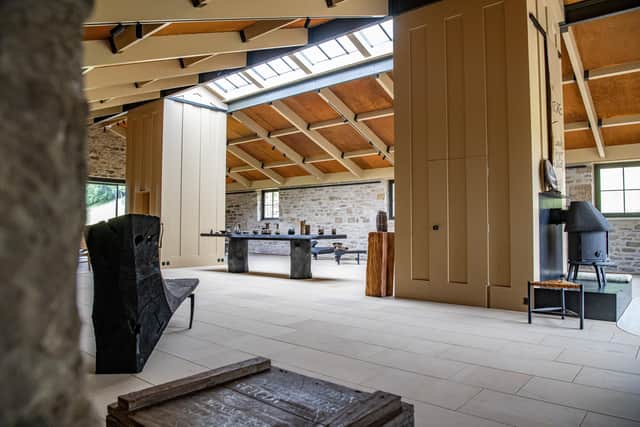
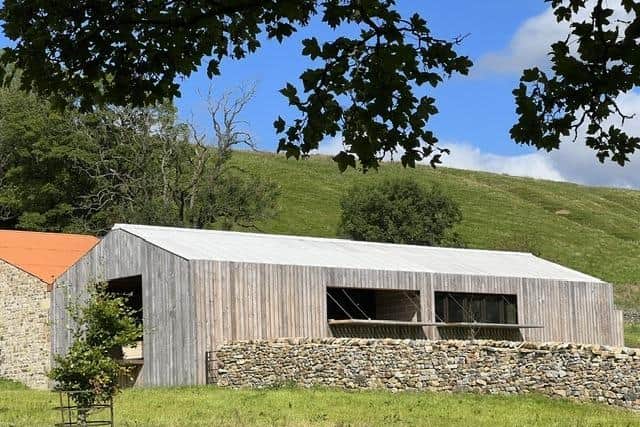
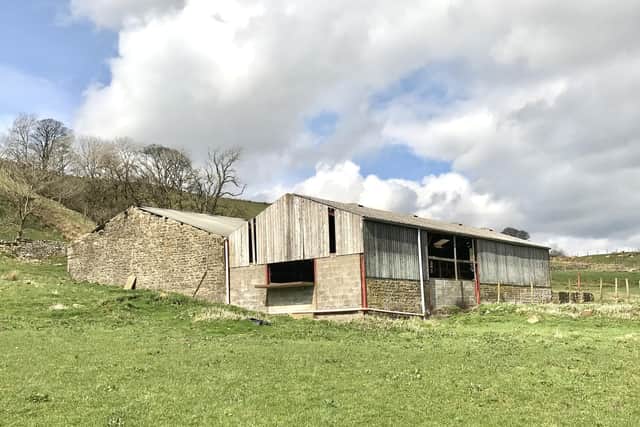
Constructed on the original footprint and largely from the salvaged remains of the existing cattle shed and milking parlour, the project is Jonathan’s response to the challenge of designing and building in a National Park.
The gallery, which also houses a professional kitchen and dining space for hosting visitors, shows the work of artists and makers who are inspired by the landscape and work with natural materials in all their forms. But for the couple it is far more than just an art gallery, it is part of their unique vision to create a new creative hub of food, culture and rural entertainment to attract people to their part of North Yorkshire.
Originally from Scotland, Black worked as an international fashion designer for brands including Armani and Ferragamo, before he decided to change direction for a slower pace of life as an artist. In 2014, with his husband, Yorkshireman Reed, a designer who has created unique homes for private clients for more than 30 years, he embarked on an ambitious regeneration project in nearby Upper Wensleydale.

It started with the purchase and renovation of a house built in the 1820s which sat in 300 acres of park and farmland on the Wood End Estate. “Unlike most houses around here which are farm houses our house was built entirely for pleasure, with parkland, a boathouse on the lake and walks through the woods. The developer had a big vision- to create mansions in the Dales for the gentry to visit. It was bold as people had only just started to visit the countryside for pleasure. He sold it in 1835 and we bought it from the descendants of those people who had used it as a shooting lodge until it became tenanted farm.” But by the time Reed and Black came across the house it was in a near derelict state.
“One of the motives for making the move was because it offered this endless scope for future challenges,” says Reed.
"We have spent most of our lives running around the world challenging ourselves to take on project and deliver them for clients, Graeme in fashion myself in architecture and interiors" says Reed. “So what might be abnormal for some people is quite normal for us."
But it wasn’t just about renovating the house. They set about ‘cleansing’ the land, says Black. “Replanting trees, making things good again as part of an environmental recovery project.”
They put the land into stewardship in a project with DEFRA and the National Park and have built up their own herd of shorthorn cattle and sheep.
"It’s all about reinvigorating the land and the land that surrounds us is all protected land including 70 acres of wildflower meadows,” says Reed. “And in the middle of this protected land we had these two buildings which were an absolute eyesore. They are a symbol of what has happened to the upland farming communities during the 20th century. The stone cattle building was built in the 1920s when farming became much more intensive and large scale, which is entirely inappropriate for the landscape we sit in.” In the ‘70s they added a milking block which also ran its course, which by the time Reed and Black bought the land they too were pretty derelict.
“They were a blot on the landscape and we both felt that we either had to knock them down or do something to repurpose them. The idea for the gallery was building on our life experiences,” says Reed. “I create spaces for people to live in, Graeme creates art work that needs to be shown in an environment that is akin to the place that someone might live in.”
“Also people need a reason to come to this beautiful area,” says Black. “To bring people together to show something interesting and to show off the view was fundamental.”
But what followed was a four year planning battle to change the use of the buildings which actually saw them open the gallery before securing planning permission.
"We felt very strongly that this was one of those projects that if your truly believed in it and the quality of what you are going to do, at the end of the day that can’t be expressed on drawings – we needed to lt them see it.” The gallery opened last month – with all the councillors, local community and farmers invited so they could see for themselves what the two men had created – and two weeks after opening they were granted planning permission.
“Without the incredible enthusiastic support of our local parish counsellor Yvonne Peacock MBE this project would not have been possible," says Black. “It is with her fresh vision for the Dales that innovative projects get the green light. Farming is a very important business but so is the creative industry that brings diversity to our community.”
It was important to both men that they used local craftsmen to create the Thorns Gallery, including Shaun Ashton and Neil Wallace from Middleton Forge) among other.
"It was a massive team effort to create this enterprise,” says Black.
"It’s isn’t just a gallery. it’s not meant as a tourist attraction it’s meant as a location where creative people can propose projects, whether its painting, whether it’s wellbeing.” The old cowshed is the gallery and milking parlour is very much a creative space and there is also a covered outside area. They have also renovated and created three different accommodations for creatives to stay in to enjoy the art and the environment around. All designed by Jonathan and populated with Black’s paintings. As part of this initiative they are also opening a restaurant, in collaboration with business partners Dave and Jules Colley, in Hawes called Bosc Kitchen which will open this Autumn after a two year renovation.
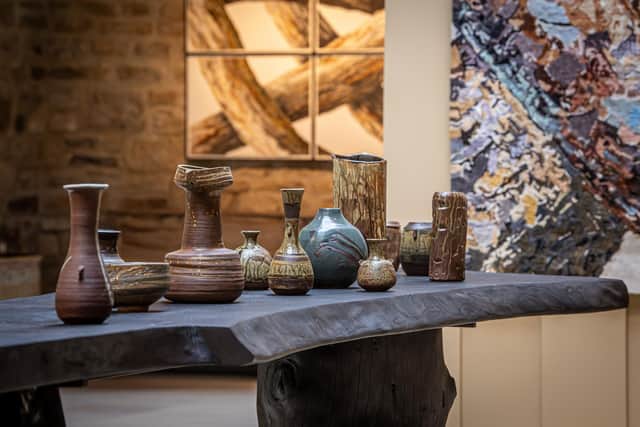
Its inaugural exhibition, ‘From Nature’ (until 14 September 2025) features works by Black, Simon Gaiger, and, in collaboration with Willoughby Gerrish Gallery, ceramics by Janet Leach. “There are few places where you can see that work in the type of place that inspired it,” says Reed.
Black presents a series of large-scale tapestries, handwoven by the Stephen’s Tapestry Studio in South Africa. The richly textured works explore the abstract forms and surfaces of trees and are based on his oil paintings, created during the winter in Yorkshire.
"Changing career was very difficult going from fashion ot being an artist but I was detertmined to do it properly and I find this space so inspiring.”
Black’s tapestries are presented with long-term collaborator Simon Gaiger’s collection of sculptural furniture, crafted in his outdoor workshop in Wales. Influenced by Gaiger’s childhood in Uganda, Sudan and the Pacific, as well as time spent working as a shipwright’s assistant, his pieces are made from raw timber and steel.
Complementing these contemporary works are ceramics by Janet Leach, dating from the 1960s and 1970s and sourced by Willoughby Gerrish, the gallery behind the nearby Thirsk Hall Sculpture Garden. “Leach was a contemporary and friend of Barbara Hepworth,” says Reed.