
Peak District: National Park celebrates 75th anniversary but climate, wildfires and funding present new challenges
The Peak District became a National Park 75 years ago today, but it wasn’t easy – and there are a different set of challenges today. John Blow reports.

There were, recalled the late Benny Rothman, “hundreds of young men and women, lads and girls, in their picturesque rambling gear: shorts of every length and colour, flannels and breeches, even overalls, vivid colours and drab khaki… multi-coloured sweaters and pullovers, army packs and rucksacks of every size and shape."
It sounds like an idyllic memory of youthful adventure - and it was - but what Mr Rothman remembered with these words in 1982 was the moment he addressed a crowd which intended to take serious action.
On April 24, 1932, hundreds of people took part in a mass trespass, walking over hills and moorland to the top of Kinder Scout, Derbyshire, in what later became - 75 years ago today on April 17, 1951, as a result of pressure such as that demonstration - the Peak District National Park, the first of its kind in Britain.
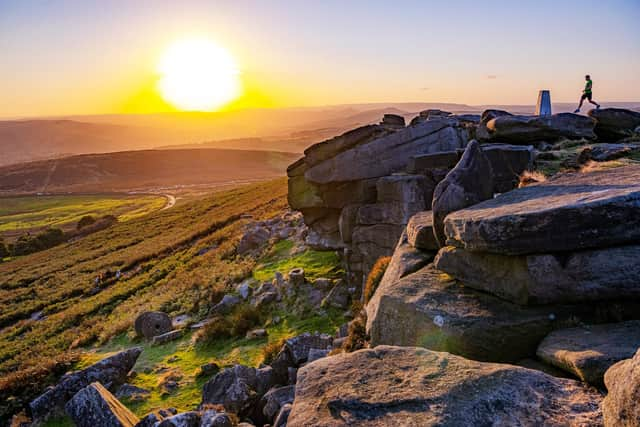

Campaigners wanted to find sanctuary in the countryside from the dark, sooty cities surrounding the Pennines.
Peak District National Park’s CEO Phil Mulligan, in a close comparison, grew up in the London suburbs under the Heathrow flight path.
His own first visit to a National Park was a walking and camping trip with school to the Lake District, but he visited the Peak District with his father as a young man.
Phil, now 57 and living in the White Peak area of the park, took up the role three and a half years ago after previous chief executive roles running environmental charities including the Landscape Institute.
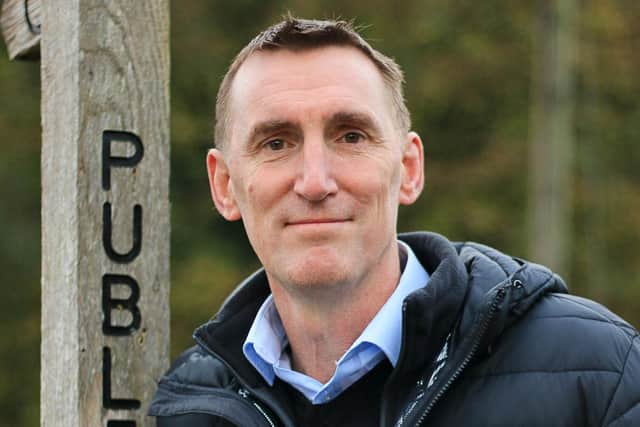
“The people I work with are amazing,” says Phil. “They are so committed and passionate about the place and what makes it so special. Living and working in such an inspiring landscape that has helped shape the nation is a real privilege.
“Seventy five years is a major achievement and I reflect on how many millions of people have come here and found something special, like learning about nature or discovering more about the story of our National Park. This significant number of visitors we see every year shows that we have been successful in helping preserve and enhance the landscape as it still holds appeal for those seeking adventure or quiet wonder.”
While one of the world's first national park was established at Yellowstone, USA, in 1872, the Mass Trespass in England 60 years later was a key moment in the fight for land access in Britain after centuries of restriction.
It was led by Mr Rothman, who then aged just 20 was the Lancashire secretary of the British Workers’ Sports Federation (BWSF), and followed a confrontation with gamekeepers three weeks earlier when ramblers attempting to reach another peak, Bleaklow, were forced to turn back during his group’s Easter camp.
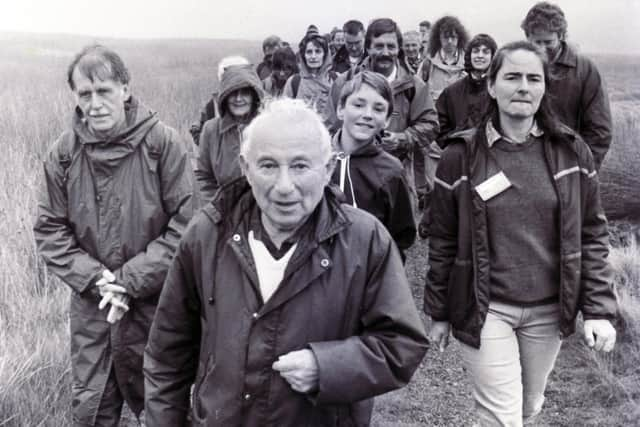
The plan was for ramblers from Manchester to meet up with groups from other places, including Sheffield in South Yorkshire, at the Kinder plateau.
At William Clough, they were confronted by gamekeepers and scuffles broke out. A gamekeeper was injured and the trespassers broke through, running through prohibited land to the plateau and meeting up with ramblers from Sheffield from the other side.
They walked together back to Hayfield, where police were waiting. The arrest of six young men – and subsequent imprisonment of five – prompted public sympathy for the ramblers and fuelled the right to roam movement campaign.
Benny Rothman and five other ramblers had been charged with unlawful assembly and breach of the peace. They pleaded not guilty and were remanded to be tried on July 7 and 8 at Derby Assizes.
Speaking in his defence at the trial, Mr Rothman said: "We ramblers, after a hard week’s work, in smoky towns and cities, go out rambling for relaxation and fresh air. And we find the finest rambling country is closed to us… our request, or demand, for access to all peaks and uncultivated moorland is nothing unreasonable."
Five of the six were found guilty of riot and received punishments of between two and six months in prison.
But the campaign couldn’t be quashed. In 1936, a voluntary sector Standing Committee on National Parks (SCNP) was formed, urging the government to act. Groups such as the Ramblers Association, the Youth Hostels Association, the Council for the Preservation for Rural England and its Welsh counterpart came together to lobby the government for measures to protect – and allow access to – the countryside for the benefit of the nation.
Progress stalled during the Second World War, but afterwards the demand for access to and protection of the countryside only grew. In 1945, the White Paper on National Parks was produced as part of the country’s post-war reconstruction.
The new Labour government set up a committee under Sir Arthur Hobhouse and in 1949, the government passed the National Parks and Access to the Countryside Act, described by Lewis Silkin, Minister for Town and Country Planning, as “the most exciting Act of the post-war Parliament”.
On April 17, 1951, the Peak District became the UK’s first national park, followed that year by the Lake District, Snowdonia and Dartmoor. The North York Moors and the Pembrokeshire Coast were designated in 1952 and in 1954 Exmoor, the Yorkshire Dales and Northumberland joined them. Now, the are 15 such parks in England, Wales and Scotland.
Of course, maintaining these huge swathes of beautiful land is no picnic - lack of funds and the climate emergency present real threats.
Asked about the park’s biggest challenges, Phil says: “A major challenge for our National Park is the decline in government funding. We are not just an amazing place to visit, but we also provide critical national infrastructure services which need core funding to deliver.
“We also face the challenge of managing the impact on our landscape from the large volume of visitors with the ongoing effects of a changing climate. For example, this increases the risks of wildfires which can cause devastating damage that costs millions to repair.”
In future, Phil hopes that “all national parks get the recognition they deserve for all they provide and deliver for nature, climate, local communities and visitors.
“I know people will continue to visit and I hope the organisation gets sufficient funding to provide impactful experiences, restore nature and protect wildlife.
“I want the heritage we maintain to still be there in hundreds of years, not just in another 75.”
A Defra spokesman said that in this financial year, the Government has provided £53m of core funding to the 44 Protected Landscapes (National Parks and National Landscapes) in England, and that funding for 2026/27 will be confirmed in due course.
He added: “Our National Parks are a source of great national pride and are playing a vital role in helping to achieve the government’s ambition of protecting 30 per cent of our land by 2030. That’s why we are providing an uplift of £23 million to support their work, in addition to up to £400 million a year which we are investing in restoring nature across the country."