
Yorkshire coast climate: ‘The winners and losers’ as seas off Yorkshire set to break record for highest average surface temperature since early 1980s
There will be winners and losers as sea temperatures around Yorkshire hit a 40+ year high, according to marine biologist Rodney Forster.

Mr Forster, director of Hull Marine Laboratory at the University of Hull, said news that seas off Yorkshire are set to break a record for the highest ever average surface temperature since records began four decades ago, showing a rise of about 2C since the 1980s.
“That’s quite a lot,” he said: “The long term trend is upwards. It’s our job as marine biologists to think about what that means.”
Mr Forster and team cover a patch which runs from Staithes in the north to Flamborough Head in the south and going out to sea for 12 miles.
He said the coldest year they recorded was in 1986 when average temperatures in the sea were 8.5C.
This year the average temperatures in UK waters as a whole to the end of July have been 11.4C, according to Met Office figures.
“Looking at 2025 we’re probably on track to have the warmest year in the Met Office’s about 300 years of air temperature records in England, and possibly the UK,” said Mr Forster.
“With the sea temperatures, we haven’t got records going back as long but we’ve got fairly accurate records going back to the beginning of the 1980s.
“We’ve been looking over the past couple of years at trends and changes on the east coast of England in particular.
“Last year and the year before were very warm also for the waters of the east coast. We go out to do measurements, we go out off Scarborough quite often, we go about 12 miles offshore and we measure dams through the water with our instruments. We also look at the surface of the ocean from satellites in space, that gives us a good measure.
“We are pretty confident of the changes in temperature that are going on and there are other things like buoys out in the ocean that we can get data from.”
He said that at the moment the temperatures this year are very close to the previous record in 2014, a difference of around 0.02C.
He said for marine life that means different things.
“Some species of plants, algae and animals will do well, some will be winners or losers. Maybe the more colder water ones will not do as well,” he added.
“Animals and plants in the sea are quite attuned to quite a small balance temperature, they’re not quite as resilient so some of our fish, seaweed species that we have along the Yorkshire coast, cold preferring species will gradually be shifting their distribution as this trend will continue and many will be replaced by more warm loving [species]. That’s what we are seeing right around the coast of the UK and Europe.”
But for species such as cod, which prefer colder waters, it will be a rarer and rarer find in the long term, Mr Forster said.
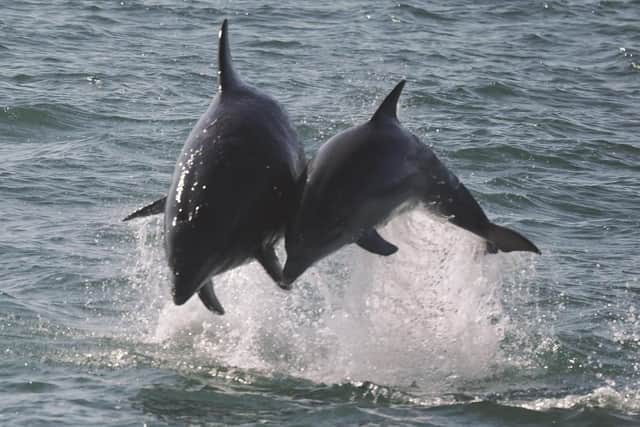

“Replacements are moving up from the south, fish like seabass, much more Mediterranean type, their numbers are increasing quite a lot. Some of the smaller shark and ray species are becoming more abundant now, thornback rays are very common now but that’s also partly because we’re not fishing as heavily as we used to in the past.
“At the minute, we’ve got a mixture of cold and warm loving species and a very rich and diverse flora and as temperatures change, we’re going to lose some of them.
“There is one that is very rare called Alaria, it’s a very big kelp. It used to be quite often spotted along the Yorkshire coast and we’re just not finding it now.
“I’m sure it’s still there somewhere but we don’t find much evidence of it and it is an arctic species. It’s probably going to be squeezed out as the temperatures warm.”
He said that because Yorkshire is one of the colder parts of the country, where waters are not yet warming to the extent that they are in the English Channel, we are not at the stage where some of our species will disappear yet.
In the Channel, where there is a summer temperature of around 20C, a lot of species cannot survive above that.

“We’re not seeing that in Yorkshire waters, we’re still in a goldilocks zone of a medium temperature but it’s something to watch for the future as these temperatures creep up and up that we will see changes happening,” Mr Forster said.
“It might be changes that are more difficult to observe, very small things, at the base of the food chain like plankton, people don’t see that with their eyes, and it might be more obvious things, there might be new species appearing on the coast.
“That’s where people can help by reporting and recording things that they see, by thinking about changes of things they’ve seen with their parents, things that are appearing now, things that might have changed. Their memories of the way people see the coast is very important.
“We’re trying to piece together changes in the seaweeds, before the 1990s there’s not a great deal of [scientific records], so we’re asking scuba divers, fishermen, to find out because not all of these changes are being recorded.”
But he said the rise in temperatures will mean a more pleasant environment for people.
“It’s quite interesting because the Combined Authority of North Yorkshire say they’re doing a lot of work thinking about this,” he said.
“For us it’s going to be a more pleasant, habitable place compared to the south of Europe; in the long term we’re going to see tourism, people wanting to spend the holidays away from these really hot areas with forest fires and droughts but also for the animals and plants on land as well as in the sea.
“It’s our job to work out what’s happening and try and get the right research in place.”
For Ana Cowie, marine advocacy manager for Yorkshire Wildlife Trust, what many people do not realise is that the North Sea is a big carbon store, with the impact of climate change being seen in the decline in seabirds.
“It’s a real concern, what a lot of people don’t realise is on our doorstep in Yorkshire, we’ve got the largest mainland breeding seabird colony in the entire UK,” Ms Cowie said.
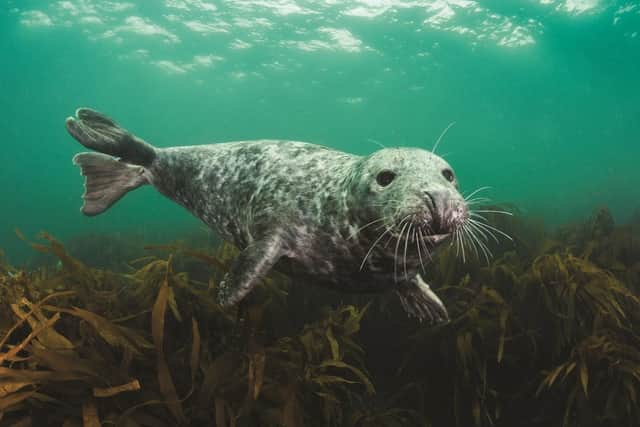
“We have regular sightings of harbour porpoise, bottlenose dolphins, minke whales and we’ve also got an ever-growing haul out of seals along this coastline, so it’s really vibrant and a wealth of wildlife.
“But unfortunately, we are seeing the impacts of many things including climate change; there is a real concern because with these changes in climates and changes in sea temperatures we are seeing shifts in species distribution. We are seeing more cold water species like cod, herring.
“They are moving further north and we’ve also got warm species that are becoming much more common in our area.
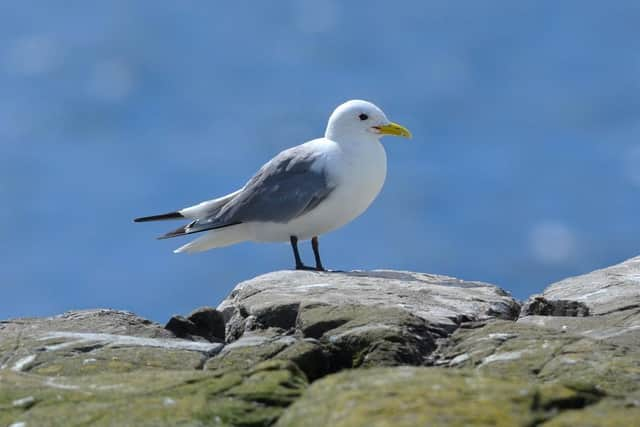
“Unfortunately with those UK seabirds, a lot of them are in decline, like kittiwakes and puffins, one of the likely reasons is because of that reduced availability of prey like the sand eels.
“They’re affected by rising sea temperatures and also acidification. We are concerned that warmer waters can attract new predators, native and non-native also could become more prevalent. So that’s something we’re keeping an eye on and trying to monitor.
“Another thing that’s really important and people don’t realise is that the North Sea is a major carbon store; we always talk about UK forests and woodlands, but actually our seas are massively important to store our carbon. I think the latest stats are that the English North Sea seabeds hold nearly 20 per cent of the carbon.”