
Leeds-raised author Lisa Carter inspired by Afghanistan veterans to write Six Poppies novel
Author Lisa Carter, who grew up in Alwoodley and Bramhope in Leeds, has released Six Poppies – a novel inspired by Afghanistan war veterans. Here, she writes about their story.
Every Remembrance Day we pay tribute to our armed forces. We wear poppies and we stand in silence to acknowledge the extraordinary sacrifices that they make. We remember those that have fallen.
And then we get on with our lives again.
Remembrance Day 2017 was different. That year, because of one particular, extraordinary man, I did not find it so easy to forget. It was the story of Rob French, a former Royal Marine, deployed to Afghanistan in 2008.
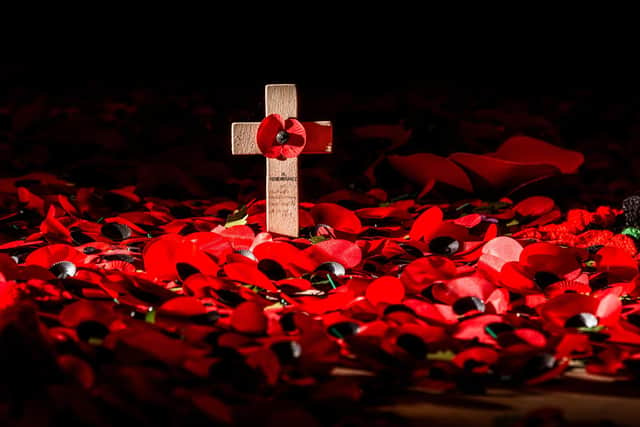

Back then, Rob was quoted in the newspapers saying: “Around this time of year the public start wearing poppies to show that they remember the fallen, but for me and all the other servicemen and women who have been to war, every single day is Remembrance Day.”
But it was not so much his words that stuck with me as his picture. A photograph taken of Rob’s back, and on it, an enormous, beautiful tattoo of seven large, vivid red, poppies.
Above the poppies sat the silhouettes of seven Royal Marines, drawn to represent Rob’s seven colleagues who all died within weeks of each other in Afghanistan in December 2008.
Rob said: “I decided to get the tattoo on my back so that they are with me and behind me, pushing me on, rather than holding me back.”

A few weeks later, unable to get Rob’s story out of my mind, I tracked him down. He warily agreed to meet me on condition that the story wouldn’t focus on him or portray him as a hero. On this he was adamant.
He had only agreed to have the original story published, he said, to raise awareness for the Royal British Legion’s Poppy Appeal.
“This is not for me,” he insisted. “It is for them. I am always remembering them. I carry on with my life but with them on my back they are always with me.”
He told me how the seven men had died.
Marine Damian Davies, Sergeant John Manuel and Corporal Marc Birch died when a 13-year-old suicide bomber approached them with a wheelbarrow packed with explosives. Lance Corporal Steven ‘Jamie’ Fellows was blown up in a separate incident the same day.
Marine Georgie Sparks and Marine Tony Evans were killed by insurgents armed with rocket-propelled grenades during a foot patrol in Helmand province.
Lance Corporal Benjamin ‘Ben’ Whatley, aged 20, was killed by enemy fire during a fierce battle on Christmas Eve.
Rob, 42, who served for nine years in the Marines, had been diagnosed with post-traumatic stress disorder and was clearly haunted by their loss, especially Ben’s. Ben was killed two weeks after Rob, a machine gunner, was sent home with a broken wrist.
“I have always felt that if I was still there I might have been selected to take that position on the same rooftop and therefore taken the round that hit Ben. I still live with that guilt now.”
For a long time the guilt was overwhelming. Until in 2015, two years after being medically discharged from the marines, partly due to complications from his broken wrist but also in part to suffering from PTSD, he reached out for help from the charity Combat Stress.
Rob was referred to one of their therapists and around the same time decided to remember his old colleagues with the tattoo. The therapy and the tattoo gave him some measure of peace but the guilt never really goes away. Neither does the PTSD.
Rob still suffers from night terrors and flashbacks to his time in Afghanistan that are so real he can literally feel the heat of the Afghan sun, smell the smells of the local bazaars.
And that’s what Rob’s story taught me. Not about the sacrifices our servicemen and women make when they go to war. But the on-going war so many of them battle with when they get home.
I started to research the war in Afghanistan. I read countless newspaper articles and testimonies of British soldiers who had served there. I read about the horrific things they had been through, the shocking things they had seen. I learned that, as of July 2015, a total of 454 British forces personnel or MOD civilians had died while serving in Afghanistan since 2001. I also discovered that 2,000 British soldiers and veterans are feared to have killed themselves since the Afghan invasion started. Two thousand.
In 2012, more soldiers and veterans took their own lives than were killed in combat in Afghanistan. All good people like Rob who fought for their country and paid the ultimate price.
I thought about those soldiers and Rob a lot. And then I decided to write a book about a fictional hero called Carl, a decent man struggling to get his life back together after serving in Afghanistan. After the war my hero Carl returns to his home in Yorkshire. It’s the county I grew up in, where my soul still resides, and where I knew I wanted the backdrop to Carl’s story to be set.
Carl’s character has PTSD and, like Rob and so many others, he is still haunted by the deaths of the friends they lost out there. As in real life Rob’s tattoo brought him some measure of peace, so too it was for Carl. But being back home also helped, spending hour after hour walking across the Yorkshire moors. Absorbing their stillness. Their silence. Their peace.
When, a year or so ago, I rang Rob to tell him I had a book deal he was thrilled. Not for him – again he begged me to tell that the story was not about him – but that it might raise awareness of the issues surrounding PTSD. Rob has worked tirelessly to raise money for military charities and awareness for PTSD. He was even among the guests for the Coronation of King Charles III in Westminster Abbey in recognition of all he has done. I hope that Six Poppies, which was published by Penguin last week, helps in some small way to raise awareness too.