
Brexit 'has completely reshaped British agriculture', NFU President says reflecting on 10-year anniversary
The farming industry has certainly seen one of the biggest shifts after the referendum with changes to subsidies, trade deals and imports and exports.

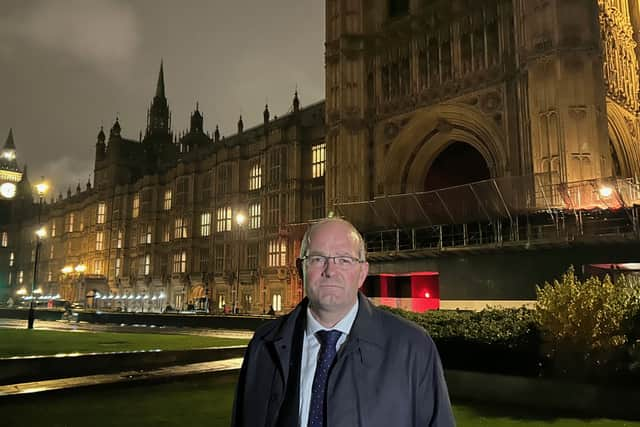
“Leaving the European Union has completely reshaped the landscape for British agriculture,” the president of the National Farmers’ Union has said, reflecting on 10 years since the referendum.
Tom Bradshaw highlighted new trade agreements, the end of the common agricultural policy (CAP) and import and export checks as some of the major changes that have affected farmers.
The farming industry has certainly seen one of the biggest shifts after the referendum.
There was a common narrative that “farmers voted for Brexit”, however Electoral Commission data has actually shown the reality is far more nuanced.
In Yorkshire and the Humber, 58 per cent of voters overall chose leave, while this figure dropped to 53 per cent amongst the agricultural community.
And in the years since, it’s easy to say why many farmers were reluctant to leave the EU.

Trade deals, in particular those signed with Australia and New Zealand by then International Trade Secretary Liz Truss, were accused of undercutting British farmers.
Former environment (Defra) secretary George Eustice has since admitted that these were "not actually a very good deal for the UK".
The latest trade figures show a huge rise in meat being imported from Australia and New Zealand, which farmers say show their fears becoming a reality.
Just before the 2024 election, farmers took to the streets of Westminster to protest these trade deals.
One Leave-voting farmer, Gavin Pearce, slammed the government’s free-trade agreements as “s***” and said Brexit has gone “terribly”.
Mr Bradshaw had rather more diplomatic phrasing, saying: “Since leaving, government has negotiated new trade agreements to replace those held by the EU.
“Farmers have had to remind ministers frequently that these must respect domestic production standards as well as create opportunities for high quality UK food to find new export markets.”
He added: “UK agricultural policy has also been completely re-engineered, most radically in England, where former CAP direct payments have been replaced by Environmental Land Management schemes (ELMs), notably the Sustainable Farming Incentive (SFI).
“That transition has neither been transparent nor predictable for our farmers and growers and has left us more exposed to extremely volatile global markets.
“What we need now is a clear framework of enabling policy that gives food production equal priority with environmental delivery backed by targeted investment, which we anticipate the Farming Roadmap could deliver later this year.”
Mr Bradshaw and other farmers are hoping that the prospective sanitary and phytosanitary (SPS) agreement can cut the red tape at the border without changing practices too much.
He said: We recognise the significantly reduced exports to the EU but it’s vital we get the right deal for UK farming; one that minimises disruption and has appropriate transition periods in place to enable farming businesses to adapt.
“We are also asking government to help safeguard areas of progress and innovation made by securing an exemption for the development of precision breeding technology and ensuring British farmers continue to have access to improved tools to tackle bovine TB.”
Country Land and Business Association director north Harriet Ranson said: “Brexit was supposed to create opportunities to reshape agricultural trade.
“The Australia and New Zealand trade deals were struck with more speed than consideration, risking increasing competitive pressure on UK farmers, while the benefits remain uneven and slow to materialise.”
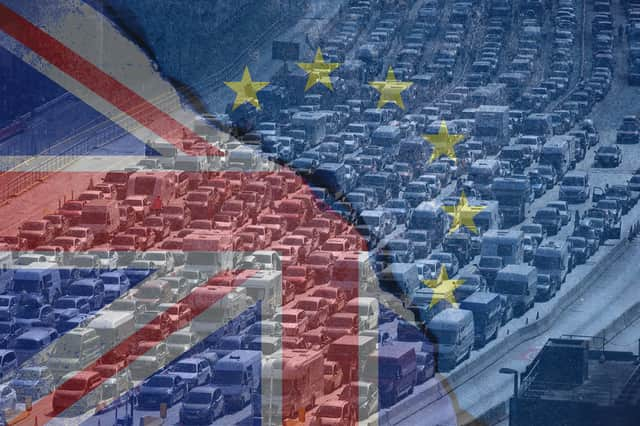
“The EU was, and remains, the UK’s largest trading partner. But the last decade has seen a significant reduction in UK exports to the EU, a substantial increase in red tape and numerous examples of British goods being left stranded at European ports.
“This trade friction has added some 8 per cent to the costs of UK exporters, in a market which has become increasingly competitive.”
_____________________
Today, Rose Mason and Ralph Blackburn reflect a decade after the decision to leave the EU changed politics.
Across a series of exclusive articles released on Monday online on The Yorkshire Post, the public perception and mood of Brexit is highlighted.
“Leaving the European Union has completely reshaped the landscape for British agriculture,” the president of the National Farmers’ Union has said, reflecting on 10 years since the referendum.
“Yorkshire was particularly poorer because of the importance of farming, manufacturing and food production,” North Yorkshire business owner Jo Foster said.
Unfortunately, the bitter referendum campaign has polarised the country, we believe.
Follow the rest of our coverage of the special here.