
Government welfare cuts likely to have bigger impact in North, analysis finds
The Government’s planned benefit cuts are largely more likely to impact the North than the South, Joseph Rowntree Foundation analysis has found.


The bill will limit eligibility for the personal independence payment (Pip), the main disability payment in England, and limit the sickness-related element of Universal Credit (UC).
Ministers have previously said the reforms could save up to £5bn a year by 2029-30.
But the JRF research has revealed that the parts of the country that will be hardest hit by the cuts have the fewest job opportunities.
It combined the number of people affected by the health UC cut, with those looking for work as a requirement of claiming the benefit.
There appears to be a significant North-South divide, not including London, with nine people on UC for every job available in Yorkshire and the Humber, compared with 2.9 people per job in the South East.
In former industrial areas, there is one “disability confident role” for every 333 on incapacity benefits.
Abby Jitendra, principal policy adviser at the JRF, said: “Cutting disabled people’s benefits won't magically create suitable jobs, particularly in those parts of the country that have long had weaker jobs markets.
“It's little wonder so many disabled people are fearful of the impact of the government's cuts.
“As MPs gear up to debate the government’s cuts, we urge the government to change course by protecting disabled people from the harm that these cuts will cause and offering a real plan to create good quality jobs across the country.”
The research was released as more than a dozen Yorkshire MPs signed their names to a Commons bid to halt the welfare reforms, the biggest rebellion of Sir Keir Starmer’s premiership.
Overall, 108 Labour MPs have signed a reasoned amendment declining to give the welfare reform bill a second reading when it returns to the Commons on July 1.
These include many who were elected for the first time last year, and have never broken the whip before.
The rebellion, the Prime Minister’s largest yet, would be enough to defeat the Government’s plans if opposition MPs joined the Labour rebels.
Worryingly for No10, The Yorkshire Post understands many other MPs across the region are considering rebelling, but have not gone public yet.
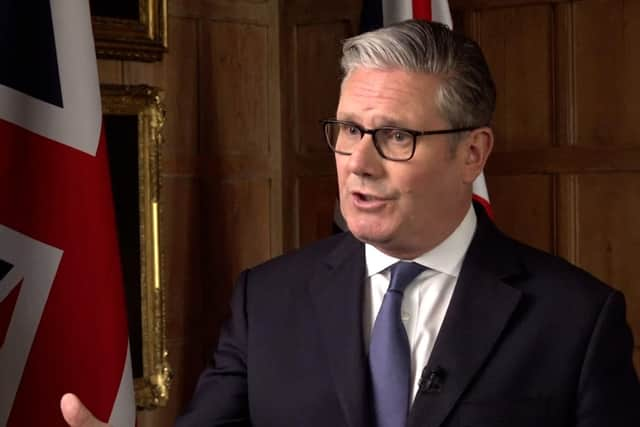
Despite this, Sir Keir said he would “press on” with the vote, saying there is a “clear moral case” for reforming the system.
While Culture Secretary Lisa Nandy told The Yorkshire Post the Government was “confident we can make that case and win the argument”.
Yesterday, as the rebellion went public, Government whips were ringing MPs who signed the amendment, trying to talk them down.
Sir Keir dampened suggestions that it was a confidence vote, which would have meant he would have to resign if he had lost.
However, some MPs told The Yorkshire Post that they would vote against the bill even if it was.
The amendment, published in yesterday’s order paper, notes there is a “need for the reform of the social security system”.
But it calls for the Commons to decline to continue scrutinising the Universal Credit and Personal Independence Payment Bill “because the Government’s own impact assessment estimates that 250,000 people will be pushed into poverty as a result of these provisions, including 50,000 children”.

There has been no formal consultation with disabled people who will be impacted by the changes, the MPs said.
Some 17 Labour MPs from across Yorkshire and the Humber have signed it as well, including former Transport Secretary Louise Haigh.
Shipley MP Anna Dixon, one of the rebels, told The Yorkshire Post that the “key issue” was the lack of consultation on Pip changes.
“I don’t think any of us want to undermine the Government and we haven’t taken this step lightly,” she said.
“But we have wanted to make our objections very clear and give the Government an opportunity to change tack before next week’s vote.”
Scarborough and Whitby MP Alison Hume, who has a disabled son, is also a signatory.
“The inescapable fact is that disabled people and their families and carers will be disproportionately harmed as a result of these cuts, and I can't square that with my conscience as a Labour MP,” she explained.