
HS2: bats have been prioritised over people of Leeds, Rachel Reeves says
Bats have been prioritised over the people of Leeds and West Yorkshire, the Chancellor has said, as she defended the Government’s planning bill.
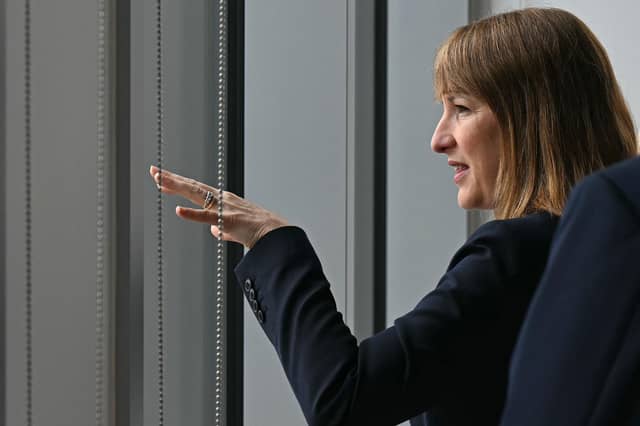


Ms Reeves appeared in front of the House of Lords Economic Affairs Committee yesterday, to talk about her year in charge of the nation’s finances.
This came at a tricky time for the Chancellor after official figures released yesterday showed higher-than-expected government borrowing last month due to soaring debt interest payments.
Ms Reeves defended her record, claiming that she had brought stability to the public finances and said that now she wanted to bring in reforms to drive growth.
The Chancellor urged parliamentarians to get the flagship Planning and Infrastructure Bill into law quickly as ministers look to reach their targets on housebuilding and major projects.
She was facing questions on Government amendments to the legislation designed to strengthen environmental protections, which one peer suggested would “make it easier” than in the original plans “to block and delay things”.
The Government has pledged to reach decisions on 150 infrastructure projects and build 1.5m homes over the course of this Parliament, which it says will drive growth.
The Chancellor said that ministers are of the view that their amendments do not “water down” or “weaken” the bill, and asked for people to be “sympathetic” towards the legislation as it heads towards the statute book.

Ms Reeves, who represents Leeds West and Pudsey, told peers: “The reason that HS2 is not coming to my city of Leeds anymore anytime soon, is because I’m afraid, as a country, we’ve cared more about the bats than we have about the commuter times for people in Leeds and West Yorkshire, and we’ve got to change that,
“Because I care more about a young family getting on the housing ladder than I do about protecting some snails, and I care more about my energy bills and my constituents than I do about the views of people from their windows.”
A £100m tunnel to protect bats along the route of the high-speed rail project has been singled out by ministers for criticism.
HS2 was originally planned to run between London and Birmingham, then on to Manchester and Leeds, but the project was severely curtailed by the Conservatives in power because of spiralling costs.
In 2021 Boris Johnson scrapped the Leeds leg and in 2023 Rishi Sunak axed the Manchester segment, with mayors describing it as a “betrayal of the North”.
Last week, Transport Secretary Heidi Alexander ruled out any chance of reviving the Leeds route of HS2 by lifting the safeguarding directions on the eastern leg.
This blocks developers from building on areas that are set to be used for large-scale infrastructure projects, like railways or roads.
More than 550 properties were acquired by HS2 Ltd ahead of the planned construction of the eastern leg to Leeds. Removing safeguarding means the process of selling them can begin.

Ms Reeves was under pressure yesterday after the Office for National Statistics announced that in June borrowing rose to £20.7bn – £6.6bn higher than a year earlier and the second highest June borrowing since records began, only behind that seen in 2020 at the height of the pandemic.
The ONS said interest payable on debt jumped to £16.4bn due to a large rise in Retail Prices Index (RPI) inflation impacting index-linked government bonds.
June borrowing was higher than the £17.6bn expected by most economists and the £17.1bn forecast by Britain’s independent economic forecaster, the Office for Budget Responsibility (OBR).
The figures have stoked fears that the Government will be forced to hike taxes in the autumn budget, with experts warning over “sin taxes” among measures to help the Chancellor balance the books.
Bank of England governor Andrew Bailey told MPs yesterday that he was “not unconcerned” by increased Government borrowing.
But Mr Bailey stressed in the Treasury Select Committee session that it was part of a global trend.
“The cost of borrowing has increased… but the important thing to say is that it is a global phenomenon,” he said.
Darren Jones, Chief Secretary to the Treasury, said: “We are committed to tough fiscal rules, so we do not borrow for day-to-day spending and get debt down as a share of our economy.”
Economist Rob Wood, at Pantheon Macroeconomics, said the Chancellor has a “major problem” to overcome, “created by U-turns on previously planned spending cuts and possible downgrades to OBR growth forecasts this autumn”.
He said: “We estimate that the Chancellor’s £9.9bn of headroom has turned into a £13bn hole, meaning that Ms Reeves would need to raise taxes or cut spending by a little over £20bn in the autumn budget to restore her slim margin of headroom.
“We expect ‘sin tax’ and duty hikes, freezing income tax thresholds for an extra year in 2029 and a pensions tax raid – reinstating the lifetime limit on pension pots and cutting relief – to fill most of the hole.”