
Special report: How West Yorkshire's tram project would change the face and fortunes of the region
With the consultation on the tram route hours away from closing, optimism is high among regional leaders that finally, the long-awaited pipe dream of a mass transit system for Leeds may be on the verge of becoming a reality.

There are, as ever, many hurdles to be crossed first. But for some, there is a sense that finally, stars are aligned - devolution bringing a regional leader with clout who can plan on a wider level - a Government making encouraging noises about infrastructure investment - and as an added bonus, a Chancellor (who will always make the ultimate decision) representing a seat in the city itself.
For some, the most key alignment is economic.
In part because of the decades of transport neglect the city has seen, the economic benefits are over-ripe - it now ranks among the low-hanging fruits of national infrastructure projects, in terms of economic return.
The region has done as well as it has despite its transport, meaning the potential for economic gain are higher than ever before.
Mark Casci, Head of Policy and Representation at West and North Yorkshire Chamber of Commerce is of this belief, and shares the city’s current optimism.
He told the Yorkshire Post: “The fact that Leeds has been as successful as it has is kind of remarkable because it's been a real albatross around our neck. I think the fact that the final piece of the puzzle is about to change is wonderful news.
“I love Yorkshire and I think Yorkshire has got a first classic economy, but there is no getting away from the fact that we've got the second poorest rate of productivity in the country.
“That's not because we've got a poor workforce in Yorkshire or we've got a lack of ambition or poor businesses, it's just because the actual logistics of getting around are problematic in the extreme.”
The current consultation, which ends on Monday, is for the very start of the scheme - a line from Leeds to Bradford, and a line through Leeds.
For Mr Casci, this pragmatism has helped the scheme’s cause.
“I think the way that West Yorkshire Combined Authority (WYCA) is doing it is very sensible. They're not going to try and boil the ocean and build everything simultaneously, they're going to do a track here a track there and just do it slowly but surely, which is exactly how the London Underground was constructed.
“That didn't just appear as an infrastructure project overnight, they did one line then another and building more and more stops and that's what the plan is for our region and it's a sensible one. “In terms of infrastructure it's one of the biggest undertakings - if it's expanded out to the level it's intended to, i.e to cover the entirety of West Yorkshire - it's one of the biggest projects in half a century.
“It's something we've tried and failed to do in this part of the world on numerous occasions, it's something we've been desperate for.”
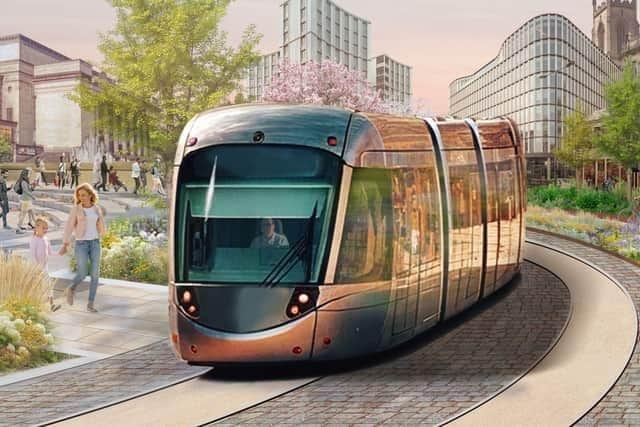

Mr Casci says while the immediate benefits of the scheme would be specific to West Yorkshire, in reality the growth will be felt by the rest of the country as well.
“It won't just deliver for Yorkshire, it will benefit UK plc.
“If we can get productivity up in Yorkshire, improve social mobility, and improve investment in Yorkshire the benefit of that doesn't stop at the top of the Pennines it ripples across the entire country and it will make us a more investable and a more attractive proposition to people from all over the world and within the UK.”
This wider benefit is a sentiment shared by Councillor Jonathan Pryor, executive member for transport at Leeds City Council, who represents the Headingley and Hyde Park ward for Labour.
He said: “All growth is local growth somewhere and the country desperately needs growth.
“The UK is not in a good place right now and I do think anyone needs telling that. The way to solve where we are now is to grow the economy and to get people better jobs, get people to better employment, better paid jobs and that can only be done if the economy grows.
“The economy can't just grow from London it has to serve everyone and with this tram this is really low hanging fruit to make sure that West Yorkshire economy is strengthened and we can do our bit and contribute to fixing the national economy.
“I think we are further ahead now than we have ever been before and there is a real willingness at every level of government, there is a real keenness to get this done.”
For Coun Pryor, Leeds’ unique human geography is another factor contributing to the importance of the scheme.
He said: “Leeds itself is a massive city of 800,000 people. We are the third largest city in the UK but with a very small city centre because we're laid out quite differently to a lot of other cities, which means you end up with a huge amount of people trying to get into it small area and that's just not sustainable in cars.
“Some people will always need to use cars and we always understand that but if we want to get more people to jobs and more people around we need better ways of moving people and getting them there.”
While political consensus of the project’s importance may be in plentiful supply, one potential risk the wider scheme faces is that all political capital is put into phase one, and the broader benefits available by expanding the scheme beyond are missed or delayed.
But Tracey Brabin, whose West Yorkshire Combined Authority is leading on the project, thinks the momentum gained in getting the first phase done will snowball, increasing the likelihood of extensions.
She told the Yorkshire Post: “ I don't think we're going to stall. I think once we start to catch the mass transit bug I think there will be no stopping further leaders that come on after me - because obviously I won't be here potentially to see the rest of it - but I really do believe when you see how this unlocks our economy, if we still have a government that wants to grow the economy across the country they will see this opportunity.
“In fact the infrastructure commission said something very similar that mass transit in West Yorkshire has been a long time coming and once you get going you will then be able to build those extra phases.
“We will have extra confidence from business - because we will have delivered the spine - to then have partnerships and a fair box that we can borrow against to build the others.”
She also said it was important to get views from as broad a range of people as possible in the consultation phase: “I'd make a plea for women, people from a diverse background, people with a disability to get involved with the consultation.
“We need those voices because we are at the beginning. Climate activists, you are here at the beginning.
“Tell us what you need and let's co-create this so we don't make mistakes that some mass transit do and then they have to unravel them later on which costs more money.”