
Rugby League World Cup review: Plenty of questions but few answers after underwhelming tournament

A month of World Cup action produced the odd moment to savour but ultimately flattered to deceive.
There was no change at the summit of international rugby league, with all three defending champions retaining their trophies.
Here, The Yorkshire Post takes stock of a tournament that raised as many questions as it answered.
The verdict
The tournament's success is a matter of perspective, depending on who you ask.
After attracting bumper crowds and record television audiences, those Down Under will tell you it was the best World Cup yet.
But ask somebody in England and you are likely to get a rather different verdict – assuming they even knew it was taking place.
Whereas a national audience could get behind England's bid for World Cup glory on home soil four years ago, free-to-air coverage was replaced by a paywall on Premier Sports. The result was barely a murmur beyond the traditional heartlands.


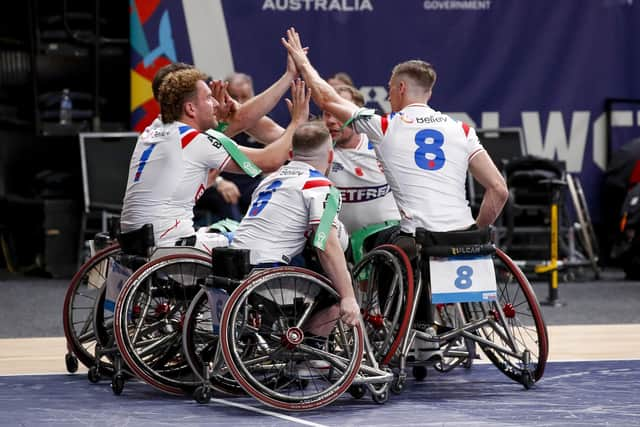
England Wheelchair provided some cheer with another World Cup triumph, in the only match shown live by the BBC, but this was a tournament that largely passed the nation by.
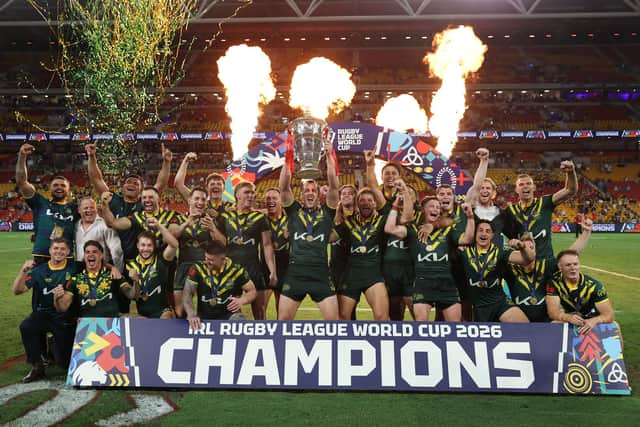
A new name on a trophy may well have salvaged this World Cup, yet the outcome was depressingly predictable with Australia once again enjoying double success in Brisbane.
The high point
As some suspected at the time, the tournament peaked on the opening night when Australia and New Zealand produced an instant classic.
The Kangaroos were second best for much of the contest, yet somehow outscored New Zealand five tries to three.
The Kiwis did enough that night to convince some they were the better bet to lift the trophy in Brisbane a month later and responded positively to the defeat with a string of powerful performances to reach the final.
But Australia simply did what Australia do, building into the tournament and saving their best for when it mattered most to leave New Zealand disappointed once again.
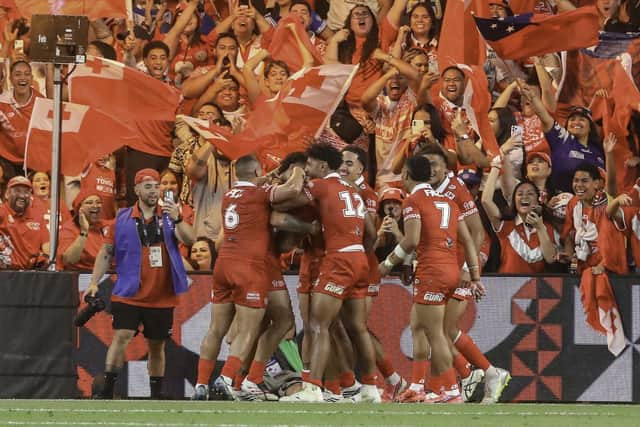
There were other rip-roaring contests – most notably the thrilling final group match between Pacific rivals Tonga and Samoa – but the World Cup never quite recaptured the quality of rugby league showcased on that opening night.
The biggest winners
In the end, for all the talk about emerging threats, it was another tournament that belonged to Australia.
Much of the focus in the build-up was on the growing threat posed by New Zealand and the Pacific nations, almost sidelining the Kangaroos despite their extraordinary World Cup record.
Star full-back Reece Walsh hinted at that frustration after Sunday's victory over the Kiwis.
"Everyone wrote us off, talking about how good all the other teams are," he said.
While Tonga and Samoa have undoubtedly made strides in recent times, Australia's ability to raise their game when the biggest prize is at stake shows just how much work remains for the chasing pack.
The biggest losers
There can only be one winner, or rather loser, here: England men.
Brian McDermott's side were set up to fail from the start with a startling lack of preparation time and a trip to Australia that would have made Phileas Fogg proud.
England duly lost to Tonga in their opening game and there was no time to recover in a tournament without quarter-finals.
Their World Cup ended before the semi-finals for the first time, prompting another round of soul-searching about the state of the game in this country.
The story that defined it
The biggest talking point, certainly on these shores, was the format used in the men's tournament.
Australia and New Zealand were paired together in a conventional four-team group, while the other six sides were left to battle for two semi-final places.
With head-to-head records initially used to separate teams level on points, England effectively faced a must-win clash with Tonga in their opening game.
The Tongans had the toughest route of all but were at least afforded a lifeline in the shape of a final group fixture against Samoa.
It was an awkward and uneven format that cannot be repeated in an era when at least five teams have a genuine claim to reach the final.
What England must learn from the tournament
If there is one lesson to take from this tournament, it is that England's fortunes will not improve while the national team remain an afterthought.
None of the answers are straightforward but something radical must be done if England are to close the gap between now and 2030.
That starts with a proper international calendar, one that gives the national team protected windows to prepare and play meaningful fixtures during the domestic season.
Over to you, RFL.
Where next for international rugby league?
England's midseason headache is unlikely to disappear anytime soon but they do at least have blockbuster series to look forward to: New Zealand at home next year and Australia away the following year.
International rugby league is thriving in the southern hemisphere, helped by the success of the Pacific Championships.
By the time of the next World Cup, slated to take place in the United States and the Pacific Islands, the international landscape could look very different.
England cannot afford to be left behind. The forthcoming series offer an opportunity to rebuild momentum and reconnect with supporters but that will count for little unless the national team are given the preparation, planning and priority they deserve.