
Budget 2025: how much extra tax will someone on £30,000 pay as Rachel Reeves extends threshold freeze to 2031?

Rising wages may mean you end up paying more in tax and National Insurance 💸
- Workers are set to pay more in tax as frozen thresholds pull more of their earnings into taxation
- Rachel Reeves’ Budget freeze affects both income tax and National Insurance, increasing bills even without rate changes
- Rising wages mean more income is taxed at higher rates, a process known as fiscal drag
- A typical £30,000 earner will face a higher combined tax and NI bill compared with previous years
Chancellor Rachel Reeves’ 2025 Budget has confirmed a move that will quietly hit millions of working people: income tax and National Insurance thresholds will remain frozen until April 2031.
While the policy itself isn’t new - thresholds were first frozen by the former Conservative government in 2021 - an extension by three more years is set to tighten the squeeze on everyday pay packets, even without an official rise in tax rates.
Because thresholds are not adjusted for inflation, salaries that would have remained in the basic tax bracket over time are slowly “dragged” into higher tax rates, a phenomenon known as fiscal drag.
The Office for Budget Responsibility (OBR) estimates that by 2030, nearly a million more people will be pulled into paying income tax, with 750,000 joining the higher rate bracket. The measure is expected to raise over £50 billion for the Treasury.
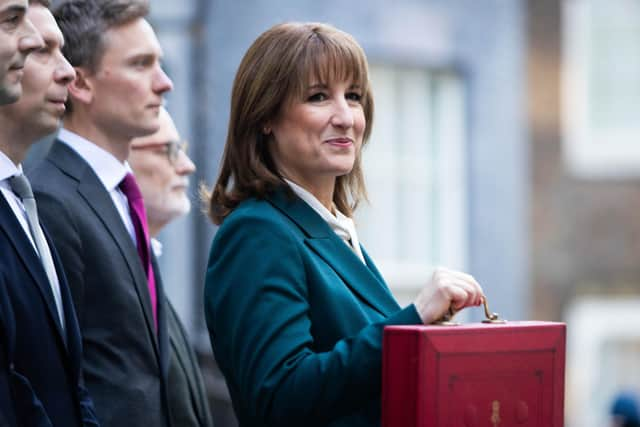

Reeves defended the move in the Commons, saying “I am asking everyone to make a contribution,” and acknowledged the decision would impact working people, framing it as part of a broader strategy to ensure fairness and fiscal responsibility.
Reeves had previously criticised the threshold freeze when in opposition, accusing the Conservative government of “picking the pockets” of working people.
Now, as Chancellor, she has extended it beyond the originally planned 2028 endpoint, prolonging a policy she once opposed.
How much more could somebody on £30,000 pay in tax?
Though earners of around £30,000 are very unlikely to be dragged into a higher tax band, even with the threshold freeze (the basic rate band goes up to £50,270), it may still feel like a stealthy pay cut.
It should be noted that as your salary increases, you naturally pay more income tax, even if you stay in the same tax band. But normally, income tax and NI thresholds rise with inflation.
That means as your salary increases, the tax-free part and the basic-rate band usually rise too, so the portion of your income that gets taxed stays roughly in line with the cost of living.
Income tax has a personal allowance, the amount you can earn before paying any tax, but as your salary rises over the years, more of it will be taxed at the basic rate of 20%.
By 2030, a £30,000 salary growing with inflation (at 3%) might be taxed on around £22,000 instead of £17,400, raising income tax by roughly £940 per year.
How do frozen National Insurance thresholds make a difference?
National Insurance is a separate tax on your earnings. You start paying it once you earn above £12,570 per year. Most of your pay is taxed at 12%, but any money above the upper earnings limit (also £50,270 per year) is taxed at 2%.
At today’s rates, that works out to about £2,092 per year for someone earning £30,000.
With the government freezing NI thresholds, the point at which you start paying NI won’t rise with inflation.
If a £30,000 salary grows with inflation to around £34,700 by 2030, the amount subject to NI would increase, even though the employee hasn’t moved into a new rate. This would mean paying roughly £2,656 in NI, a rise of about £564 per year.
Together with income tax, this means a £30,000 earner would be paying about £1,500 more per year in tax and NI by 2030, even though they haven’t moved into a higher tax bracket.
The impact is not just limited to those already paying tax. The OBR predicts that the extension of threshold freezes could create over five million new taxpayers over the decade, including individuals on the full new state pension.
What else is changing?
The Budget also introduced a suite of other tax measures. New charges will hit homes valued over £2 million and £5 million, while electric vehicle owners will face a mileage-based tax aimed at encouraging greener transport.
Pension contributions above £2,000 will be taxed, and Individual Savings Account (ISA) rules will be altered, though details are still emerging. On the benefits side, the two-child cap on means-tested support will finally be lifted.
While many of these measures affect wealthier households, the frozen thresholds policy is a more universal, everyday concern.