
Artisan sausage firm which supplies Booths to sue council over 'catastrophic' investigation
Sausage makers are suing Calderdale Council for more than £500,000 over a ‘catastrophic’ food safety probe into their ham, high court filings have alleged.
Porcus People Limited is demanding £575,106 in damages for what it claims was an ‘egregious, flawed and unmerited’ investigation that forced a 10-day closure of their operation and imposed ‘unjustified’ restrictions on products.
Calderdale Council denies all liability and says the claim is ‘entirely misconceived’, arguing it has no common law duty of care to protect a business from economic loss when acting to protect public health.
The Todmorden company, led by Sarah-Jane Clegg and Nataliya Clegg, farms free range pigs to produce hand-made artisan sausages and charcuterie sold at select farm shops, restaurants, and hotels, and high-end supermarkets like Booths.
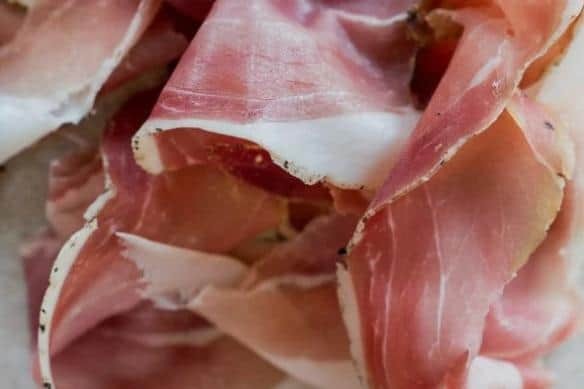

The dispute centres on what Porcus claims was a ‘fundamental’ error in the way its air-dried ham was categorised during laboratory testing, which meant listeria was detected at an unacceptable level.
Listeria is a bacterium that can cause listeriosis, an illness that is most dangerous for pregnant women, children, older people, or those with weakened immune systems.
Of 181 known cases in England and Wales in 2025, death was reported for 28 of them.
Porcus argues its air-dried ham was a Category 13 preserved product, but the laboratory wrongly classed it as Category 8 ‘ham – cooked sliced’ under UK Health Security Agency ready to eat guidelines.
A ‘critical friend’ report commissioned from Peterborough City Council later concluded if the product had been categorised differently, the listeria levels detected would have been ‘satisfactory’ and ‘no enforcement action would have been required’.
Porcus also argue the council did not understand its product, namely the use of salt and sodium nitrate as preservatives and air drying to reduce moisture.
But in defence filings, the council has denied misunderstanding the business and said the UKHSA categories have ‘no bearing whatsoever on the issue of the acceptable level of listeria’.
The council also insists the dispute is not simply about how the ham sample was categorised, but whether Porcus could show the categorisation through regular pH and water tests to prove its products would not support listeria growth.
The case history stretches back more than a decade when David Bacon, an environmental health officer (EHO), found food safety management issues during routine inspections in July 2013 and November 2014, according to the court files.
Porcus and the council also communicated about an amended food safety plan, known as a hazard analysis and critical control point (HACCP), for sausages and bacon in December 2016, the documents show.
After another inspection by Mr Bacon in January 2021, Porcus agreed to stop selling smoked bacon or meals in a jar until they had provided updated HACCP documents, the court files say.
EHOs visited the site for a routine inspection in October 2023 but it was rearranged due to the director’s holiday plans.
Inspectors returned in January 2024 and noted issues with excessively hot water at the washing station; rusting shelves; and deep cleaning needed around the cutting area, according to the court documents.
Inspectors also asked for a review of HACCP documentation and advised routine sampling of all products ‘to verify their safety throughout their declared shelf life’.
Inspectors took ‘informal’ samples on February 1 2024 which were lab tested, leading to a request for formal samples of the air-dried ham on February 6.
Porcus had the air-dried ham tested independently at an accredited lab, resulting in negative tests for listeria and e-coli on February 13 which were shared with council.
But the council’s formal testing of the air-dried ham returned positive results for listeria on February 29, according to the court files.
In defence filings, the council says it offered voluntary closure (rather than a hygiene emergency prohibition notice) to Porcus because ‘there was an imminent health risk to the consumer’.
Porcus argue that had Calderdale Council issued a hygiene emergency prohibition notice, it would have been liable to compensate the business in the event it was wrong about the need for the closure.
The council has accepted the voluntary closure should have been put in writing, but maintains its officer explained it meant waiving the right to appeal and compensation.
The council also insists its officers were properly qualified and authorised, despite Porcus alleging a Calderdale ‘senior environmental health officer’ was ‘not yet a qualified or competent food inspector’ at the time of the enforcement action.
Porcus agreed to close and deep clean the premises, but when the test results arrived over email, they noticed the air-dried ham had been tested as ‘ham – cooked sliced’.
“This was a fundamental and catastrophic error which led to the defendant interpreting the presence of Listeria monocytogenes as ‘unsatisfactory’,” Porcus argues in its particulars of claim.
Inspectors returned on March 4 and took environmental swabs that came back negative for listeria on March 11, allowing Porcus to re-open with a four-day shelf-life restriction on the air-dried ham.
After follow-up visits identified disputed food safety concerns in July 2024, the council handed Porcus a remedial action notice (RAN) restricting ready-to-eat products to a four-day shelf life, the defence filings say.
Porcus claims the council had become ‘fixated’, was acting in ‘bad faith’, and this was case of ‘targeted victimisation’ that made their preserved products ‘virtually unmarketable’.
On September 27, two Calderdale EHOs seized Porcus charcuterie products from the Calder Cheesehouse on Burnley Road, Todmorden, because their shelf-life exceeded four days, according to the defence.
Those products were later condemned by Bradford Magistrates’ Court.
By this point, Peterborough City Council had become involved as an intermediary with its officer recommending a shelf-life of four weeks for some products and four days for others until ‘pH and water testing’ was in place, the court papers say.
Calderdale issued a new enforcement notice on some Porcus products, which was withdrawn on December 11 2024 once the council had received the new pH and water tests – required to prove the shelf stability of the products.
For its claim, Porcus relies on a ‘critical friend report’ by Peterborough City Council’s, published on January 3 2025, which said: “In our opinion, based on the results we have seen, if the food was a category 8 food, we would not have closed the entire business.
“However, we would have instructed the business to recall the [air-dried ham] and remove it from sale and cease further production until such a time that the matter has been resolved satisfactorily (e.g. HACCP review, environmental sampling, verification product sampling, and route cause analysis).
“If Porcus People Ltd had not co-operated with this instruction, we would have considered detaining the product whilst those investigations were carried out, and we would have served a remedial action notice (RAN) to cease production of the air-dried ham only.
“If the evidence was available to prove the air-dried ham was in fact a category 13 food not category 8, this would change the course of action in that the sample would not have been tested for presence/absence of Listeria but would have been enumerated as and thus, would have been satisfactory.”
Porcus also relies on a report by food safety expert Dr Slim Dinsdale, who was ‘surprised’ by the categorisation of the air-dried ham as ‘ham – cooked sliced’.
In Dr Dinsdale’s opinion, the ingredients listed on the air-dried ham ‘should have alerted the food examiner that this was a preserved product, particularly the presence of anti-listerial sodium nitrite’.
He concluded: ‘My opinion is the products would not support the growth of Listeria monocytogenes because they have been engineered to be safe by way of the use of salt, sodium nitrite, and air drying to reduce the moisture content.’
On a claim form, filed at the King’s Bench Division in Manchester on December 22 2025, Porcus has said: “This is a claim by the claimant against the defendant concerning an egregious, flawed and unmerited Health and Safety investigation into the claimant company by the defendant.
“The claimant business has suffered a closure of their entire operation based upon flawed and incorrect testing, negligence and breaches of the applicable code and practice guide due to demonstrable negligence by the defendant.
"Further, the claimant business has suffered unjustified and prolonged restrictions on its products which seriously impacted its ability to trade. The claimant has suffered extensive financial losses and reputational damage as a direct result of the defendant’s erroneous and illegal actions.
“The claimant expects to receive more than £100,000 in damages. Its provisional estimate of damages is £575,106, comprising: loss of profits (to date) £232,770, loss of profit associated with stock and meal in a jar product £39,300, consequential loss due to herd recovery and breeding £10,280, consequential loss due to the forfeiture of grants £192,256, additional expenditure £58,000 and £32,500. Damages are also claimed for distress and inconvenience of no less than £10,000.”
In its defence filing, Calderdale Council has said: “This is an entirely misconceived claim in which the claimant appears to misunderstand the applicable regulatory regime.
“It is denied that the defendant owed the claimant a common law duty of care in the circumstances relied on by the claimant;
“It is denied that any actionable statutory duty (i.e. one giving rise to a right to compensation) is either pleaded or owed by the defendant to the claimant;
“The actions of the defendant are entirely consistent with the general enforcement principles and if and insofar as any actionable statutory or common law duty is owed the defendant has not breached the same;
“The major (and all) decisions in this case were entirely justified including: The decision to offer voluntary closure of the claimant’s premises on the 29 February 2024 in light of the circumstances and the detection of listeria monocytogenes;
“The decisions to serve eemedial action notices in July, October and November 2024, in respect of which the claimant did not exercise its statutory right to appeal the same and in regard to which its own advisers have accepted certain actions to be justified;
“The decision to detain products supplied by the claimant to its retail client Calder Cheese House and ultimately seize and obtain a condemnation order from the magistrates in respect of which the claimant did not exercise its statutory rights to oppose or appeal the condemnation.
“The claimant is put to proof of its losses which are in any event denied. Damages for distress and inconvenience should be struck out.”
A 10-day trial window is listed between July and November 2027, with costs totalling £891,696.40p approved by the court (£465,266.90p for the claimant and £426,429.50p for the Council).
A Calderdale Council spokesperson said they were unable to comment due to ongoing court proceedings.
Porcus People Limited and Sarah Jane Clegg were approached for comment.