
Whitby: History of Yorkshire coast town that inspired Bram Stoker's Dracula and hosts annual Steampunk Weekend event

Whitby has a deep heritage which spans more than a thousand years that inspired Bram Stoker’s novel Dracula - here is its history ahead of the Yorkshire town’s annual event Whitby Steampunk Weekend.
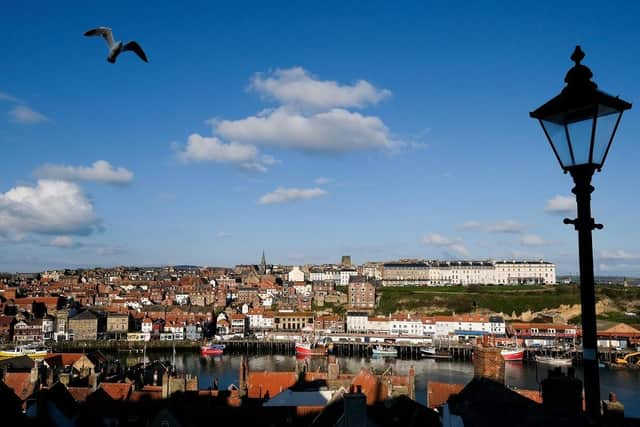
Whitby is a coastal town and port with a maritime, mineral and tourism economy and from the Middle Ages, Whitby had prominent herring and whaling fleets.
It is where Captain Cook learned seamanship and explored the southern ocean in HMS Endeavour which was built there.
The main trades in Whitby were alum and jet jewellery which was fashionable during the 19th century.
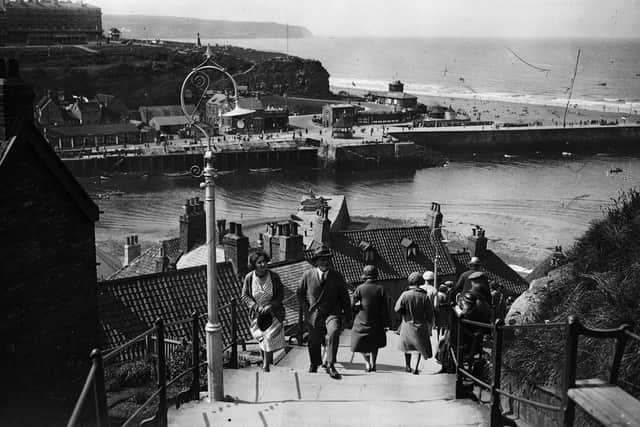

Tourism took off in Whitby during the Georgian period and developed with the arrival of the railway in 1839. The abbey ruin is the oldest and most significant landmark in Whitby.
The town is also part of the coastal stretch known as the Dinosaur Coast or the Fossil Coast, which runs from Staithes in the north to the south to Flamborough.
Dinosaur footprints are visible on Whitby beach and the area contains fossils and organic remains including jet.
A popular event that attracts tourists from all over the country is the annual Whitby Steampunk Weekend which will take place from Friday, February 7 to Sunday, February 9, 2025.
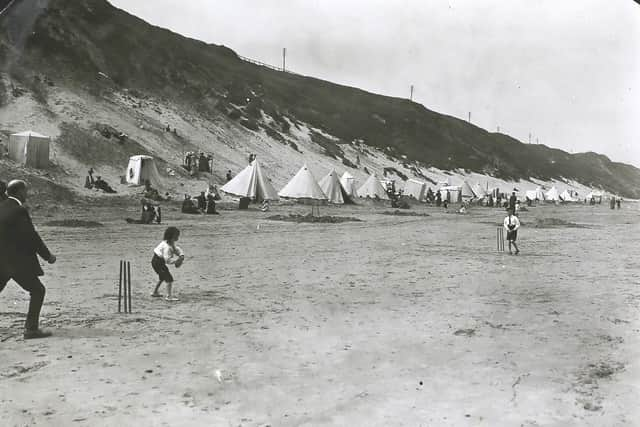
There are unique seminars, vendors, activities and presentations as well as the chance to dress up in your finest steampunk attire.
History of Yorkshire coast town Whitby
During the 7th and 8th centuries, Whitby was called Streanæshalc, Streneshalc, Streoneshalch, Streoneshalh, and Streunes-Alae in Lindissi in records.
In the 11th century, it was called Prestebi, from Old Norse býr meaning ‘village’ and presta meaning ‘of the priests’. In the 12th century, its name was recorded as Hwitebi and Witebi, from the Old Norse from hvítr meaning ‘white’ and býr meaning ‘village’. The name was changed to Whitebi in the 13th century and Qwiteby in the 14th century.
The first monastery was founded at Streanæshealh in 657AD by King Oswiu or Oswy of Northumbria. The first abbess was the royal princess Hild, who was later venerated as a saint.
The monastery was destroyed between 867 and 870 in a series of raids by Vikings from Denmark until their leaders Ingwar and Ubba. The site remained abandoned for more than 200 years until after the Norman conquest in 1066.
Following the conquest, the area was occupied by William de Percy who, in 1078 donated land to establish a Benedictine monastery dedicated to St Peter and St Hilda.
Whitby was recorded as being a small settlement lying within the Langbaurgh Wapentake of Yorkshire and more details reveal the state of the town’s economic and agricultural decline compared to its pre-conquest state under Earl Siward, due to the depredations of William the Conqueror’s army during the Harrying of the North in 1069-1070.
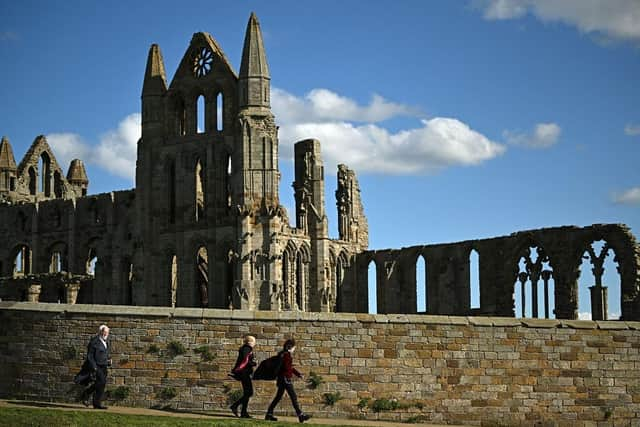
In December 1539, Whitby Abbey surrendered when Henry VIII dissolved the monasteries and a year later, the town had between 20 and 30 houses and a population of around 200.
During the reign of Elizabeth I, Whitby was a small fishing port and at the end of the 16th century, Thomas Chaloner visited alum works in the Papal States. At the time, alum was significant for medicinal purposes, in curing leather and for fixing dyed cloths.
Whitby grew in size and wealth, expanded its trade to include shipbuilding using oak timber and in 1790-1791, the town built 11,754 tons of shipping, making it the third largest shipbuilder in England, after London and Newcastle.
In 1753, the first whaling ship sailed to Greenland and by 1795 Whitby had become a prominent whaling port.
Although, by 1831, the market for whale products dropped in demand and only one whaling ship, the Phoenix, remained.
James Cook trained as a collier and in shipping coal from the port when he was young and HMS Endeavour, the ship commanded by Cook on his voyage to Australia and New Zealand, was built in Whitby in 1764 by Tomas Fishburn as a coal carrier named Earl of Pembroke.
The Royal Navy bought the ship in 1768, refitted and renamed and Whitby flourished as a spa town during the Georgian period when three chalybeate springs were in demand for their medicinal and tonic qualities.
The Whitby and Pickering Railway was built and connected Whitby to Pickering and York, and played a significant role in the town’s development as a tourism destination.
The period of iron ships in the late 19th century and the development of port facilities on the River Tees resulted in the decline of smaller Yorkshire harbours.
Bram Stoker’s 1897 novel Dracula was set in Whitby, featuring pieces of local folklore, including the beaching of the Russian ship Dmitry and Bram discovered the name ‘Dracula’ at the old public library.
A scholar suggested that he chose Whitby as the site of Dracula’s first appearance in England because of the Synod of Whitby.
There was a hospital shipwreck in October 1914, when Rohilla sank, hit the rocks within sight of shore just off Whitby at Saltwick Bay and 74 people died out of 220.
The fishing fleet remained popular during the 20th century and few cargo boats used the port and was revitalised as a result of a strike at Hull docks in 1955, when six ships were diverted and unloaded their cargoes on the fish quay.