
Tim Spector: 'Caring for your gut health is more powerful than you think'

Medical doctor and gut health expert Tim Spector says the connection between our gut and brain is much more powerful than many people realise.
His new cookbook explores how food can influence our mood.
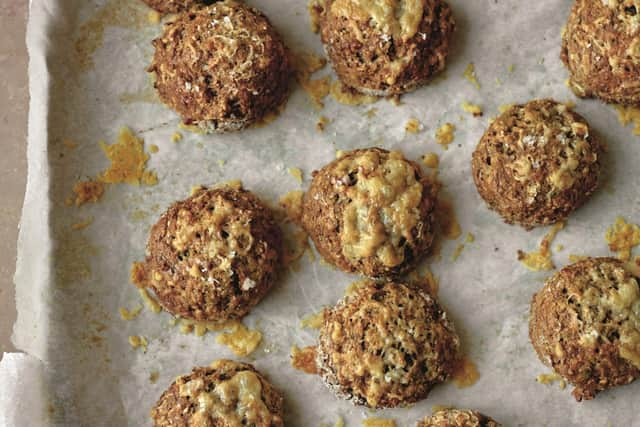
Cheesy seeded scones
“These are lovely with a spoonful of kimchi scooped on top or served with a pâté. They are best frozen the day or day after you make them,” says medical doctor and gut health expert Tim Spector.

“To defrost, simply remove from the freezer the night before and leave at room temperature. To serve warm, heat in a toaster or warm oven, or blast in a microwave for 15–20 seconds.”
Prep: 15 minutes. Cook: 15 minutes. Makes: 12 scones. Plants: 5. Fibre: 5g
Ingredients: 185g mix of hazelnuts, pecan nuts, walnuts; 210g wholemeal rye flour, plus extra for dusting; 80g mixed seeds; ¾tbsp bicarbonate of soda; 1tsp salt; 100g Cheddar cheese; 250ml kefir; 2 eggs; 2tbsp milk
Top-up: A handful of roughly chopped nuts for added texture
Swaps: Wholemeal or buckwheat flour for rye flour; Greek yoghurt for kefir
Preheat the oven to 200°C/180°C fan/400°F/gas 6 and line a large baking tray with baking parchment.
Put the nuts into a food processor and blitz until very fine. Transfer to a large bowl with the rye flour, mixed seeds, bicarbonate of soda, salt and three-quarters of the Cheddar cheese.
Whisk the kefir with one of the eggs and add to the dry ingredients. Gently mix everything together using a wooden spoon or spatula – be gentle with the mixture as overworking it will result in a tough dough.
Tip out onto a floured surface, knead gently to bring the dough together (flour your hands if necessary) and roll out to a thickness of 2.5cm. It will be slightly sticky – this is normal.
Use a 5cm round cutter to cut out 12 scones and transfer them to the prepared baking tray. Whisk the remaining egg with the milk and use a pastry brush to brush the tops of the scones with the egg wash. Then scatter the remaining Cheddar cheese over the tops.
Bake for 15 minutes, then cool on a wire rack. Keep a few to eat over the next couple of days and freeze the rest in batches.
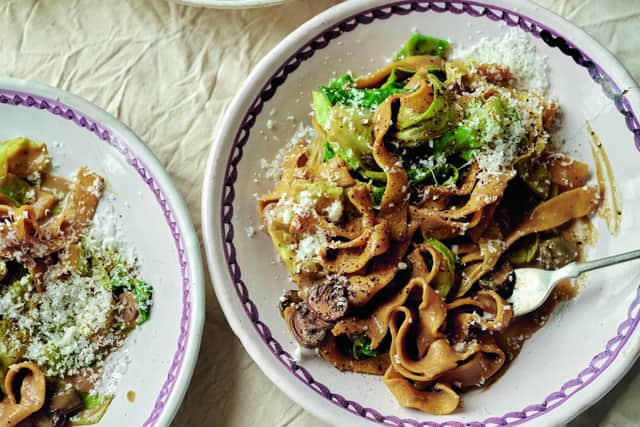
Mushroom and hispi cabbage pappardelle
“Here the rich and intensely flavoured sauce is made using dried mushrooms, their stock, silken tofu and miso.
"Hispi cabbage is shredded to resemble the pappardelle, which adds another layer of flavour as well as increasing the plant and fibre count of this recipe,” says best-selling author and medical doctor Tim Spector.
Prep: 8 minutes. Cook: 15 minutes. Serves: 4. Plants: 6. Fibre: 5-10g
Ingredients: 20g dried mushrooms; 3tbsp extra virgin olive oil 600g portobello or chestnut mushrooms; 4 sprigs of thyme, leaves picked; 3 garlic cloves, finely chopped; 100g silken tofu; 1tbsp miso; 130g pappardelle pasta; 1 hispi cabbage, leaves picked and shredded to resemble pappardelle; Salt and black pepper
Top-ups: Chopped nuts or seeds; Chopped parsley; Parmesan cheese, to serve
Swaps: Any pasta for pappardelle; Savoy cabbage for hispi
Cover the dried mushrooms with 120ml of boiling water and set aside to rehydrate.
Heat the olive oil in a large non-stick frying pan over a high heat and sauté the fresh mushrooms and thyme for 10–12 minutes. They will release a lot of liquid while cooking – keep cooking until the liquid has evaporated and the mushrooms are soft and starting to turn golden. Add the garlic and cook for 1 minute longer.
Place the tofu and miso into a bowl and add the rehydrated mushrooms, then gently pour in the soaking liquid, taking care to leave behind any grit from the mushrooms.
Use a hand-held blender to blitz until smooth. Season with salt and pepper, and stir into the mushrooms. Then remove from the heat.
Bring a large saucepan of salted water to the boil and cook the pasta for 7 minutes. Add the hispi cabbage, bring the water back to the boil and simmer for 1 minute longer. Drain, reserving the cooking liquid.
Put the mushrooms back over a low heat and add the pasta and hispi cabbage along with 8–10 tablespoons of the cooking liquid.
Stir until everything is heated through and the sauce is creamy and coating the pappardelle. Serve immediately.
Chocolate pecan bites
“These chocolatey bites taste as good as they look and are best enjoyed with a cup of freshly brewed coffee,” enthuses gut-health expert and best-selling author Tim Spector.
“Make sure you use a high-quality peanut butter that is 100 per cent peanuts as the labels can look very similar to cheaper varieties that often have added salt, sugar and palm oil. The same goes for the chocolate.”
Prep: 10 minutes, plus freezing time. Makes: 12. Plants: 6. Fibre: 5g
Ingredients: 80g dark chocolate (70% cocoa solids); 70g crunchy (100%) peanut butter; 70g berry chia jam – use fresh raspberries, mashed with a fork instead; 12 pecan nuts; Pinch of sea salt
Top-up: Mixed seeds
Swaps: Any nut butter for peanut butter; Walnuts for pecan nuts
Line a baking tray with baking parchment. Break the chocolate into small pieces and add to a heatproof bowl set over a saucepan of barely simmering water, making sure the base of the bowl doesn’t touch the water. Stir until melted. (Alternatively, microwave in 30-second bursts, stirring as it melts.)
When ready, spoon 12 circles, each about 3cm in diameter, onto the lined baking tray, making sure you leave enough space between each one.
Place a teaspoon of peanut butter on top of each, followed by a teaspoon of jam. Cover each one with the remaining melted chocolate.
Place a pecan nut on the centre and press down gently. Sprinkle some sea salt over the top, then freeze on the tray for 1–2 hours until set. Gently peel the bites off the baking parchment and store in a container in the freezer.
Extracted from Good Mood Food by Tim Spector, written with Dr Federica Amati and featuring recipes by Kathryn Bruton. Published in hardback by Jonathan Cape, priced £30. All photography by Issy Croker. Available now.