
Abattoirs face ban on gas which causes 'unnecessary' pain and distress to pigs in abattoirs

The Government has taken the first step towards banning the use of high concentration carbon dioxide to stun millions of pigs a year to spare the animals “unnecessary” pain and distress.
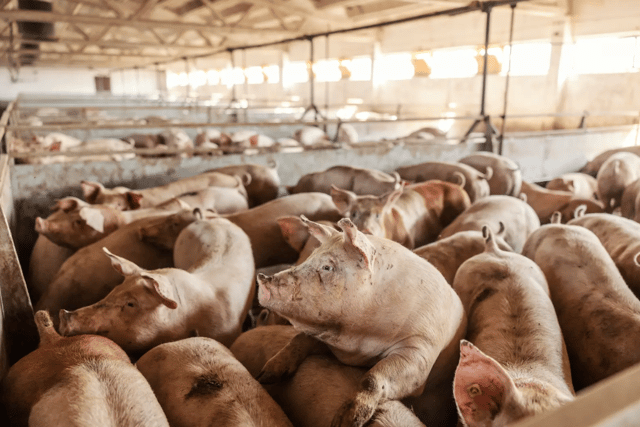
Carbon dioxide is used to stun 90 per cent of pigs that are killed in the UK, a total of 9.7 million a year, including at abattoirs in Yorkshire, despite concerns dating back 20 years.
The government says there is “clear evidence” that using more humane alternatives - such as an inert gas like argon or automated electrical stunning – “substantially reduce animal suffering”. A consultation which runs until December 21 has been opened seeking views from the industry.
Defra says its preferred policy is to ban carbon dioxide (CO2) in slaughterhouses after a three-year transition period.

Farming Minister, Stephen Morgan said: "We are a nation of animal lovers - pigs are intelligent animals that deserve to be treated with care and respect throughout their lives including at slaughter.
“The public want to know the meat they buy in the shops is produced in a way that supports high standards of animal welfare. These plans will help deliver that and reduce unnecessary suffering.”
He said the government is committed to supporting the industry to make the transition.
CO2 is considered a serious welfare issue because it is a highly “aversive” gas which causes pain, fear and respiratory distress.
In contrast animals cannot smell, taste, or detect the presence of argon, and it does not trigger a panic or escape response.
Defra says slaughterhouses would be able to continue using existing stunning pits with modifications, but extra pits may be needed as argon stunning takes longer.
It estimates switching to argon would cost an extra 87p per pig, a 58% increase, while AHDB estimates an increase of £1.07 per pig.
Chair of the Animal Welfare Committee Madeline Campbell said continued use of CO2 was “ethically unacceptable” when there were more humane alternatives.
She said: “I hope that all stakeholders will now work together to overcome the acknowledged challenges for industry which such a move presents and deliver that change within a transition period which is as short as possible.”
Trade association, National Pig Association, acknowledged the welfare concerns, but said a new approach had to be commercially viable to ensure British pork continued to be produced.
It said a three-year transition is “totally unworkable”, adding: “So far, research and trials have not revealed any feasible alternative which can provide improved pig welfare at commercial scale.
"We will be communicating to Defra the importance of a reasonable transition period which allows for thorough testing of all alternatives to ensure they do indeed meet the required objectives.
“Defra must also consider the impact on our domestic pork sector of continued imports of pork produced using CO2 stunning.”
Anthony Field, Head of Compassion World Farming UK, said the move is an “important and long awaited step towards improving pig welfare”. He said: “The change cannot come soon enough. We hope the outcome of this consultation will be an ambitious timeline for phasing out cruel CO₂ slaughter for pigs.”