
Exclusive:Mayor opposes huge Light Valley Solar farm near York
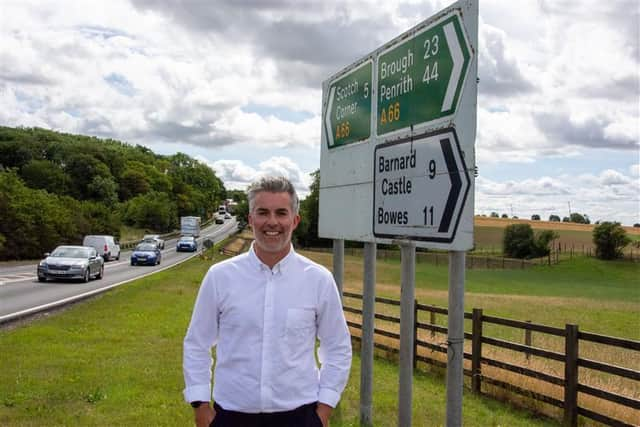
The Mayor of York and North Yorkshire has revealed he will oppose a 2,600-acre solar farm at Escrick as it is on high-quality agricultural land.

In a letter to residents seen by The Yorkshire Post, David Skaith said that large pieces of infrastructure should be built on “brownfield or ‘grey belt’ sites”.
The mayor was responding to concerns from residents about Light Valley Solar (LVS), which will be formed of seven separate farms between York and Selby.
These will be set up between the villages of Escrick, Monk Fryston, Hambleton, Chapel Haddlesey and South Milford.
Further land would be used for underground cabling to connect the sites to the national grid at Monk Fryston substation, and a 500MW battery energy storage system (BESS) is also proposed.
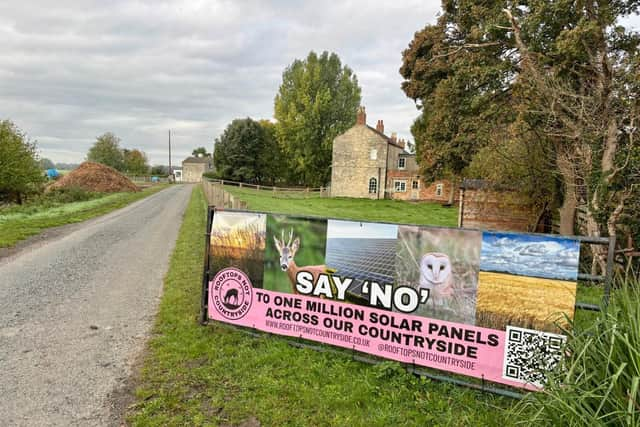

As the development has been categorised as Nationally Significant Infrastructure Project (NSIP), the local authority does not make the decision and instead it will be taken by the Planning Inspectorate, on behalf of the Government.
Mr Skaith said: “Even though local councils do not have powers to directly intervene in NSIP projects, consultations are still taken with local councils and with the public.”
Explaining his opposition to the scheme, the mayor wrote: “I personally believe that when we are building large pieces of infrastructure like solar farms, we should prioritise using brownfield or ‘grey belt’ (land that is part of our green belt but is already built on) sites or the rooftops of buildings, instead of using land that would be suitable for farming.”
He later added: “As Mayor, I am proud to support initiatives that seek to find innovative new ways of creating clean energy that are less disruptive to our rural communities.”
LVS has already faced opposition from Selby MP Keir Mather, who wrote to Island Green Power UK Ltd, the company behind the scheme.
Mr Mather said he objected to the size of the project, with much of the designated land being classified as ‘best and most versatile’ for food production, the impact on wildlife and the disruption to local roads.
Annette Lardeur, senior project development manager for LVS, said the firm “welcomed feedback from the community and elected representatives”.
She said: “As part of the site selection for Light Valley Solar, we investigated available brownfield sites across a wide area but none were suitable, either individually or in combination with other sites.”
“We are grateful to everyone who has taken part in our consultation, which has helped shape our design of this scheme,” Ms Lardeur added.
“There will be more opportunities to comment if the application is accepted for examination.”
This is one of a number of solar schemes that is facing opposition from regional and national politicians.
Yorkshire has been the focus of a huge number of clean energy developments due to its terrain and access to the grid.
More than 300 solar farms are currently in the planning pipeline across the region, with the 3,500-acre Whitestone Solar Farm in Conisburgh, South Yorkshire, on green belt land which is attracting the ire of a number of local MPs.
South Yorkshire Mayor Oliver Coppard referenced this at The Yorkshire Post’s Great Northern Conference this week, saying there was a “disconnection” about where energy was produced and who benefits.
“For me the challenge is if you are going to have that energy infrastructure in your back yard, then you have to have cheaper bills as a result” he said.
“That is where the challenge lies. If we are going to support and build that energy infrastructure in the region, then our communities need to see the benefit of that, be it cheaper bills for businesses or households.”