
'This is not the outcome we wanted' - grouse moors owners' failed court bid


Grouse moor owners have been refused permission by the Court of Appeal to appeal against new regulations which restrict burning on deep peat.
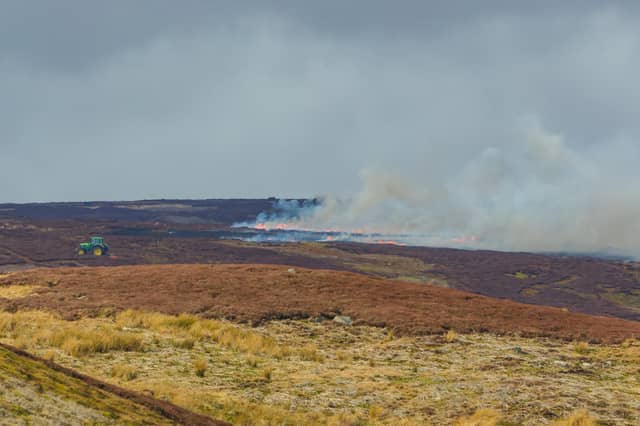
Land managers systematically burn areas of moorland to remove old, tough heather and encourage the growth of young, highly nutritious green shoots.
This ensures an abundant food supply and varied shelter for red grouse. Supporters say burning also plays a key role in reducing overall fire load and the risk of larger wildfires.
However new restrictions were introduced last September which seek to protect deep peat, which acts as the country's largest terrestrial carbon store, is a vital natural filter for drinking water, and acts as a buffer against flooding.
In January High Court judge Mrs Justice Lieven refused permission to the Moorland Association for a judicial review of Defra’s new regulations, which limit the depth of peat where fires can be lit.
The association, which argues the new regime compromises wildfire safety by allowing flammable, overgrown vegetation to build up, appealed the ruling.
A Judge at the Court of Appeal has now also refused permission for the case to proceed. In a blog last week, Moorland Association chief executive Andrew Gilruth expressed disappointment.
It said: “This is not the outcome we wanted. We brought the case because we believed the Government’s approach to heather burning, wildfire risk and peatland management was legally flawed, practically damaging and environmentally short-sighted. We remain of that view.”
The association, whose members own and manage vast tracts of the moors in North Yorkshire, said it wasn’t an outright ban, because land managers can still apply for licences in certain circumstances.
Mr Gilruth said they would continue to “press for a regulatory system that is proportionate, practical and grounded in real-world land management”.
Defra says 80% of peatlands across England are dried out and deteriorating and actually emit carbon dioxide contributing to global warming.
The latest restrictions saw the burning ban extended to cover 676,628 hectares of deep peat, up from 222,000 hectares, an area equivalent to the size of Devon.
It expands protections to all deep peat in the uplands, and redefines deep peat from the current 40cm to 30cm depth.
The new system allows prescribed burning in exceptional circumstances. Defra says licences will only be issued where there is a clear need - for example to reduce wildfire risk.
Speaking last year Environment Minister Mary Creagh said: “Our peatlands are England’s Amazon Rainforest – home to our most precious wildlife, storing carbon and reducing flooding downstream.
“Burning on peatland releases harmful smoke ruining local air quality and damaging the precious ecosystems found in these iconic landscapes.
"Restricting burning will help us restore and rewet peatlands.”