
Ousewem: A catchment-wide approach to flood resilience


York is one of the most history rich cities in the UK, from its Roman and Viking military heritage, to the City Walls and its part in the railway revolution of the Victorian era.
Running alongside all of this as a constant, yet lesser spoken about history, is the River Ouse.
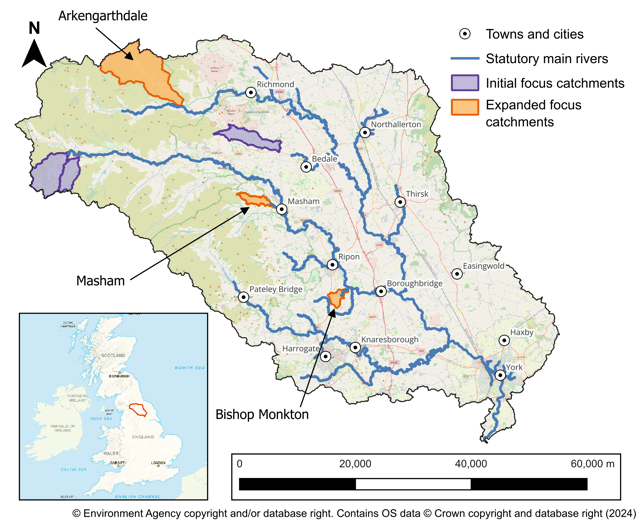
Around 60 miles long, the River Ouse is fed into by the Wharfe, Nidd, Swale, Ure and Foss tributaries in the Pennines, Yorkshire Dales and North York Moors areas.
The River Ouse chooses to make its own history though, and when it does, it can be devastating. It is estimated that in York alone, 3,000 properties are at risk of flooding from the River Ouse.
There are written records of flooding in York which date back to the 12th century. In living memory, the floods of March 1947, December 1982, October and November 2000 and Boxing Day 2015 are deemed to be the worst in modern history.
Images of people being evacuated by the military beamed into people’s living rooms across the Christmas period, particularly raising awareness of the damage and devastation caused.
It prompted the government and environmental authorities to take a different approach to flooding.
“Out of the Boxing Day floods ten years ago, there was an appreciation that things needed to be done differently,” commented Rachel Flood, Ousewem project manager.
“The investment led by the Environment Agency in partnership with City of York Council has meant that thousands of properties are now better protected. But flood walls and barriers alone are not enough. You cannot always build walls high enough, and that’s where natural flood management comes in as a complimentary approach. It’s about working with nature, slowing the flow and helping communities be more resilient – not trying to stop the river completely.”

Ousewem is one of 25 projects funded by Defra’s £200m Flood and Coastal Innovation Programme.
Over the last five years it has brought together partners - City of York Council, North Yorkshire Council, JBA, Natural England, Yorkshire Dales Rivers Trust and the University of York - and worked with farmers, landowners, businesses and communities to implement nature-based solutions (NbS), including natural flood management (NFM) across the catchment.
Farmers and landowners partnering with Ousewem are using practical measures such as temporary ponds, install leaky barriers and cross-slope hedges to slow or divert water flows, for example. These help slow water, giving communities and businesses downstream more time to prepare and reducing the impact of heavy rain. As a project, Ousewem emphasises that flood resilience is a shared responsibility: actions upstream directly affect water levels, homes and businesses downstream.
Education and awareness is another key theme. Working with schools, community groups and artists, a new route along the River Ouse will help people see York’s rivers differently. Developed with schools, community engagement and storytelling., this collaboration aims to share Ousewem’s legacy with residents and visitors, including teaching pupils about upstream land management, wildlife and community action in building climate resilience.
Ms Flood said: “What makes Ousewem different is the strategic approach. We look at the whole catchment to see where natural flood management can have the greatest impact, not just on water levels but for wildlife, communities and businesses downstream. The work is more than managing floods – it’s about showing how the river and its landscape connect and helping people understand the benefits of a more resilient York and North Yorkshire for years to come, and exploring new ways to fund and invest in these solutions.”
BLOGS:
READ MORE: