
Sheffield Wednesday administration: What does it mean for crisis-torn Owls?

Sheffield Wednesday have gone into administration as six months of financial turmoil finally caught up with owner/chairman Dejphon Chansiri.
Although the financial problems around the club have gone on much longer than that, it is since the spring that they have become overwhelming.
An application was filed with the Insolvency and Companies Court at the High Court on Friday morning.
Business recovery and insolvency firm Begbies Traynor, who have wide experience of football administrations, will take over the running of the club under joint-administrators Julian Pitts, Paul Stanley and Kris Wigfield. Wigfield is an Owls fan and season ticket holder.
How has this happened?
Of the many creditors who have not been paid on time this year, it is HMRC who have forced the issue by successfully issuing a winding-up petition over an unpaid tax bill believed to run into seven figures.
The Owls are currently under five transfer embargoes, including one for not keeping up with payments to HMRC, and have been under 10 in total since June. They have also been placed under "fee restrictions" which mean they cannot pay transfer or loan fees for signings until the summer of 2027.
Chansiri and the Owls were both charged by the Football League in June after failing to pay wages of playing and non-playing staff on time for the second time in three months. That has since extended to five times in seven months.
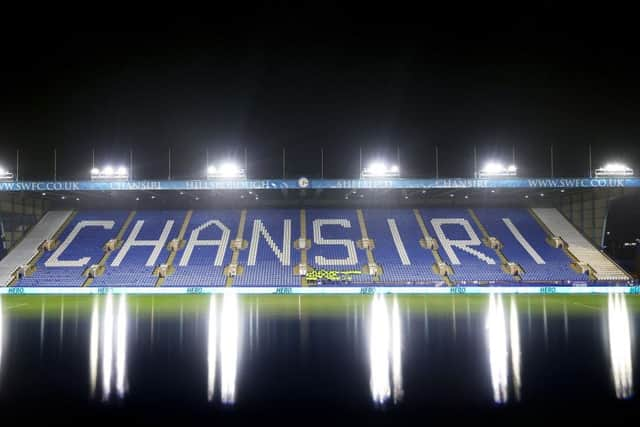

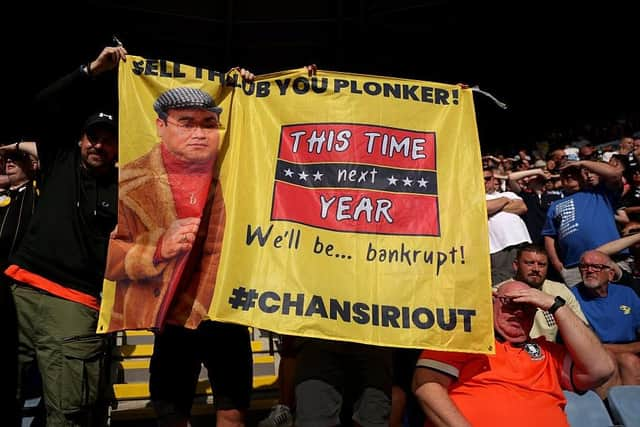
Supporters have been protesting against Chansiri's ownership in an attempt to force him out by highlighting his mismanagement and starving him of income.
The home game against Middlesbrough on Wednesday was the third match the club's supporters trust have boycotted, but the first in the Championship. The others were League Cup ties against Leeds United and Grimsby Town. On each occasion there were only around 3,000 home fans in the ground.
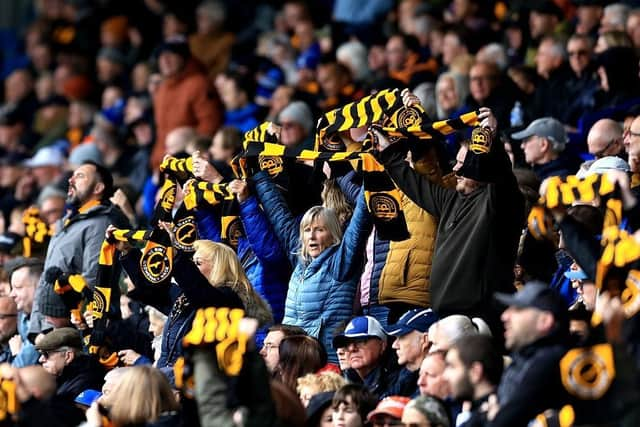
Match-going fans have taken to wearing black and gold “until the club is sold”, there have been protest marches, boycotts of club merchandise and in-stadium refreshments, and the problems have also been raised in Parliament.
Individual supporters have taken the decision not to attend matches even before matters came to a head this summer, with unhappiness at Chansiri's 10-year reign deep-rooted.
The administrators are now urging supporters to end their boycotts and start putting money back into the club. The Owls are at home to Oxford United on Saturday in a 3pm kick-off.
What does this mean?
Going into administration will not wipe the slate clean in terms of the Football League charges against the club which are expected to lead to a hefty points deduction expected as it is the club’s responsibility as much as the owner’s to meet their financial responsibilities, but it may mitigate them.
Clubs going into administration are deducted 12 points. With the Owls bottom of the league after 11 matches and playing with a threadbare squad because of their financial situation, it makes relegation from the Championship look ever more likely.
Wednesday will go onto minus six points with city rivals United, the club immediately above the Championship relegation zone, on nine.
The job of the administrator is to stop the 158-year-old club going into liquidation by settling debts, and to get the best possible price for the club.
Unsecured creditors must be paid a minimum of 25 pence for every pound owed.
Administration will make selling the club much easier. Chansiri's asking price was understood to be wildly unrealistic, with some putting it around the £100m mark. This was something the Football League referred to in August when it called for the Thai businessman "either to fund the club to meet its obligations or make good on his commitment to sell to a well-funded party, for fair market value."
Experts put that valuation at nearer the £30m-£40m mark, although with every week of dropped points, interest accrued and money lost at the turnstiles or in the club shop, that decreases.
Former Crystal Palace and current Lyon and Botafogo owner John Textor revealed recently he was one of "three or four" parties in discussions to buy the club. Textor has had his own financial issues, with Lyon briefly relegated to Ligue 2 over them in the summer, only to be reinstated.
The new owners will have to pass a "fit and proper person" test. Legislation to bring in a new, beefed-up version of the rules is currently going through Parliament so that the Independent Football Regulator can take charge of the process. At present it is in the hands of the Football League.
The new legislation is anticipated to come into being later this year.
Important for the club, Begbies Traynor will also oversee the administration of Sheffield 3 Ltd, which owns their stadium.
Chansiri split the ownership of Hillsborough off from that of the football club in 2019 in a failed attempt to get around financial fair play rules, but debts on that also became insurmountable.
Under football's rules, the administrators are expected to priorities players, managers, other clubs, the players union the Professional Footballers Association, the Football League and other associated leagues in that order before settling debts to other creditors, such as local business.
The Owls biggest creditor is Chansiri, who has poured in well over £100m since buying the club from Milan Mandaric in January 2015 in an attempt to get the club into the Premier League, but the only promotion they have managed was via the League One play-off in 2023 after dropping into the third tier for two seasons.
A fire sale of players is not possible until the new year, when the January transfer window opens. Goalkeeper Pierce Charles, the club's most valuable playing asset, is currently recovering from shoulder surgery. If a new owner can be found before then, they will be able to take over the process and look at it from a wider perspective than an administrator, whose job is simply to act in the best interests of the creditors.
What has the reaction been?
The Football League (EFL) has confirmed the 12-point deduction and said that it will now work with the club's administrators to end the uncertainty hanging over the club since the summer.
"The EFL will now engage in discussions with the administrators in respect of the immediate actions required to enable them to achieve an early resolution, and end the ongoing uncertainty faced by Sheffield Wednesday staff, management, players, supporters and all those associated with the club and their local community," it said in a statement.
Wigfield has urged fans to return to the club and get the cashflow moving again.
“Supporters are the backbone of any football club,” he said in a statement. “The money they spend at the gate and in the ground is vital. I’ve been a season ticket holder since 1984 and know first-hand the passion of this fanbase.
"Now, more than ever, we need fans back in the ground — buying tickets, merchandise, pies and pints. Every penny spent will go directly to supporting the day-to-day running of this club, not to the former owner or professional costs. This will help stabilise the club while we secure a suitable buyer.”
"There's a clear answer to that and the answer is yes," said Silverwood when the question was put to him by The Yorkshire Post earlier this week. "The reason it's a price worth paying is because Sheffie Wednesday can never move forward whilst Dejphon Chansiri is the owner.
"He has no respect for the football club, he has no respect for his place and role in the community, he has no respect for fans. He quite clearly cannot, not only does he not have the ability any longer to invest into the club if he ever really did, but he can't even pay the bills.
"If administration is the only way that's achievable, then it's absolutely a price worth paying."
Culture secretary Lisa Nandy struck a more cautious tone, saying: “For the fans, staff and players of Sheffield Wednesday this is an extremely worrying situation. Having been in this position with my own team, Wigan Athletic, I know everyone who loves the club will be hoping for a resolution as soon as possible.
“Situations like this are exactly why this Government set up the new Independent Football Regulator. Owners should be good custodians who act with their club’s best interests in mind and clearly, in this instance, that has not been the case.
“We are working quickly to give the Regulator the powers it needs so it can better secure the future of football clubs and ensure they remain at the heart of their communities."
More to follow...