
Middlesbrough judoka Charlie Ayre on Commonwealth Games medal and road to LA28

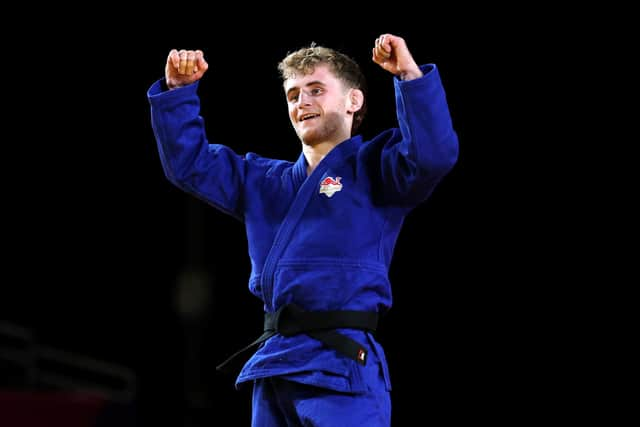
Defeat in the semi-final of a major competition can be a crushing disappointment, but at the recent Commonwealth Games, young Middlesbrough judoka Charlie Ayre had less than two hours to get over it.
For the nature of a judo competition demands mental strength as well as physical prowess.
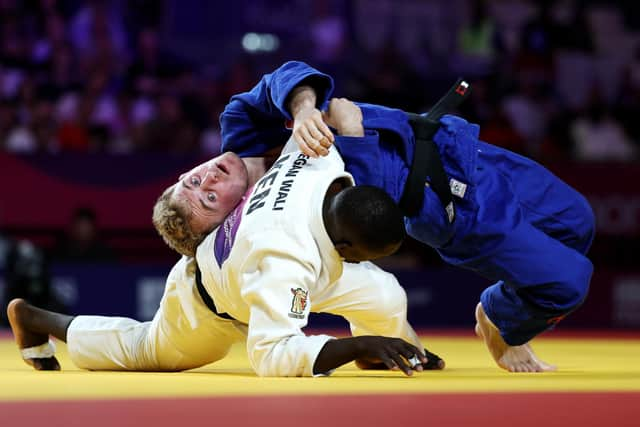
Ayre, 20, had no time to process his defeat to Australian Joshua Katz in the -60kg category because he was going straight back out onto the mat to face Kenyan Regan Wali for the bronze medal.
“You have to greet it as a good chance to look at how you can reset and make sure your mentality is in the right place before going into another big fight,” Ayre told The Yorkshire Post.

“There'll be a lot more matches like that over the years where things don't go quite how you expect them to and you’ve only got a couple of hours to move on from it.
“I find that I'm better at it now than I was when I was younger in terms of being able to sort of just think ‘I’ll worry about that at the end of the day or in a couple of days' time and we'll deal with it then’.
“I'm quite big on trying to float to the next task at hand.”
The proximity of the Games in Glasgow to where he is from in North Yorkshire meant his coaching team and close family members were all there supporting him - and all played a part in the quick reset.
“I came outside and said hello to the two of them and sort of chilled out for a little bit before I went back out and fought,” he said. “I spoke to my coach and just got myself in a better mental space really.”
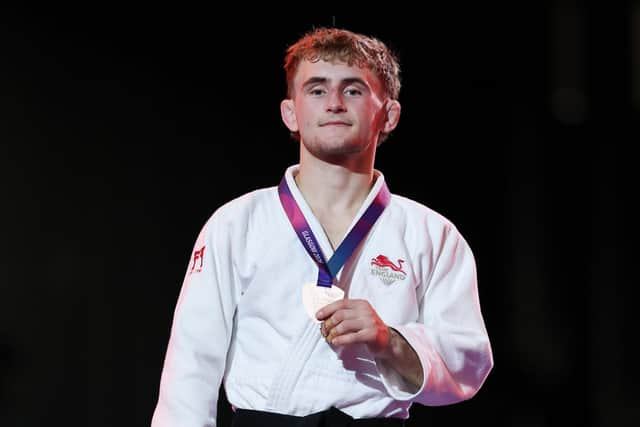
It did the trick, for Ayre went back out in front of the crowd and in the biggest showpiece moment of his career, delivered, defeating Wali to win the Commonwealth Games bronze medal.
“Great to come away with a medal - it looks good on the CV,” he said.
“Obviously it's not the medal I would have liked, but I got a lot out of it in terms of learning to take part in a multi-sport Games.
“It's not as big as the Olympic Games hopefully in two years' time but I think it still holds me in good stead of having that experience because it's a completely different feeling on the day to a normal competition.”
And that is the next big one on the horizon for Ayre - the Los Angeles Olympics of 2028.
His first year in the senior ranks suggests he is on the right trajectory.
As well as his big Commonwealth Games moment, there was also a first medal on the Grand Prix circuit in Qingdao in June.
From his exploits this summer he has already earned selection for the world championships in Azerbaijan later this year.
“For me personally, LA28 is very realistic,” said Ayre.
“To be honest, the weight category I'm in, obviously there's a lot of challenges that come with it, but it is typically a young person's weight category. There's a lot of other lads that have come through juniors with me or are very similar age to me, who are also doing pretty well from other countries. It's definitely taken some adjusting to in terms of the tactical aspect of it, and fighting different people, but it's been a reasonably good transition.
“I think this year has been massive in terms of pushing on for those types of events, and I think it holds me in good stead for the rest of the next two years.”
Not bad for someone who first took up judo through his Dad Paul, a sport he admits to not particularly liking at first.
Ayre was seven and a keen footballer at the time, but the individual nature of the martial art drew him in.
“I kept going and kept going and eventually started to really enjoy it,” he said. “I'm not a particularly natural athlete. I had a flat feet when I was really young, so I've had to work hard from being young to get where I am.
“One of the things I struggled with when playing in team sports and football was having to rely on other people to do the job and I got frustrated with that. Whereas with judo you’re competing individually, if you've made a mistake, it's on you. If you've done well, it's on you.
"I quite like that aspect of it.”
Despite not considering himself a natural, he was a British champion by the age of nine, coincidentally the same age at which his father won a national title.
The younger Ayre has been through a number of clubs in Middlesbrough, starting with Destination Judo where he came under the tutelage of Sharam Shahbazi who still coaches him today.
He also benefited from the guidance of Joe Glynn, a Middlesbrough man who coached judo up until his 90s, when he sadly died.
“He had an unbelievable influence on me,” Ayre said of Glynn. “He was my dad's coach when he was young.”
The younger Ayre has already eclipsed what his father would go on to accomplish and now courtesy of his Glasgow experience, is steeled for tougher days ahead.