
Yorkshire rivalries set to take centre stage in revamped Championship as rugby league enters new era

Yorkshire rivalries will take centre stage in the Championship next year as part of a major revamp of the competition.
The second tier has been divided into East and West Conferences following London Broncos' promotion to Super League, featuring an expanded play-off structure.
All nine Yorkshire clubs – including the returning Featherstone Rovers – will join Newcastle Thunder in the East Conference, with the top five progressing to the play-offs alongside their counterparts from the West Conference.
The post-season will span four weekends following an 18-game regular season, culminating in the Grand Final on October 3 between the East and West Conference Final winners.
Meanwhile, a new Shield Trophy has been introduced to provide an incentive to teams in the bottom half of each conference.
In a cross-conference format, sixth-placed sides will face ninth-placed opponents and seventh-placed sides will meet eighth-placed opponents before semi-finals and a Shield Final at a neutral venue.
The fixtures for the 2027 campaign, which is scheduled to begin on January 21, will be released this Sunday.
All 20 clubs will take part in a new-look 1895 Cup featuring a Champions League-style opening phase where each club plays six fixtures against six different opponents.
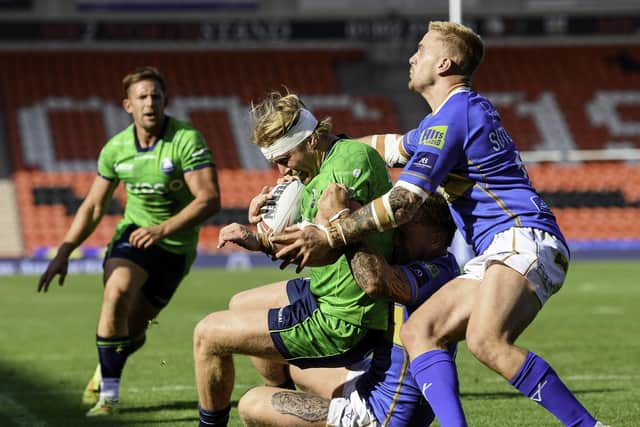

Clubs will have three home games and three away games, with ranked fixtures and results feeding into a single table covering all 20 teams.
The top eight will qualify for the quarter-finals as the competition builds towards a final on August Bank Holiday weekend.
The rugby league season officially begins on the weekend of January 16-17 when the Challenge Cup gets under way.
Ten Championship clubs will enter the competition in the second round and be joined by the remaining second-tier sides in round three.

The bottom four Super League teams from 2026, plus newly promoted London, come next before the rest of the top-flight sides – excluding Catalans Dragons and Toulouse Olympique, who will not participate in 2027 – arrive in the fifth round, also in March.
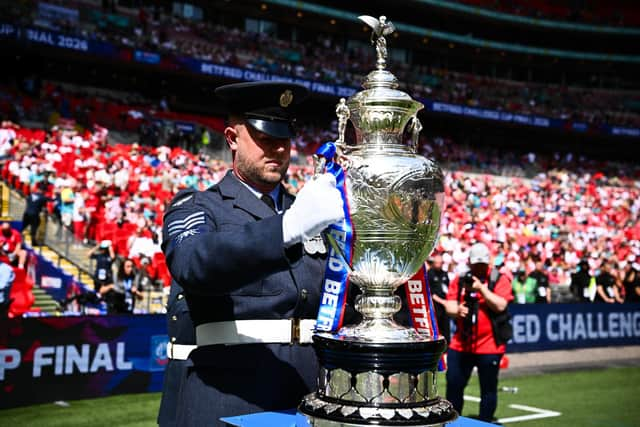
The semi-finals are scheduled for the weekend of May 8-9, giving finalists four weeks to prepare for the showpiece event at Wembley on June 5.
The draw for the first round, which features 28 community clubs, will take place next Monday.
It is a season of change across the sport following Super League's latest expansion.
London's elevation at the 11th hour means the top tier has gone from 12 to 15 teams in the space of two seasons, creating a different look for the competition.
A new seven-team play-off format has been introduced, as well as two bye rounds for every side bar the Broncos.
London will receive an additional bye during Magic Weekend, an event they must sit out in their first season back in Super League.
The capital club will receive one point for missing the festival of rugby, in addition to the two points each club receives for every bye round.
Under the new play-off format, the League Leaders' Shield winners will earn an automatic semi-final place on home soil, while the remaining six teams will compete in the eliminators.
The regular season has retained the 27-round structure, with clubs playing 13 games at home and 13 away, in addition to Magic Weekend, which takes place on the weekend of May 1 and 2.
However, there will be one different opponent that each club does not host at home and visit.
Highlights of the Super League campaign include Bradford Bulls' Las Vegas showdown with Leigh Leopards on February 27 and the competition's weekend in Dublin in late April, which features Warrington Wolves, Wigan Warriors, St Helens and Hull FC.
The fixture list for the 2027 season, which is set to begin on January 28, will be released next Thursday.
The new campaign will also feature a number of rule changes, bringing Super League closer to the NRL as discussions over a proposed partnership between the two competitions continue.
One of the most significant changes will see teams name a matchday squad of 19 rather than 17. Six replacements can be selected, although only four will be permitted to take the field – a format used at the recent World Cup.
From next year, drop goals from outside the opposition's 40-metre line will be worth two points rather than one.