
Heritage at Risk Register 2026: Parts of Fylingdales Moor added to list after devastating wildfire

Areas of a Yorkshire moorland which was devastated by wildfire are among the sites and buildings to be added to Historic England’s Heritage at Risk Register for 2026.
Half a dozen sites around the Fylingdales area in the North York Moors National Park have been officially added to the register after the wildfire damaged more than 20 scheduled monuments and six listed buildings across around 18 square kilometres.
The blaze broke out in Langdale Forest in the North York Moors National Park in June 2025, spreading to Langdale Moor and Fylingdales Moor and burning for several weeks.
The devastating fire, which swept across vast swathes of forest and moorland with billowing smoke clouds, is believed to have been started by someone cooking using a naked flame.
Historic England said it is working with the National Park Authority to assess the damage and record archaeological findings which were revealed by the blaze.
It has been providing support in the area, including using drone-based Light Detection and Ranging (LiDAR) and aerial imagery to assess the impact and damage.
The six areas in Fylingdales to be included on the list are; linear earthwork to the north west of the junction of the A171; a bowl barrow on Low Moor 185m south of the Postgate Cross; a round barrow 690m south east of John Bond's Sheep House; a World War II bombing decoy, 500m north west of John Cross; two round barrows known as Thorn Key Howes, on Low Moor and a bowl barrow 30m north of Lilla Cross.
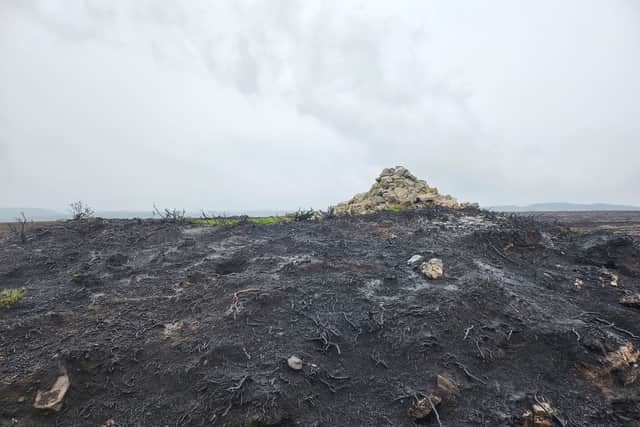

Miles Johnson, archaeologist at North York Moors National Park Authority, said the fire didn’t just damage areas of the landscape, but also removed its ‘proective cover’, leaving it open to damage from the elements such as wind and rain.
He told The Yorkshire Post: “The North York Moors is covered in these Bronze Age burial grounds, which are known as barrows, and which date back to the early Bronze Age, so they are around 3,500 to 3,700 years old.
“We knew that these sites were going to be added to the register. They were protected by the vegetation but the fire has removed that, so part of our work is to try and make sure we can replace that.
“The fire has also exposed a lot of sites which we didn’t know were there, so it’s about assessing and recording those aspects too.”
David Skaith, Mayor of York and North Yorkshire, said: "Last year's Langdale Moor and Fylingdales Moor fire was devastating to our natural landscape, and as Historic England have made clear, to many of our heritage assets.
“The impact of climate change cannot be ignored, which is why I'm pleased we've been able to support natural restoration after the fire and that the Government are investing into peatland restoration to create more resillient landscapes in our countryside."
A total of 16 sites and buildings have been added to the Heritage at Risk Register in Yorkshire for 2026, while four have been removed from the list, although a fifth is soon to be confirmed.
It is hoped Crown Court House, in Wakefield, will be removed in the near future after progress has been made on a restoration project.
The building served as Wakefield's local court and crown court for 182 years before finally closing its doors in 1992.
Work has started on a regeneration project to turn it into a new venue called the Court House, which will feature a bar, restaurant, workspace, community hall and creative studios in the heart of the city's civic quarter.
The building, which was designed by architect Charles Watson to a Greek revival style, was added to the Heritage at Risk Register in 2013 after suffering heavy damage, including from the weather.
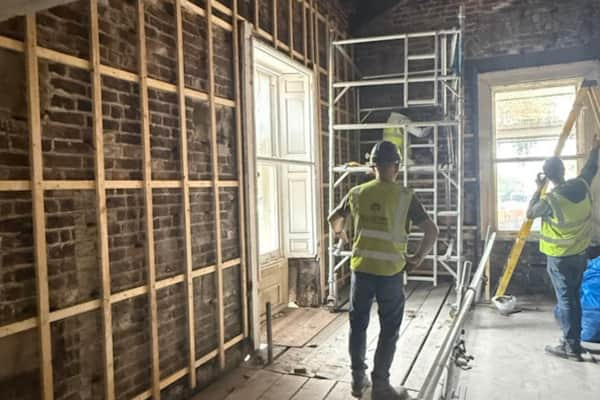
The redevelopment work on the 25,000sq ft Grade II-listed building is expected to be finished next year and opened to the public shortly afterwards.
It will then be removed from the register, Historic England said.
Claudia Kenyatta CBE and Emma Squire CBE, Co-CEOs of Historic England, said: “Our historic buildings and places help tell the story of where we live and contribute to the character and identity of local communities.
“Each year, the Heritage at Risk Register showcases the positive impact that restoring and reusing these special places can have.
“The most effective way to protect our buildings is to bring them back into use as places that create connection and enjoyment for local people.
“The sites saved and removed from the register this year show what can be achieved when partners and communities work together to deliver positive, lasting change. By working together, we can protect our heritage for generations to come.”