
Polarisation dominates public life, warns Jo Cox’s sister ahead of anniversary
The sister of murdered MP Jo Cox has called on people to speak responsibly and reject extremism, as she warned that forces of division are “perhaps even stronger” a decade on.
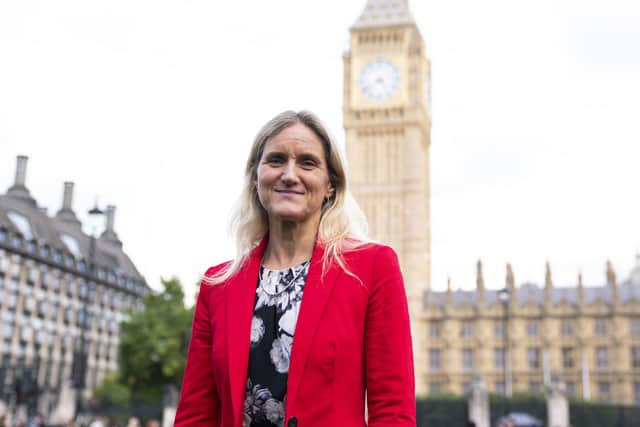
Kim Leadbeater, speaking ahead of the 10th anniversary of her sister’s death, described that time in 2016 during the Brexit debate as “one of the most divisive periods in modern British history”.
Ms Cox, a Labour MP, was shot and stabbed by neo-Nazi Thomas Mair in her Batley and Spen constituency on June 16 that year, days before the EU referendum.
Ms Leadbeater recalled that period as she gave the 2026 Jo Cox memorial lecture at Pembroke College, Cambridge – which her sister had attended – on Monday.
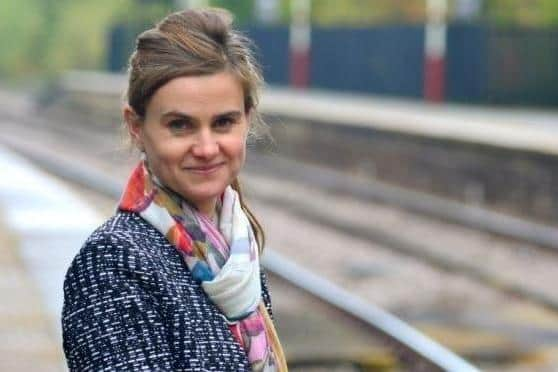
Remembering her sibling as “one of the nicest people you could hope to meet”, she said her murder had “horrified” people around the world.
Ms Leadbeater said: “Jo had worked in some of the world’s most dangerous countries, but she was killed not in some distant place, not a warzone, but on the streets of her constituency while carrying out her democratic duty as an elected representative, 10 minutes from where we live.

“It shocked the nation. It horrified the world. It left our family utterly bereft and it left two small children without their mum.”
While she said it had been “one individual (who) committed that heinous crime, a far-right neo-Nazi whose evil act was his and his alone”, she added that “things don’t happen in a vacuum”, and branded that time “one of the most divisive periods in modern British history”.
Ms Leadbeater added: “People were encouraged to see each other not as neighbours with differing opinions, but as enemies. Public discourse became increasingly toxic. Fear was weaponised. Anger became political currency. Complex issues were reduced to slogans, and compromise was portrayed as weakness.”
The Spen Valley MP warned that failing to examine “the environment of anger and polarisation that surrounded” the murder would “fail both her memory and our democracy”.
She added: “And sadly, a decade later, many of the same forces are still with us. Perhaps even stronger.
“Today, polarisation dominates public life. Across politics, media, and online platforms, people are increasingly pushed into opposing camps. Nuance disappears and every issue becomes a battle.
“Every disagreement becomes moral warfare.”
The speech came after a week which saw Prime Minister Sir Keir Starmer urge the nation to choose unity over hatred in the wake of the conviction of student Henry Nowak’s killer.
The 18-year-old’s treatment by police triggered a political row, with Reform UK leader Nigel Farage having faced condemnation after saying the public should feel “pure, cold rage” about the case.
Violent protests erupted near where the student was fatally stabbed, amid an outcry over his treatment, after his killer Vickrum Digwa falsely claimed he had been the victim of a racial attack, while Mr Nowak was handcuffed by police who ignored his pleas that he could not breathe as he lay dying.
US vice president JD Vance commented on the case, saying there should be “righteous anger” in response to Mr Nowak’s murder, which he partly blamed on “the mass invasion of migrants”.
His remarks prompted a response from Downing Street, which hit out at “people trying to interfere in our democracy and seeking to stir up division on our streets” over Mr Nowak’s case.
Mr Nowak’s father Mark, speaking after Digwa was sentenced last week, said: “We do not want his death to be used to create further division, hatred or tension.”
Ms Leadbeater urged people to build a society defined by compassion and solidarity, rather than outrage and suspicion, saying a lesson of her sister’s legacy is that “hatred grows when good people become indifferent to division”.
She added: “The answer to polarisation cannot be more polarisation. The answer to fear cannot be more fear.
“The answer must be courage. The courage to listen. The courage to speak responsibly. The courage to reject extremism. The courage to defend democratic values even when emotions run high.
“And most importantly, the courage to remember that we belong to one another. Do we want a society defined by outrage and suspicion? Or one defined by compassion and solidarity? Do we want future generations to inherit division? Or do we want them to inherit hope? The choice is ours.
“And perhaps the greatest tribute we can offer Jo is not merely to repeat her words, but to live by them, and show that we really are ‘far more united and have far more in common than that which divides us’.”