
Super League Basketball Q&A: Sanjay Bhandari on league expansion, salary structure and ownership model

After the collapse of its governing body before Christmas, basketball - the second-most participated team sport in Britain - has a chance at a fresh start.
In the first of a two-part Q&A, Harrogate-based Sanjay Bhandari MBE, who became chair of Super League Basketball last summer, looks at the issues directly affecting the league.
Key: Nick Westby’s questions in bold, Sanjay Bhandari’s answers in normal font.
NW: First of all Sanjay, why did you get involved in basketball?

“I didn’t have a basketball background, I was a litigation lawyer, a disputes lawyer.
“After finishing work full-time I built a portfolio of interests - Kick it Out, LTA, Athletic Ventures.
“It was a friend of mine who approached me about being the chair of SLB, he gave me a bit of the background.
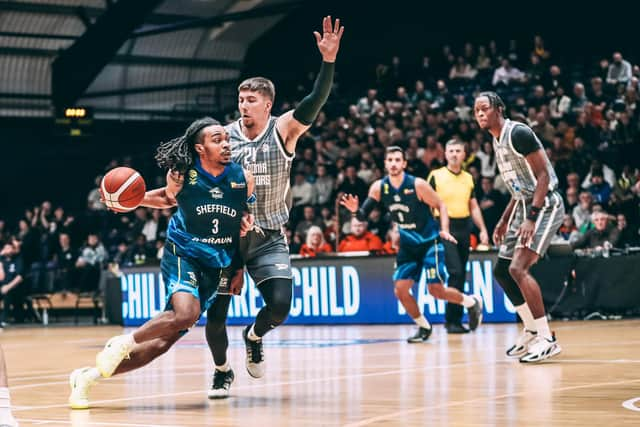
“I spoke to some of the folks at Sheffield Sharks, then a few of the other owners, it was more that I could see the potential for the sport, and resolving disputes was my day job, so can I help us get through this dispute as fast as possible to get us to the point where we could focus on the future, so that was really the challenge.
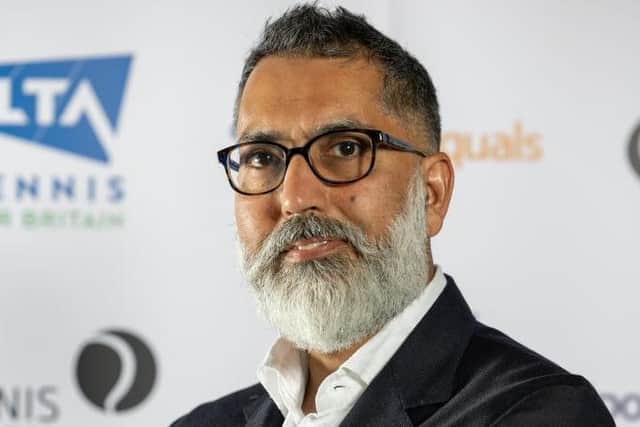
“I like to see on my boards somebody who is not an aficionado of the sport, someone who is from the outside, to ask the questions. Because I think if you’re inside the sport you stop asking why. If you’re from outside the hurly burly of the centre of the sport then you’re more likely to ask those questions of ‘why are we doing that?’
“I’m not someone who knows the sport inside out, my job is to ask how do we grow the sport, how do we help the league to be successful, how do we help the governance, how do we help the pathways in the sport to improve. It’s about focusing on outcomes.
“In many sports there’s a danger that they can attract false prophets; that’s not me, my job is to help people come together.
“And basketball: from a grassroots-perspective the participation is amazing, plus it’s almost effortlessly inclusive; men, women, boys, girls, different races, creeds, it appeals to all sorts of people.
“I think coming in as an outsider really helped me. No preconceptions, I just came in to try and help us get to a place where we can focus on the future which is where we are now.”
Let’s start with Super League. Nine clubs at the minute, how many teams do you want?
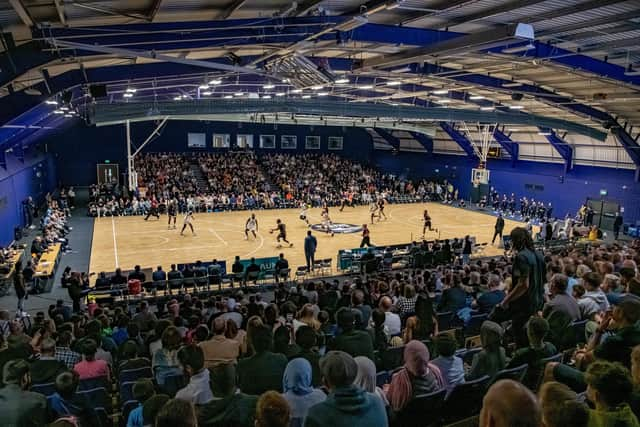
“I think the most important thing is that we’re looking to commercially develop the league. We are looking to expand the league, there are major cities around the league that have got a major sporting heritage that don’t have clubs. We’re sat on the doorstep of Leeds that doesn’t have a club.
“We don’t have a number in mind but there is an active dialogue about new clubs coming into the league and building and developing the existing clubs as well.”
Last summer The Yorkshire Post reported Liverpool was ready? Will they enter in 2026?
“There are active conversations around a number of cities and as and when we’re happy to talk to you about those franchises we’ll come and talk to you.”
“There are lots of big cities, Leeds and Birmingham in particular are two major cities where we should be having clubs. I don’t know the final answer on those yet but clearly the big cities are where we should be having clubs.”
Given the recent history of the league (collapse of financiers 777 in summer 2024), should SLB be wary of being over-reliant on overseas’ owners/investors, or does this remain the best ownership model?
“The reality across sport is we’re seeing lots of interest from domestic and overseas investors, and it’s a trend we’re going to see continue.
“I’m conscious of how much capital there is looking to invest in UK sporting assets and so I think the reality is it’s great that people want to come and invest in our sport and in our country, so we’ll welcome people coming with money, with new ideas coming from completely different areas of industry and entertainment. That’s what brings innovation, that’s what brings new ideas.
“It’s great also that we’ve got a mix of new owners and then you look at clubs like Newcastle and Leicester, owners that have been around for a very long time, like some of the people at Sheffield. So we’ve got a nice mix of modern and heritage.
“We’re looking at how we modernise the ownership and governance structure so that we can commercially develop the league.
“The reality is you look at lots of different sports and there are lots of different ways that you can do that now.
“It’s an active conversation about how we do that. I don’t think there’s one model that universally works across every sport, you’ve got to figure out what works best for you and where you’re at in your maturity.”
SLB operates without a title sponsor, is that something you’re looking at for next season?
“It’s one for our commercial team but we’re looking to expand the commercial revenues of our business, so of course we’re looking at all sorts of things.”
And same question regarding the broadcast deal, currently residing with DAZN?
“We’ll be looking at every commercial revenue stream, how can we maximise that and where we’re at in our stage of development as a sport.”
With regards salary structure - Is the current rule (only four imports allowed if you’re spending over £800k on salaries, five imports if you’re paying £500k-£800k, six imports if paying less than £500k) be the one you’ll apply next season?
“You see this in every sport, how do you balance homegrown players and homegrown development pathways with overseas players that maybe improve the quality of the overall mix, but also help with the development of your homegrown players.
“It’s always something that we’ll keep under review and have a look at with regards where we’re at with the maturity of our sport.
“Look back to the early 1990s in football when you had the foreigner rule and how that’s changed. The key is making sure that’s aligned with the player pathways.
“We’re starting to see it in football where they have the balance really well; an incredible product in the Premier League and EFL but also successful international teams.
“Basketball is a long way back in its journey, but that’s the reality, we need to balance those different factors of the development of our homegrown talent and having a competitive league and a spectacle for paying customers.
“I don’t have the absolute answer but it’s about getting that balance right.”
Is the current system of work-permitted players per squad beneficial for the development of British national team?
“I don’t have answers on the specifics, but the question is how do you balance the development with, is it attractive for paying customers? There’s a broader question around are we aligned as a sport as a whole about our development pathways, what’s the mission for the sport, the development of players from playground to podium, and the clubs need to be a part of that.
“Part of the challenge we have is that the sport operates in silos, people do what’s best for their own individual organisations, they don’t have ‘here’s a vision for the sport as whole’.
“That’s what I’m trying to encourage people to do with the conversations I’m having (and there’ll be more answers on this in Part 2 of the Q&A coming later this week).
“What do you want to do by the time of the 2032 Olympics, what are the things we need to have done really well to create a really successful GB team and also a successful league?
“What are those big things we need to get aligned on, because we don’t control everything about the player pathway.”
What about the women’s game?
“The women’s game is involved in all of those conversations. We have some commonality with our governance, we want to encourage that investment and encourage our clubs to continue that growth of the women’s game.
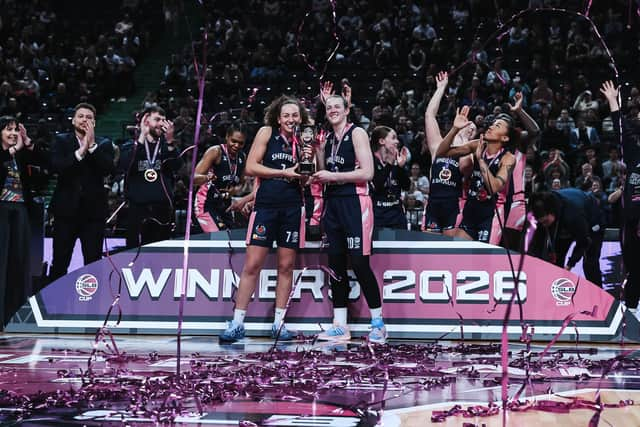
“We have the Trophy and Cup finals as double-headers in great arenas. It becomes an event. We see it as the whole sport.”
Will any SLB expansion involve women’s teams as well?
“My experience is investors want men’s and women’s sport and there is a lot of investment going into women’s sport.”
Come back later this week for Part 2 of our Q&A on all things British basketball with Sanjay Bhandari.
Further reading – Bhandari labels SLB Cup final brawl “unacceptable”