
England's World Cup failure must be catalyst for radical change - James O'Brien comment

The irony should not be lost on England fans.
For years, we have heard calls for a more competitive, compelling international game that isn't dominated by Australia and New Zealand. That is finally starting to happen, yet England, for so long the closest challengers to the big two, are in danger of being left behind as the balance of power begins to shift.
Tonga and Samoa are leading a changing of the guard, demonstrating the depth of talent emerging beyond the traditional powerhouses. England, meanwhile, appear to be heading in the opposite direction.
Their World Cup has ended before the semi-finals for the first time, prompting another round of soul-searching over familiar failings which continue to undermine the country's international ambitions.
Simply put, England were doomed to fail from the outset of a tournament that amplified issues of their own making.
Before drilling down into the problems at the heart of the national team's malaise, there is no getting away from the perfect storm that blew their World Cup off course.
There were, of course, plenty of factors within England's control. The lack of meaningful preparation time, the six months it took to appoint a new head coach after the Ashes whitewash and the decision to sign off on a mind-boggling journey to Perth via Sydney all left Brian McDermott with a difficult hand to play before a ball had been kicked.
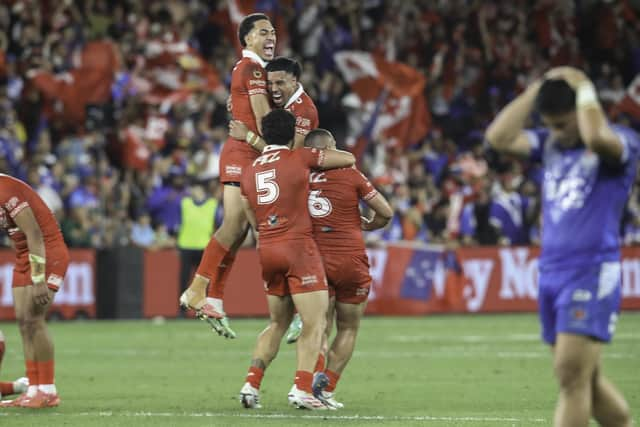
But not everything was of their own making. A tournament format without quarter-finals left little room for error, while being pitched against Tonga in their opening fixture meant England – already without a host of players due to injury – went into their toughest test cold.


Under a more conventional tournament format, two wins out of three would have been enough to progress; this year, England were as good as out after losing on the opening weekend.
The arduous journey meant McDermott had just two field sessions with his new charges before the first game and the lack of preparation was evident in a performance that unravelled.
The 30-12 defeat effectively left England in a battle with Samoa for a semi-final spot and a race against time to score the points required to finish above their group rivals.
Almost farcically, the numbers became as important as the results themselves as McDermott's men chased improbable scorelines.
That they came up short and exited the tournament on points difference only adds to the frustration.
Whereas Samoa had the opportunity to recover from a demolition by England in their opening game and reach the final four years ago, there was no such second chance for McDermott's side.
The upshot is that the show moves on to the semi-finals without a team from these shores for the very first time.
Last-four qualification may have papered over the cracks but this unwanted landmark moment leaves the powers that be with little option but to act.
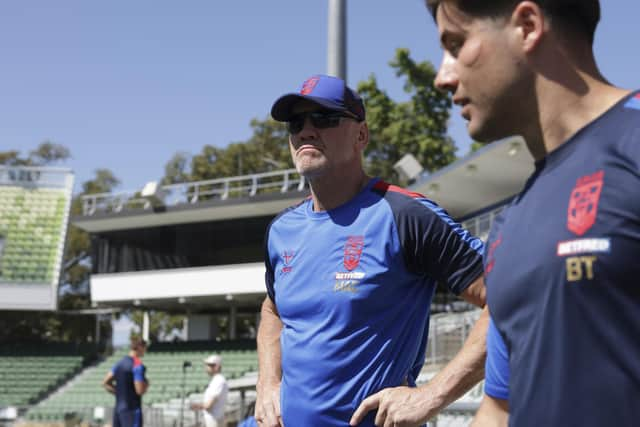
The introspection has already begun with some of the greatest players in England's modern history brought together to help map out a future for the national game.
It is a start, although quite how much influence former players can have over the administrative changes required remains to be seen. After all, England's issues extend far beyond the pitch.
This group-stage exit has been years, perhaps even decades, in the making.
The national team have been an afterthought for too long and this is the price of that neglect.
Now administrators are left facing the million-pound question: what can be done to improve England's fortunes on the international stage?
None of the answers are straightforward but that cannot be allowed to disguise the fact that more can and must be done.

Some of the solutions are staring the sport in the face. England need a proper international calendar, one that gives the national team protected windows to prepare and play meaningful fixtures during the domestic season.
The question is who they play. It has long been clear that playing France is an exercise in futility, while a team made up of Super League's overseas contingent is hardly an enticing alternative. Sending England Down Under for a mid-season series would bring its own complications, not least the prospect of clubs having to surrender their leading players for a month.
But that should not be an insurmountable obstacle. Cricket and rugby union routinely make provision for their international sides through dedicated windows. If England are serious about competing with the best, the domestic calendar cannot always take priority.
Of course, the problems run deeper than a lack of opportunities to pull on the shirt. There are wider questions about the size and strength of the domestic player pool, the reliance on overseas recruits and whether the competition's current structure is sustainable given the talent available. If there are too many clubs competing for a limited pool of quality homegrown players, the sport must be prepared to ask difficult questions about the number of teams, quota places and the pathways available to develop the next generation.
The scale of the challenge demands radical thinking if England are to avoid falling further behind the sport's leading nations. Standing still is no longer an option.