
John Harrison: The Yorkshire joiner and clockmaker who invented the marine chronometer

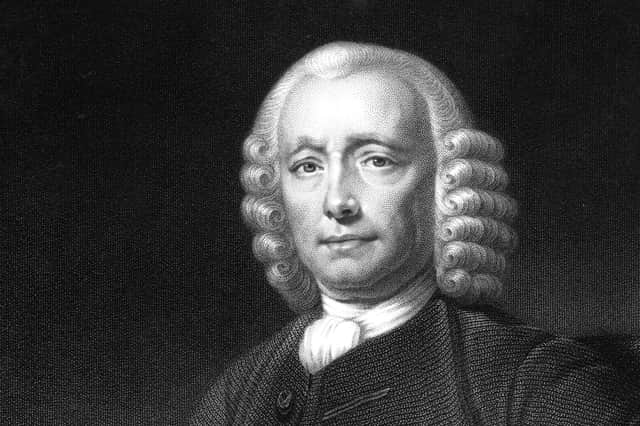
John Harrison was a Yorkshire clockmaker and joiner who revolutionised navigation when he invented the marine chronometer.
The clockmaker greatly increased the safety of long-distance sea travel through the marine chronometer, a device that solved the problem of how to calculate longitude while at sea.
Following the Scilly naval disaster of 1707, John’s invention was so desperately needed that the British government offered him financial rewards of up to £20,000 (which would be £3.83 million in 2025) under the 1714 Longitude Act, but he never received the full reward due to political differences.
The first design John patented was in 1730 and after working for years on various improved versions of time-keeping technology, he eventually turned to what were called sea watches.
Early life of John Harrison
John was born in Foulby in West Yorkshire and was the eldest of five children in his family.

His stepfather worked as a carpenter at the Nostell Priory estate and at around the year 1700, his family moved to the Lincolnshire village of Barrow upon Humber.
John was inspired by his stepfather’s trade as a carpenter to build and repair clocks in his spare time.
It is thought that when he was just six years old, while he was bedridden with smallpox, he was given a watch to amuse himself and spent hours listening to it and studying its moving parts. However, this story has been contested as at the time, watches were expensive and no clockmaker is known to have lived or worked near north Lincolnshire.
John also enjoyed music and eventually became a choirmaster at the Church of Holy Trinity, Barrow upon Humber.
He married Elizabeth Barret at Barrow upon Humber church on August 30, 1718, and after her death eight years later, he married Elizabeth Scott on November 23, 1726, at the same church.
John Harrison’s inventions
He built his first longcase clock in 1713 at the age of 20 and the mechanism was made fully of wood.
Three of his early wooden clocks exist to this day: the first from 1713 is in the Worshipful Company of Clockmakers’ collection and since 2015 is displayed in the Science Museum; the second from 1715 is also in the Science Museum in London; and the third from 1717 is at the Nostell Priory, the face inscribed ‘John Harrison Barrow’.
In the early 1720s, he was commissioned to make a new turret clock at Brocklesby Hall, North Lincolnshire. The clock continues to work today and similar to his previous clocks, it has a wooden movement of oak and lignum vitae.
What sets this clock apart from his previous inventions is that it incorporates some original features to improve timekeeping, for example, the grasshopper escapement, a low-friction mechanical latch for pendulum clocks.
Between 1725 and 1728, John and his brother James, who was also a skilled joiner, made at least three precision longcase clocks, again with the movements and longcase made of oak and lignum vitae. The grid-iron pendulum was developed during this period.
John’s precision and skilful techniques were used to systematically enhance the performance of the pendulum clock.
The grid-iron pendulum consisted of alternating brass and iron rods assembled in a particular way that the thermal expansions and contractions cancel each other out.
His earlier work on sea clocks was assisted in various ways including financially by the watchmaker and instrument maker George Graham. He was introduced to George by the Astronomer Royal Edmond Halley, who championed John and his work.
John Harrison’s sea clock inventions
During the 1720s, the Somerset clockmaker Henry Sully invented a marine clock that was designed to determine longitude.
It was in the form of a clock with a large balance wheel that was vertically mounted on friction rollers and stimulated by a frictional rest Debaufre-type escapement.
Unconventionally, the balance oscillations were controlled by a weight at the end of a pivoted horizontal lever attached to the balance by a cord.
This solution avoided temperature mistakes due to thermal expansion, an issue which affects steel balance springs.
Sully’s clock kept accurate time only in calm weather conditions, due to the balance oscillations that were affected by the pitching and rolling of the ship.
In 1730, John designed a marine clock to compete for the Longitude prize and travelled to London, seeking financial help.
He presented his ideas to Edmond Halley, the Astronomer Royal, who in return referred him to George Graham, the country’s foremost clockmaker.
John impressed George as he loaned him money to build a model of his ‘Sea clock’. The clock was an attempt to make a seagoing version of his wooden pendulum clocks, which performed very well.
He used wooden wheels, roller pinions, and a version of the grasshopper escapement and instead of a pendulum, he used two dumbbell balances which were connected together.
It took John five years to build his first sea clock (or H1) and he demonstrated it to members of the Royal Society who spoke on his behalf to the Board of Longitude.
His clock was the first proposal that the Board considered worthy of a sea trial and in 1736, John sailed to Lisbon on HMS Centurion under the command of Captain George Proctor, then returned on HMS Orford after Proctor died at Lisbon on October 4, 1736.
The clock lost time on the outward voyage, however, it performed well on the return trip and it was praised by the captain and the sailing master of the Orford.
John was granted £500 by the Board, though he did not get the winning prize.
By 1737, he moved to London and went on to develop H2, a more compact and rugged version of the sea clock.
After three years of building and two of on-land testing, the H2 was ready, but by then Britain was at war with Spain in the War of the Austrian Succession, and the mechanism was deemed too important to risk falling into Spanish hands.
John suddenly abandoned all work on his second machine when he discovered a serious design flaw in the concept of the bar balances.
His discovery led him to adopt circular balances in the third sea clock (H3) and the Board granted him another £500. While waiting for the war to end, he proceeded to work on H3.
It took John 17 years to work on his third sea clock, but despite his efforts it did not perform exactly as he had wished.
The issue was that due to not fully understanding the physics behind the springs used to control the balance wheels, the timing of the wheels was not isochronous, a characteristic that affected its accuracy.
The engineering world did not fully understand the properties of springs for these clocks for another 200 years.
Despite that, it had proved a very valuable experiment and a lot was learned from his invention and after all this, John left the world with two enduring legacies: the bimetallic strip and the caged roller bearing.
John died on March 24, 1776 at the age of 82, just shy of his 83rd birthday and was buried in the graveyard of St John’s Church, Hampstead in North London, along with his second wife Elizabeth and later their son William.
His tomb was restored in 1879 by the Worshipful Company of Clockmakers, even though John had never been a member of the company.